
Affiliate Disclosure
Plumber Guide Guys is a participant in the Amazon Services LLC Associates Program, an affiliate advertising program designed to provide a means for sites to earn advertising fees by advertising and linking to Amazon.
Can You Put Liquid Plumber in a Toilet? Ever thought about using Liquid Plumber for a toilet clog? Before you do, ask if it’s safe for your toilet. Many homeowners face this question when dealing with a stubborn clog.
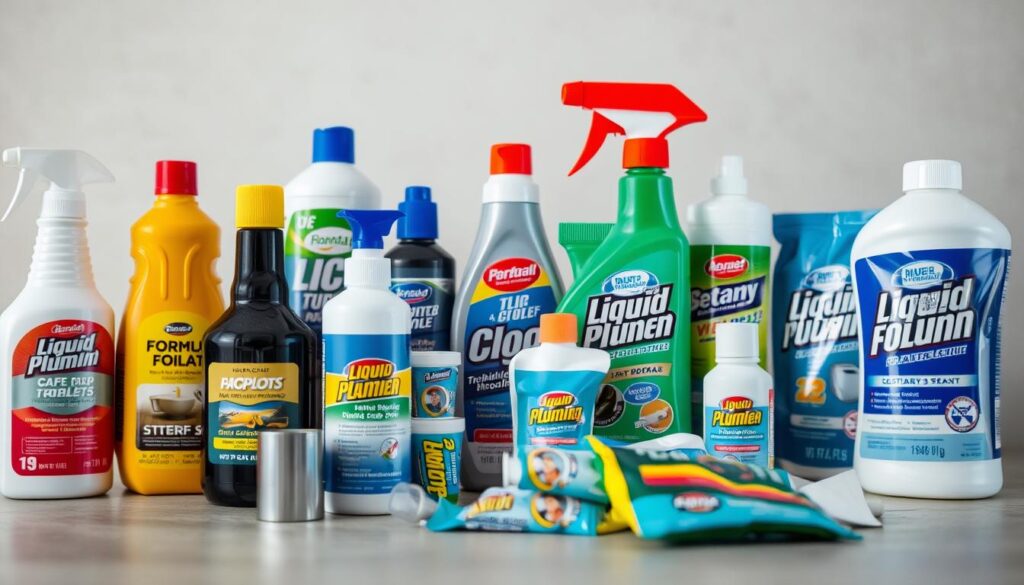
Chemical drain cleaners might seem like a quick solution. But they can actually harm your plumbing. It’s important to know if Liquid Plumber is safe for your toilet.
This guide will answer key questions about chemical drain cleaners and toilet clogs. We’ll look at the science, risks, and safer alternatives. You’ll learn how to protect your home’s plumbing.
Key Takeaways
- Chemical drain cleaners can damage pipe materials
- Not all cleaning solutions are safe for toilet systems
- Mechanical and natural methods offer safer alternatives
- Understanding clog causes prevents future blockages
- Professional plumbers provide expert clog resolution
Table of Contents
Understanding Toilet Clogs and Their Causes
Toilet clogs can really mess up your day. Knowing why they happen helps you fix them and avoid future problems.
Common Materials Causing Blockages
Many things can clog your toilet. Knowing what they are can help you avoid problems:
- Too much toilet paper
- Feminine hygiene products
- Baby wipes and wet wipes
- Cotton swabs and cotton balls
- Dental floss
- Hair and personal care items
Signs of a Clogged Toilet
Spotting early signs can stop big plumbing problems. Look out for these signs:
- Slow water draining
- Gurgling sounds
- Water rising near the rim
- Unusual bubbling in the bowl
Impact of Regular Usage on Toilet Function
Using your toilet a lot can wear it down. Using the right drain cleaner and keeping it clean can make it last longer.
| Usage Factor | Potential Impact | Prevention Strategy |
|---|---|---|
| Frequent Flushing | Increased wear on pipes | Regular inspection |
| Hard Water | Mineral buildup | Water softening treatments |
| Incorrect Usage | Higher clog risk | Proper disposal practices |
Understanding these points lets you keep your toilet working well. This way, you can avoid sudden plumbing issues.
Can You Put Liquid Plumber in a Toilet?
Many homeowners wonder if liquid plumber can fix a stubborn toilet clog. The truth is, using liquid plumber in a toilet is not recommended by professional plumbers. Chemical drain cleaners can seriously damage your toilet’s plumbing system.
Understanding liquid plumber vs toilet clogs is important. These strong chemical solutions have harsh ingredients. They can damage your pipes, leading to long-term problems. Specialized plumbing experts warn against using liquid plumber directly in your toilet for several reasons:
- Chemical composition can erode pipe materials
- Potential damage to toilet’s internal components
- Risk of creating permanent plumbing issues
- Ineffective against complex toilet blockages
If you’re wondering “can you put liquid plumber in a toilet,” the answer is no. These products are made for sink and shower drains, not toilet plumbing. Toilets have unique structures that make chemical drain cleaners very risky.
Protecting your plumbing is always more cost-effective than repairing extensive damage caused by inappropriate cleaning methods.
Professional plumbers suggest safer ways to clear toilet clogs. They recommend using a plunger, toilet auger, or getting professional help. These methods are safer and more effective for keeping your toilet in good shape.
The Science Behind Chemical Drain Cleaners
Chemical drain cleaners are a smart way to tackle tough toilet clogs. Knowing how they work can help you choose the right method for unclogging your toilet.
Drain cleaners use special chemicals to tackle blockages. These solutions are made to dissolve and clear out stubborn clogs.
Chemical Composition and Functionality
Drain cleaners come in three main types:
- Chemical Drain Cleaners: Alkaline-based solutions
- Acid Drain Cleaners: Highly reactive acidic compounds
- Oxidizing Drain Cleaners: Oxygen-releasing formulations
Active Ingredients in Drain Cleaners
The success of toilet unclogging methods depends on their ingredients. Most cleaners have:
| Ingredient | Primary Function | Effectiveness |
|---|---|---|
| Sodium Hydroxide | Dissolve organic matter | High |
| Sulfuric Acid | Break down tough blockages | Very High |
| Potassium Hydroxide | Chemical reaction catalyst | Moderate |
Chemical Reactions in Your Pipes
When used, these chemicals start exothermic reactions. These reactions create heat and break down clogs. They turn solid waste into liquid, making it easier to flow through pipes.
Understanding the science behind these cleaners helps you see their benefits and risks.
Risks of Using Liquid Plumber in Toilets
Homeowners should think twice before using liquid plumber in toilets. Chemical drain cleaners can seriously harm your plumbing. This can lead to long-term problems, even if they clear clogs temporarily.
Using liquid plumber in toilets is risky for several reasons. The harsh chemicals can:
- Corrode pipe materials
- Create microscopic cracks in porcelain
- Weaken pipe structural integrity
- Generate toxic fumes
Your toilet’s plumbing system can suffer a lot from these chemicals. The hydrochloric acid in drain cleaners can damage your pipes. This might cost you a lot to fix.
| Chemical Cleaner Risk | Potential Damage |
|---|---|
| Pipe Corrosion | Structural weakening |
| Material Degradation | Potential leaks |
| Toxic Chemical Reaction | Health hazards |
Professional plumbers always advise against using chemical drain cleaners in toilets. They know the big risks.
Knowing the risks helps you make better choices for your toilet. It keeps your home’s plumbing safe.
Safe Alternatives to Chemical Drain Cleaners
Dealing with toilet clogs doesn’t always mean using harsh chemicals. There are safer options that protect your plumbing and the environment. These alternatives are effective at clearing blockages without harming your pipes or wallet.
Natural Cleaning Solutions
Your kitchen might have what you need to clear clogs naturally. Here are some eco-friendly choices:
- Baking soda and vinegar mixture
- Hot water flush
- Enzyme-based cleaners
- Salt and hot water solution
Mechanical Cleaning Methods
Tools can be safer than chemicals for fixing toilet clogs. Here are some effective methods:
- Plunger techniques
- Toilet auger or snake
- Specialized toilet cleaning brushes
Professional Plumbing Options
At times, you might need a pro to fix a clog. Plumbers have the tools and skills to handle tough blockages.
| Method | Effectiveness | Cost Range |
|---|---|---|
| Plunger | Low to Moderate | $0-$10 |
| Toilet Auger | Moderate to High | $20-$50 |
| Professional Plumber | High | $100-$500 |
Pro tip: Regular maintenance can prevent most severe toilet clogs and reduce the need for aggressive drain cleaning methods.
How to Properly Clear a Toilet Clog
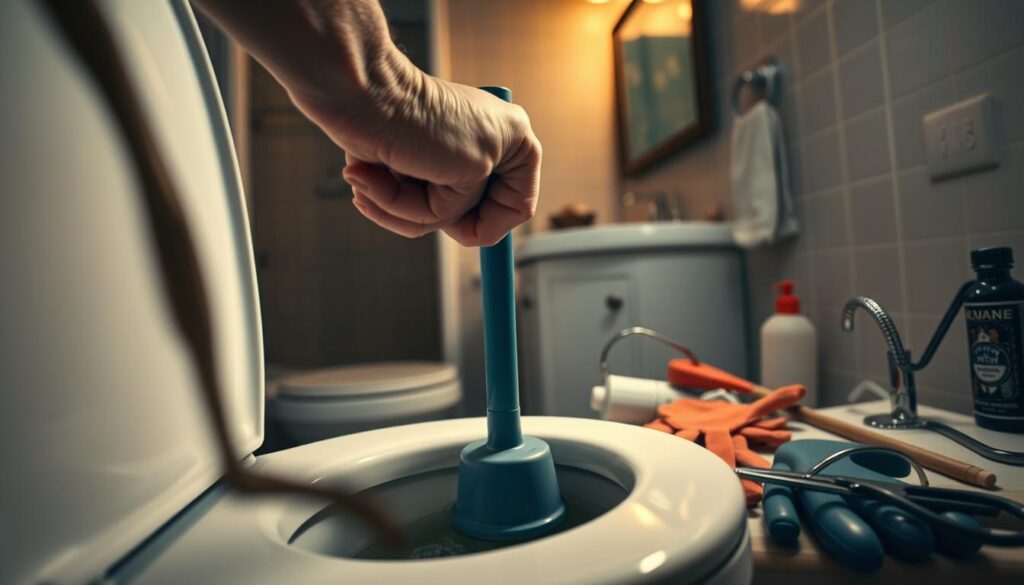
Dealing with a clogged toilet can be frustrating. But, with the right solutions, you can fix it quickly. Always wear rubber gloves and make sure the bathroom is well-ventilated before starting.
Your first step is to use a reliable plunger. Here’s how to do it right:
- Position the plunger directly over the toilet bowl drain
- Create a tight seal between the plunger and toilet bowl
- Push down slowly, then pull up rapidly
- Repeat the plunging motion 4-6 times
Pro Tip: For tough clogs, try a toilet auger (plumbing snake). Insert it carefully and turn the handle clockwise to move through the pipe.
If plunging doesn’t work, try enzyme-based waste removers. They break down organic materials safely. Chemical drain cleaners should be a last choice, as they can harm pipes.
Remember: Prevention is always better than cure when it comes to toilet maintenance!
Keep a bucket of hot water ready. Don’t flush the toilet multiple times if it’s clogged. Being patient and using the right method is key to clearing clogs.
Impact of Drain Cleaners on Different Plumbing Systems
Chemical drain cleaners can really harm your home’s plumbing. Knowing how they work with different systems helps you choose the right way to keep your toilet working. It also helps you avoid risks.
When picking between liquid plumber and dealing with toilet clogs, think about the big picture. Your choice can affect your plumbing for a long time. This is true for both septic and city sewer systems.
Effects on Septic Systems
Septic tanks need a special mix of bacteria to work right. Chemical drain cleaners can mess with this balance by:
- Killing good bacteria
- Making waste harder to break down
- Even causing the system to fail
City Sewer System Considerations
City sewers have their own problems when liquid plumber is used often. The type of pipes and how they’re set up can affect how well chemicals work.
| Plumbing System | Chemical Cleaner Impact | Recommended Action |
|---|---|---|
| Older Clay Pipes | High Corrosion Risk | Mechanical Clearing |
| PVC Pipes | Moderate Chemical Tolerance | Selective Use |
| Modern Copper Pipes | Lower Damage | Careful Application |
Deciding when to use liquid plumber in your toilet needs careful thought. Always choose methods that keep your plumbing system healthy and working well for a long time.
Prevention Tips for Future Toilet Clogs
To prevent toilet clogs, you need to take care of your plumbing. Using the right solutions can save you money and hassle. Simple steps can keep your toilet working well and prevent drainage problems.
- Use enzyme-based cleaners like Green Gobbler to naturally break down waste
- Limit toilet paper usage and avoid flushing non-biodegradable items
- Install a drain cleaner for toilet clogs as a preventative maintenance tool
- Perform regular toilet maintenance checks
Knowing what causes clogs is key to preventing them. Most clogs come from bad waste disposal and buildup. Enzyme cleaners are a gentle but effective way to keep your pipes clear without harming your plumbing.
| Prevention Method | Effectiveness | Cost |
|---|---|---|
| Enzyme Cleaners | High | Low |
| Regular Maintenance | Medium | Very Low |
| Drain Screens | High | Low |
For long-term protection, consider these additional toilet clogging solutions:
- Use a plunger after each challenging flush
- Avoid disposing of grease or oil in toilets
- Schedule annual professional plumbing inspections
By following these steps, you can greatly lower the chance of toilet clogs. This keeps your plumbing system healthy and working right.
When to Call a Professional Plumber
Knowing when to call a professional plumber can save you from expensive and serious toilet clogging problems. Some plumbing issues are too complex for DIY fixes and need expert help.
There are key signs that mean you should stop trying to fix it yourself and call a pro right away:
- Multiple drains are backing up at once
- Toilets keep overflowing even after plunging
- You hear strange gurgling sounds from the pipes
- Foul odors keep coming from the drainage area
- The water level in the toilet changes suddenly
Professional plumbers have special tools to find the root of the problem. They use advanced cameras and pressure tests to find where the issue is in your plumbing.
“When you face persistent toilet clogs that won’t go away, it’s time to get professional help,” says Mark Rodriguez, Master Plumber at Integrity Plumbing Services.
Trying to fix complex toilet clogs without the right knowledge can harm your home’s plumbing. Experts know how different pipes work and can fix problems for good.
| Plumbing Issue | DIY Possible | Professional Help Needed |
|---|---|---|
| Simple toilet clog | High | Low |
| Recurring multiple drain blockages | Low | High |
| Sewage line problems | None | Critical |
Keep your home’s plumbing safe by knowing when to call a professional. The right help can stop small problems from becoming big, costly repairs.
Environmental Considerations of Chemical Drain Cleaners
Chemical drain cleaners have big environmental problems that many people don’t think about. Using liquid plumber toilet safety methods can harm more than just your bathroom pipes. These methods can damage our ecosystem for a long time.
The dangers of chemical drain cleaners are big and varied. They put harmful stuff into our water, hurting animals and people’s health.
Ecological Impact of Chemical Drain Cleaners
Chemical drain cleaners cause serious environmental issues:
- They contaminate our water supply
- They leave toxic stuff in soil and groundwater
- They harm aquatic life
- They can damage water treatment systems
Safer Eco-friendly Alternatives
Keep your plumbing safe and the planet healthy with these green options:
- Enzymatic cleaners that naturally break down organic stuff
- Mechanical tools like plungers or drain snakes
- Vinegar and baking soda mixes
- Professional plumbing services that care about the environment
Choosing eco-friendly liquid plumber toilet safety methods helps fix clogs without harming the planet. Your choices can help protect our environment.
Safety Precautions When Using Drain Cleaners
When you think about using liquid plumber on your toilet, safety is key. Chemical drain cleaners can be dangerous. It’s important to handle them carefully and take the right precautions.
Before you start, make sure you’re safe. Using liquid plumber on your toilet needs special steps to avoid health risks.
- Wear protective eyewear to shield against chemical splashes
- Use rubber gloves to prevent direct skin contact
- Ensure adequate ventilation in your workspace
- Keep children and pets away from the cleaning area
Chemical drain cleaners release harmful fumes. These can irritate your lungs. Always read the label and follow the instructions. Never mix different cleaners, as this can lead to dangerous reactions.
If you get exposed by accident, act fast:
- Rinse affected skin with cool water for 15 minutes
- Remove contaminated clothing immediately
- Contact poison control if symptoms persist
- Seek medical attention for severe exposure
Remember: Your safety is more important than any drain blockage.
Professional recommendation: Mechanical methods or professional plumbing services are often safer alternatives to chemical drain cleaners.
Conclusion
It’s important to know the dangers of using Liquid Plumber in your toilet. Chemical drain cleaners can harm your pipes and septic systems. When you’re looking for ways to fix a clogged toilet, safer options are better for your home’s pipes.
Fixing a clogged toilet is best done with a mix of prevention and smart fixes. Tools like plungers and augers are safer than harsh chemicals. Keeping your toilet in good shape can save you from expensive repairs later.
Calling a professional plumber is a smart move for tough clogs. They have the right tools and know-how to fix problems without causing more damage. Choosing to fix it right the first time can save you money and headaches.
Learn about your plumbing needs and how to take care of your toilet. Knowing the signs of a clog and how to prevent it is key. This way, you can keep your home’s plumbing system working well.