
Affiliate Disclosure
Plumber Guide Guys is a participant in the Amazon Services LLC Associates Program, an affiliate advertising program designed to provide a means for sites to earn advertising fees by advertising and linking to Amazon.
How to Winterize RV Plumbing? Ever thought about what could happen to your RV’s plumbing if you don’t winterize it? Imagine coming back to your RV in spring and finding thousands of dollars in water damage. This is because of freezing temperatures.
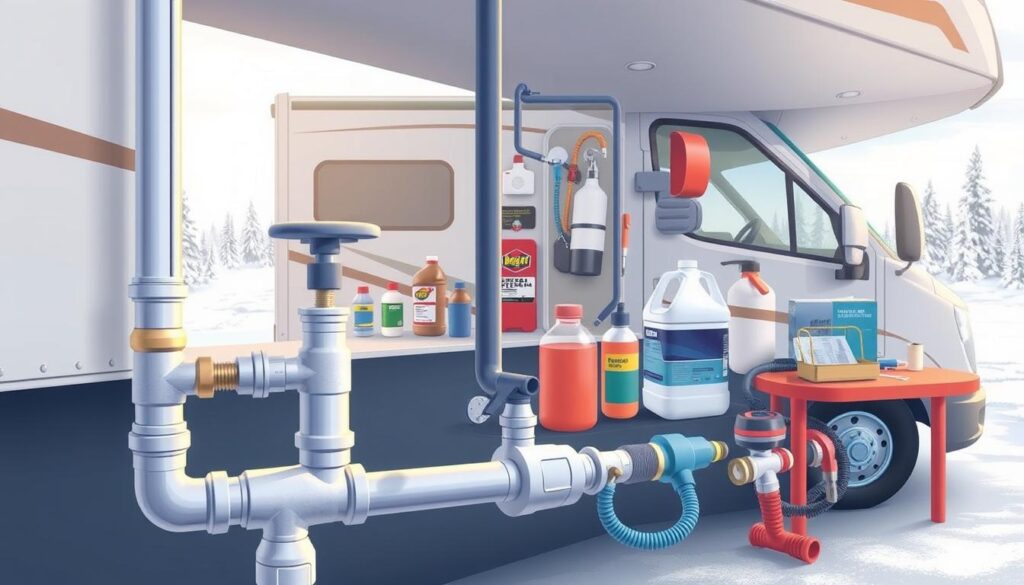
Winterizing your RV plumbing is key to protecting your investment. This guide will show you how to keep your RV in great shape during the cold months.
The RV winterization checklist is not just a precaution. It’s your guide to keeping your RV in top condition and avoiding expensive repairs. Whether you’re an experienced RV owner or new to RV travel, knowing these steps can save you time, money, and stress.
Key Takeaways
- Winterization prevents expensive plumbing damage
- Proper preparation protects your RV’s water systems
- Timing is critical for effective winterization
- DIY winterization can save a lot on repair costs
- Regular maintenance can extend your RV’s life
Table of Contents
Understanding RV Plumbing Winterization Basics
Keeping your RV’s water system safe from freezing is key to avoiding expensive repairs. Winterizing your camper’s water system needs careful planning. It’s important to know how cold weather can harm your RV’s plumbing.
Why Winterization is Critical
Frozen pipes can seriously damage your RV’s water system. When water freezes, it expands and can crack pipes, valves, and tanks. Fixing such damage can cost thousands, making winterization a must.
- Prevent costly pipe repairs
- Protect water system components
- Avoid water damage
- Extend your RV’s life
Best Time to Winterize Your RV
Timing is key to protect RV pipes from freezing. The best time to winterize depends on where you live and the expected cold. RV owners should winterize before temperatures drop below 32°F (0°C).
Common Winterization Mistakes to Avoid
Many RV owners make big mistakes during winterization. Incomplete drainage, skipping the water heater bypass, or using the wrong antifreeze can cause serious damage.
- Failing to drain water systems fully
- Missing hidden water lines
- Using car antifreeze instead of RV antifreeze
- Ignoring external water connections
Professional RV technicians say thorough winterization is the best way to save money.
Essential Tools and Materials Needed for Winterization
To get your RV ready for winter, you need specific tools and materials. These help protect your RV’s plumbing system. Make sure your rv winterization checklist includes these important items.
Before you start, make sure you have these essential supplies:
- Non-toxic RV/Marine antifreeze (at least 2-3 gallons)
- Water heater bypass kit
- Water pump converter kit
- Basic hand tools (screwdrivers, pliers)
- Tank cleaning wand
- Flexible tubing
- Protective gloves
Choosing the right antifreeze is key. Always pick a non-toxic RV-specific antifreeze to avoid damaging your plumbing.
| Tool/Material | Purpose | Recommended Quantity |
|---|---|---|
| RV Antifreeze | Prevent water system freezing | 2-3 gallons |
| Bypass Kit | Protect water heater | 1 kit |
| Cleaning Wand | Tank maintenance | 1 piece |
Quality tools make RV winterization easier and safer. Preparing and gathering these materials now will save you a lot of trouble later.
Preparing Your RV Water System for Winter
Winterizing your RV’s water system is key to avoiding cold-weather damage. It prevents expensive repairs and keeps your RV in great shape during storage.
Start by getting all the tools and materials you need. This makes the winterization process more efficient and complete.
Fresh Water Tank Drainage
Draining your fresh water tank is the first important step in winterizing your RV’s water heater. Follow these steps carefully:
- Locate the fresh water tank drain valve
- Open the valve completely
- Allow all water to drain fully
- Use compressed air to blow out any remaining water
Black and Gray Water Tank Management
Emptying your waste tanks is key to stopping bacterial growth and freezing:
- Drive to an approved dump station
- Connect your sewer hose securely
- Completely empty both black and gray water tanks
- Flush the black tank with clean water
- Use tank cleaning chemicals if recommended
Water Heater Drainage Process
Careful water heater drainage prevents damage during winter storage:
- Turn off the water heater and let it cool completely
- Disconnect power sources
- Open the drain plug carefully
- Never drain a hot or pressurized water heater
By following these steps carefully, you’ll protect your RV’s water system from freeze damage. This ensures it’s ready for your next adventure.
How to Winterize RV Plumbing Step by Step
Winterizing your RV plumbing is key to avoid expensive damage from cold. It’s important to know how to winterize RV plumbing to keep your travel trailer’s water system safe.
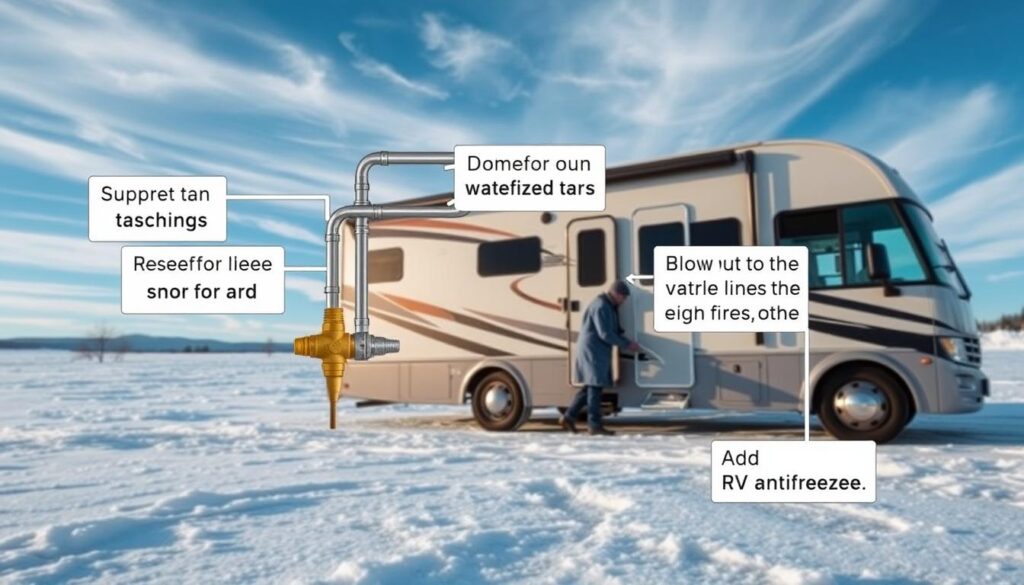
- RV antifreeze (non-toxic)
- Water pump converter kit
- Adjustable wrench
- Plastic tubing
- Bucket
Here are the essential steps to winterize your RV plumbing:
- Drain all fresh water tanks completely
- Remove water filter cartridges
- Open all faucets and low-point drain valves
- Bypass the water heater
- Connect water pump converter kit
Winterizing your RV plumbing involves several important steps. Proper preparation can save you thousands in repairs.
| Step | Action | Purpose |
|---|---|---|
| 1 | Drain Water Tanks | Remove all water to prevent freezing |
| 2 | Bypass Water Heater | Protect water heater from antifreeze |
| 3 | Add RV Antifreeze | Protect pipes from freezing temperatures |
When winterizing your travel trailer plumbing, take your time. Make sure to drain all water systems well. Also, add antifreeze correctly to prevent damage in the cold months.
Pro Tip: Always use RV-specific antifreeze, never automotive antifreeze, which can damage your plumbing system.
Using RV Antifreeze: A Complete Guide
Winterizing your RV is key to protect its plumbing system. It stops costly damage from cold temperatures. This keeps your pipes safe all winter long.
Knowing how to use RV antifreeze is vital. It helps keep your RV’s pipes from freezing. Use a non-toxic antifreeze made just for RVs.
Choosing the Right Antifreeze
Not all antifreeze is the same. Look for these important things:
- Use only non-toxic RV/Marine antifreeze
- Check the freeze protection rating
- Confirm it works with your RV’s plumbing
- Choose pink-colored antifreeze for drinking water systems
Proper Antifreeze Distribution Methods
Getting antifreeze to all parts of your RV’s water system is key. Here’s how to do it right:
- Use a water pump converter kit
- Manually pump antifreeze through each faucet
- Flush toilets with antifreeze
- Run antifreeze through exterior shower connections
Amount of Antifreeze Needed
| RV Size | Antifreeze Quantity |
|---|---|
| Small (under 25 feet) | 2-3 gallons |
| Medium (25-35 feet) | 3-4 gallons |
| Large (over 35 feet) | 4-6 gallons |
Buy a bit more antifreeze than you think you need. This ensures you cover every part of your system. Doing this right saves you from costly repairs later.
Water Heater Bypass and System Protection
Keeping your RV’s water heater safe in winter is key. A water heater bypass kit can help save money and cut down on antifreeze waste. Without one, you’ll have to fill the whole tank with expensive antifreeze.
Most RVs today come with a built-in bypass kit. But older models might need a manual setup. Here’s how to protect your water heater during winter:
- Find the bypass valve near your water heater
- Make sure all valves are set right to bypass antifreeze around the tank
- Check the electric heating element if your RV will be plugged in during storage
When you’re blowing out rv water lines, focus on the water heater connections. Turn off the power and drain the tank fully before winterizing. This stops damage from frozen water and keeps your system safe all winter.
If your RV doesn’t have a built-in bypass kit, think about getting a universal bypass kit. These kits are affordable and can save you a lot on antifreeze costs during winter.
“Proper water heater winterization can prevent costly repairs and extend the life of your RV’s plumbing system.”
Winterizing Special RV Fixtures and Appliances
It’s important to protect your RV’s special fixtures from water damage during winter. When you winterize your camper’s water system, focus on appliances that freeze easily.
Your RV has unique fixtures that need extra care during winter. These parts need special treatment to stay safe during the cold months.
Ice Maker Winterization
Winterizing your RV’s ice maker is a big job. Here’s what you need to do:
- Disconnect the water supply line completely
- Drain all remaining water from internal components
- Use compressed air to blow out any residual moisture
- Consider removing the ice maker if extended storage is planned
Washing Machine Preparation
Don’t forget to winterize your RV’s washing machine:
- Disconnect water inlet hoses
- Drain all water from internal pump and lines
- Apply RV antifreeze to prevent cracking
- Leave washing machine door slightly open to prevent mold
External Shower Protection
External showers are at high risk of freezing. To protect them:
- Completely drain water lines
- Apply RV antifreeze to internal components
- Cover external shower connections
- Check rubber seals for damage
| Fixture | Key Winterization Steps | Risk Level |
|---|---|---|
| Ice Maker | Drain, Blow Out, Disconnect | Medium |
| Washing Machine | Drain Hoses, Apply Antifreeze | High |
| External Shower | Drain Lines, Seal Connections | High |
By using these winterization steps, you’ll keep your RV’s special fixtures safe. This prevents water damage during storage.
Protecting RV Pipes from Freezing Damage
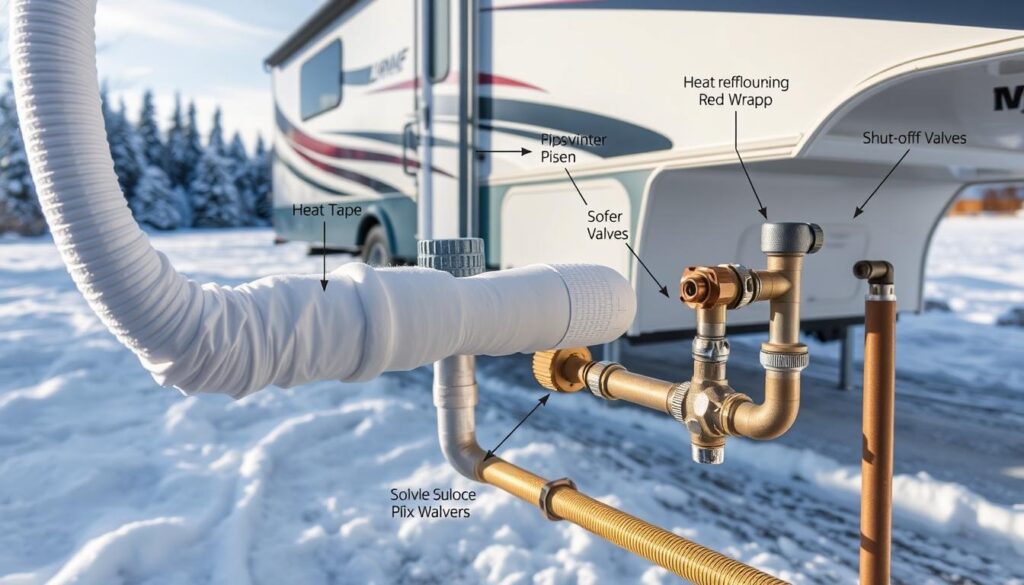
Keeping your RV pipes from freezing is key to avoid expensive damage in cold weather. Freezing can make pipes crack, causing costly repairs and water system failures.
To safeguard your RV pipes, you need a detailed plan. Blowing out RV water lines is a vital step to stop freeze damage.
- Identify vulnerable pipe locations
- Use proper insulation techniques
- Apply heat tape to exposed pipes
- Create additional barrier protection
When you blow out RV water lines, use a compressed air compressor. Experts say to use 30-50 PSI to clear water from your plumbing system.
| Pipe Protection Method | Effectiveness Rating | Cost Estimate |
|---|---|---|
| Foam Pipe Insulation | High | $15-$30 |
| Heat Tape | Very High | $40-$80 |
| Compressed Air Blowout | Moderate | $0-$50 |
Focus on exterior pipes and connections. These spots are most at risk from freezing. Use RV insulation or heat tape to protect them well.
Pro tip: Always drain your water system completely before applying antifreeze and additional protection methods.
Storage Preparations Beyond Plumbing
Winterizing your RV is more than just plumbing. It’s about keeping your travel trailer in great shape all winter.
Winterizing your RV means protecting it from damage. Your storage plan should cover many areas to keep your RV safe.
- Clean and thoroughly dry the interior to prevent mold growth
- Remove all perishable items and food supplies
- Cover exterior vents to block pest entry
- Disconnect and properly store batteries
- Apply protective wax to exterior surfaces
Choosing the right place to store your RV is key. Look for indoor spots or use a good RV cover. This protects against UV rays and moisture.
Check your RV often while it’s stored. Look for moisture, pests, or structural changes monthly. These checks can help avoid costly repairs in the spring.
Pro tip: Keep tires at the right pressure and use covers to prevent damage from dry air and UV rays.
Winterizing your RV is more than just plumbing. It’s a way to protect your investment all winter.
Spring De-winterization Process
Getting your RV ready for camping season is a big job. You need to carefully restore your water system. This ensures you have safe, clean water for your adventures.
To restore your RV’s water system, you must follow a few key steps. These steps help remove antifreeze and get your plumbing ready for use.
System Flushing Techniques
Flushing your RV’s system is key to getting it ready for spring. Here’s how to clean your RV’s water system:
- Connect a fresh water supply to your RV
- Open all faucets and run water until clear
- Flush each water line thoroughly
- Check for any remaining antifreeze residue
Sanitizing Water System
Sanitizing your water system is important. It keeps your water safe for drinking and cooking.
- Create a bleach-water solution (1/4 cup bleach per 15 gallons of tank capacity)
- Fill the fresh water tank completely
- Run solution through all water lines
- Let sit for 12 hours
- Drain and rinse thoroughly
Water Heater Reconnection
Reconnecting your water heater right is key for safe use:
| Step | Action |
|---|---|
| 1 | Remove bypass valve |
| 2 | Check anode rod condition |
| 3 | Inspect heating element |
| 4 | Refill water heater tank |
Pro Tip: Always do a full system check before your first trip. This helps avoid water system problems.
Conclusion
Learning how to winterize RV plumbing is key to keeping your investment safe. It ensures your RV stays in great shape during the cold months. By using a detailed RV winterization checklist, you can avoid expensive damage from freezing and water system failures.
Every step in the winterization process is important. It helps protect your RV’s sensitive parts. By draining water systems and using antifreeze, you save money and avoid trouble when spring comes. The effort you put in now will keep your vehicle in good shape for future trips.
Remember, each RV is different. Always check your owner’s manual for specific tips. For more detailed help, look at this RV winterization guide that offers model-specific advice. By following these steps, your RV will be ready for your next adventure.
Your hard work in winterizing your RV shows you care about keeping it in good shape. With the right preparation, you can store your RV safely during winter. This way, it will be ready for many more adventures and great experiences.