
Affiliate Disclosure
Plumber Guide Guys is a participant in the Amazon Services LLC Associates Program, an affiliate advertising program designed to provide a means for sites to earn advertising fees by advertising and linking to Amazon.
How to Winterize Plumbing in a House? Are your pipes ready for the harsh winter that could damage your home’s plumbing? Winterizing your pipes is key to avoiding costly water damage and preventing plumbing system collapse.
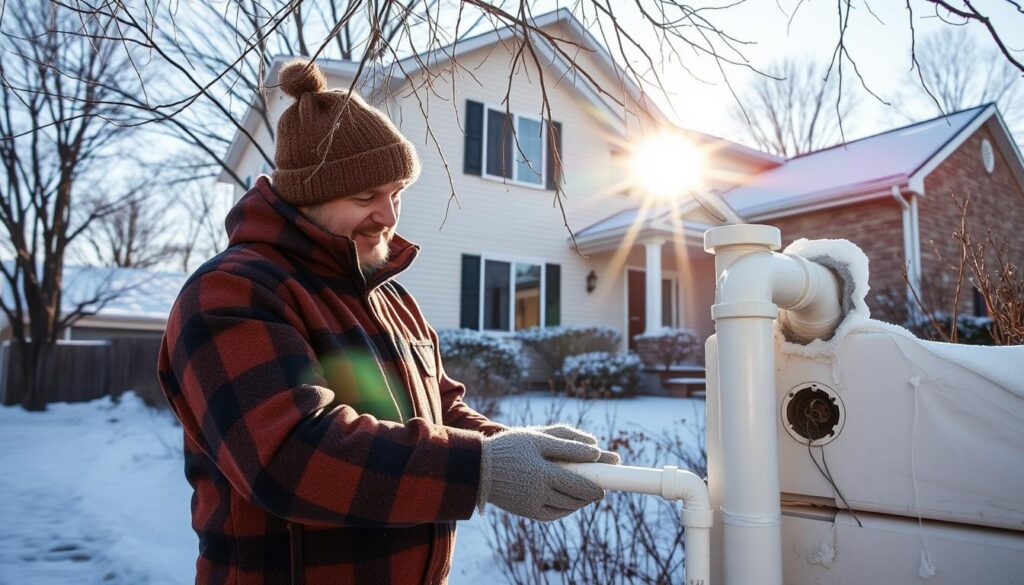
As temperatures drop, pipes without protection are at risk of freezing and bursting. This guide will show you how to winterize your home’s plumbing. This way, your home stays safe and functional during the cold months.
Winterizing your pipes needs careful planning and execution. Whether you live in Minnesota or Alaska, knowing these steps can save you thousands. It also helps prevent major damage to your property.
Key Takeaways
- Winterizing prevents expensive pipe damage
- Early preparation is key for protection
- Different regions need unique winterization strategies
- DIY methods can lower professional maintenance costs
- Insulation is your main defense against freezing
Table of Contents
Understanding the Importance of Plumbing Winterization
Winter can be tough on your home’s plumbing if you’re not ready. It’s key to get your plumbing ready for winter to avoid damage from cold. Water expands when it freezes, which can burst your pipes.
Why Pipes Freeze and Burst
Knowing why pipes freeze helps you prevent it. When water gets below 32°F, it freezes and expands. This can put a lot of pressure on your pipes, strong enough to burst them.
- Pipes in unheated areas are most vulnerable
- Exterior walls and uninsulated spaces increase freezing risk
- Wind chill can accelerate pipe freezing
Risks of Neglecting Winter Preparation
Not preparing for winter can lead to big problems. A burst pipe can cause:
- Water damage to walls and floors
- Mold and mildew growth
- Expensive repairs that can cost over $5,000
- Disruption of your daily life
“An ounce of prevention is worth a pound of cure” – this is true for your home’s plumbing.
Best Time to Start Winterization
The best time to prevent frozen pipes is before the first frost. This is usually in late autumn, around October or early November. Preparing early lets you fix any plumbing issues before they become big problems.
Essential Tools and Materials for Winterizing Your Plumbing
Winterizing your plumbing system is key to protect your home. You’ll need the right tools and materials to avoid costly damage and pipe bursts.
For winter prep, gather a set of supplies for pipe insulation and protection. The right materials are vital for keeping your plumbing safe.
- Pipe insulation sleeves
- Antifreeze for pipes
- Foam pipe wrap
- Heat tape
- Caulking gun
- Weatherstripping
Choosing quality pipe insulation is essential. Foam tube insulation is best for pipes in cold spots like basements and attics.
| Material | Best Used For | Cost Range |
|---|---|---|
| Foam Pipe Insulation | Interior Pipes | $5-$15 per 6ft |
| Fiberglass Insulation | Exterior Pipes | $10-$25 per roll |
| Antifreeze for Pipes | Drainage Systems | $15-$30 per gallon |
Quality antifreeze for pipes is a smart investment. It prevents costly repairs by keeping water from freezing in unheated areas.
How to Winterize Plumbing in a House: Step-by-Step Process
Winterizing your home’s plumbing is key to avoid expensive damage in cold months. By taking a step-by-step approach, you can keep your pipes and fixtures safe from freezing and bursts.
Winterizing means shutting off water supply and draining the system well. Your aim is to remove all water and shield your plumbing from freezing.
Locating the Main Water Valve
Finding your main water valve is the first step. It’s usually in:
- Basement
- Crawl space
- Mechanical room
- Near the water meter
Systematic Water System Drainage
To drain the system right, follow these steps:
- Turn off the main water valve fully
- Open all faucets to let out water pressure
- Flush toilets to empty water tanks
- Use compressed air to blow out plumbing lines
Adding Protective Antifreeze
After draining, add non-toxic antifreeze to key fixtures:
| Fixture Type | Antifreeze Amount |
|---|---|
| Toilets | 1-2 cups |
| Sink Drains | 1/2 cup |
| Shower Drains | 1 cup |
Pro tip: Always use plumbing-specific antifreeze, never automotive antifreeze, which can damage your pipes.
Protecting Interior Plumbing Systems
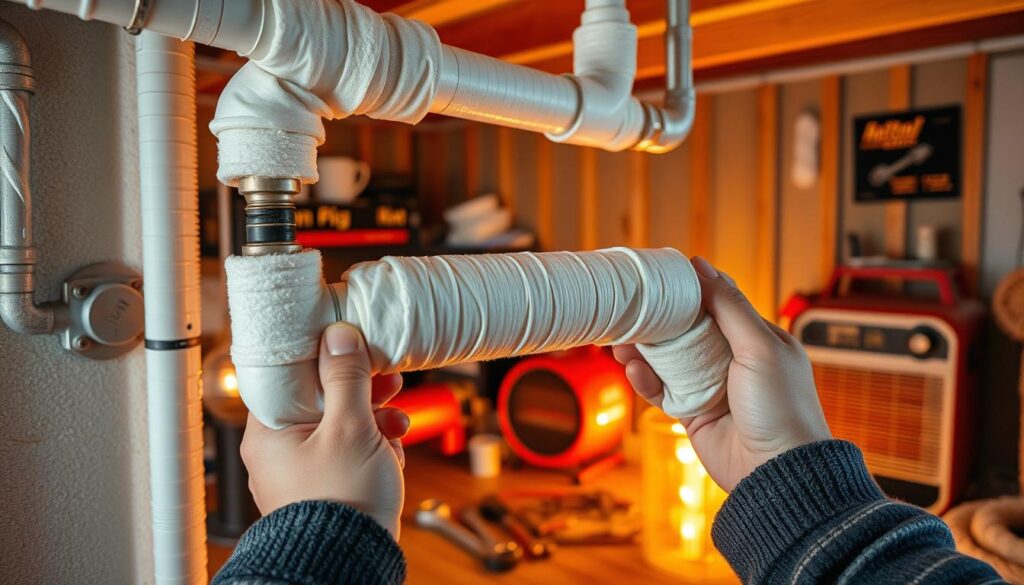
Winterizing your home’s pipes is key to avoiding frozen pipes in cold weather. Your pipes can freeze when it gets too cold, mainly in areas without much heat.
It’s important to focus on these areas to stop pipes from freezing:
- Underneath kitchen and bathroom sinks
- Basement and crawl spaces
- Unheated interior spaces
- Pipes near exterior walls
Opening cabinet doors under sinks is a good way to keep pipes from freezing. This lets warm air reach the pipes. Keeping your home’s temperature between 55-65 degrees Fahrenheit also helps.
For unheated areas, try these steps to protect your pipes:
- Use foam pipe insulation sleeves
- Apply heat tape around vulnerable pipe sections
- Seal air leaks near pipe locations
- Install additional wall insulation
Professional tip: Pay extra attention to pipes in unheated zones like attics, garages, and basement perimeters. These areas are most susceptible to freezing temperatures.
Proactive winterization can save you thousands in possible water damage repairs.
By using these methods, you can keep your home’s pipes safe from winter’s cold.
Winterizing Exterior Plumbing Components
It’s important to protect your home’s exterior plumbing in winter. Cold weather can damage outdoor pipes and fixtures, leading to expensive repairs. Winterizing pipes means focusing on several key areas.
Outdoor plumbing is at high risk of freezing. Proper winterization can save you from costly repairs and water damage.
Outdoor Spigots and Hoses
Disconnecting garden hoses is a key step in winterizing pipes. Here’s what to do:
- Disconnect all garden hoses from outdoor spigots
- Drain hoses completely before storing
- Use foam covers or insulated caps on exterior faucets
- Install frost-free hose bibbs if possible
Irrigation System Protection
Your irrigation system needs extra care in winter. Not winterizing it properly can cause a lot of damage.
| Irrigation System Component | Winterization Action |
|---|---|
| Underground Pipes | Blow out with compressed air |
| Sprinkler Heads | Remove and drain completely |
| Control Valves | Insulate or disconnect |
Foundation Vent Management
Foundation vents help keep cold air out of your plumbing. Good vent management can lower the chance of frozen pipes.
- Install vent covers during winter months
- Seal any gaps around foundation vents
- Use weatherstripping for additional protection
By following these steps, you can keep your exterior plumbing safe from winter’s cold. This will help avoid expensive repairs.
Water Heater Winterization Techniques
Keeping your water heater safe during winter is key for your home’s plumbing. Cold weather can harm your water heater if you don’t prepare it right.
Winterizing your water heater involves several important steps. These steps help protect your investment and avoid expensive repairs:
- Shut off the power supply (gas or electric) to the water heater
- Close the cold water inlet valve
- Drain the entire water tank completely
- Insulate the water heater and surrounding pipes
For tank water heaters, winterization is critical. You need to connect a garden hose to the drain valve. Let all water flow out completely. Partial draining can lead to sediment buildup and damage from freezing.
Tankless water heaters need special care in winter. Here’s what you should do:
- Disconnect power sources
- Remove any remaining water from internal parts
- Apply antifreeze made for water heater systems
Getting professional help is a good idea for winterizing your water heater. If you’re not sure about the steps, a licensed plumber can help. They know how to prepare your home’s plumbing for winter.
Insulation Strategies for Pipes and Fixtures
Keeping your home’s plumbing safe from freezing is key. It helps avoid costly water damage. Smart insulation can save you money and stress during winter.
Homeowners have many pipe insulation options. Choosing the right one is important for your plumbing’s safety.
Types of Pipe Insulation
- Foam Sleeve Insulation: Lightweight and easy to install, ideal for most residential pipes
- Fiberglass Wrap: Provides excellent thermal protection for high-temperature areas
- Heat Tape: Active heating solution for pipes in extremely cold regions
- Rubber Pipe Insulation: Durable and moisture-resistant option
Critical Areas Requiring Extra Protection
Some areas of your home need extra care to prevent frozen pipes. Pay special attention to these spots:
- Exterior wall pipes
- Unheated basement spaces
- Crawl spaces
- Attic pipe connections
- Garage plumbing lines
Professional vs DIY Installation
Deciding between hiring a pro or doing it yourself depends on your skills and home needs. DIY can be cheaper, but a pro ensures thorough protection.
Pro tip: When in doubt, consult a professional plumber to assess your home’s unique insulation requirements.
Proper pipe insulation is a smart investment. It protects your plumbing from winter’s worst. By acting early, you can keep your plumbing safe.
Special Considerations for Vacation Homes
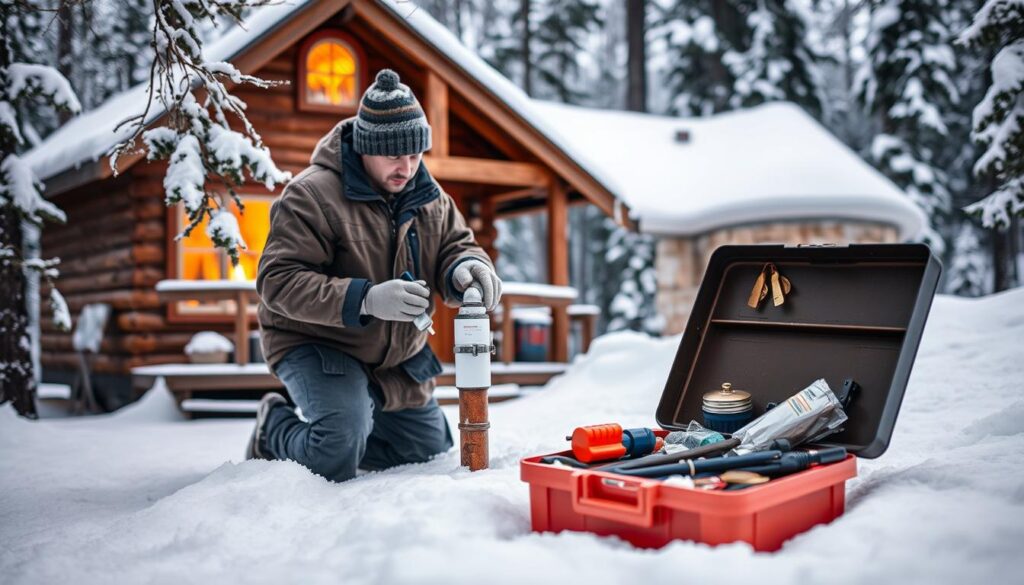
Winterizing pipes in a vacation home needs extra care and planning. Snowbirds and seasonal homeowners face special challenges. They must prepare their homes for long periods without them during the cold months.
To protect your vacation home, you must take detailed steps. Important strategies include:
- Complete drainage of water systems
- Installing smart home monitoring devices
- Using automated temperature control systems
- Implementing professional property check services
Your winter prep should aim to avoid water damage. Winterizing pipes well means fixing both inside and outside plumbing issues.
| Vacation Home Winterization Checklist | Recommended Action |
|---|---|
| Water System Drainage | Complete evacuation of water from pipes |
| Temperature Monitoring | Install remote sensors and smart thermostats |
| Emergency Preparedness | Local contact for property inspection |
Professional services can offer detailed winterization plans for your vacation home. They know the local climate and can apply the right protection.
Proactive winterization can save you from expensive repairs and damage. Spend time getting your vacation home ready. This way, you can relax knowing it’s safe during the winter.
Common Winterization Mistakes to Avoid
Keeping your home’s plumbing safe in winter needs careful steps. Many people make big mistakes that can cause a lot of damage. These errors can ruin your home’s plumbing system.
Understanding the common mistakes is key to avoiding frozen pipes. It’s all about knowing what not to do.
- Neglecting to drain exterior water lines completely
- Failing to insulate pipes in unheated spaces
- Turning off home heating during cold periods
- Overlooking small cracks or possible draft areas
One big mistake is setting the thermostat too low. Experts say keep your home at least 55°F to stop pipes from freezing. Pipes in places like basements, attics, and crawl spaces are most at risk.
Not getting a professional check can also cause problems. While you can winterize your home yourself, some plumbing systems need a pro’s touch. This ensures they’re fully protected from winter damage.
Remember: Prevention is always cheaper than repair when it comes to home plumbing winter preparation.
By avoiding these mistakes, you can lower the chance of pipes bursting and expensive water damage. This is true during the coldest months.
Conclusion
Winterizing your home’s plumbing is key to avoiding costly repairs and headaches. It helps prevent pipes from freezing and bursting in cold weather. The secret is to be proactive and pay attention to details.
Preparing your plumbing for winter involves several important steps. You need to insulate pipes, drain water systems, and protect outdoor parts. Each step is vital for your home’s safety. Remember, the effort you put in now can save you thousands of dollars later.
It’s important to act before the first frost hits. Check all vulnerable pipes, outdoor faucets, and systems that rely on water. If you’re not sure what to do, get help from a professional plumber. They can guide you and ensure your plumbing is well-protected.
Protecting your plumbing is about keeping your home safe and your mind at ease during winter. With the right planning and winterization, your water systems will work well. And you’ll avoid unexpected problems.