
Affiliate Disclosure
Plumber Guide Guys is a participant in the Amazon Services LLC Associates Program, an affiliate advertising program designed to provide a means for sites to earn advertising fees by advertising and linking to Amazon.
Is HVAC Plumbing? Ever thought about what keeps your home comfy? Is HVAC plumbing just a fancy term, or is it something deeper that affects your daily life?
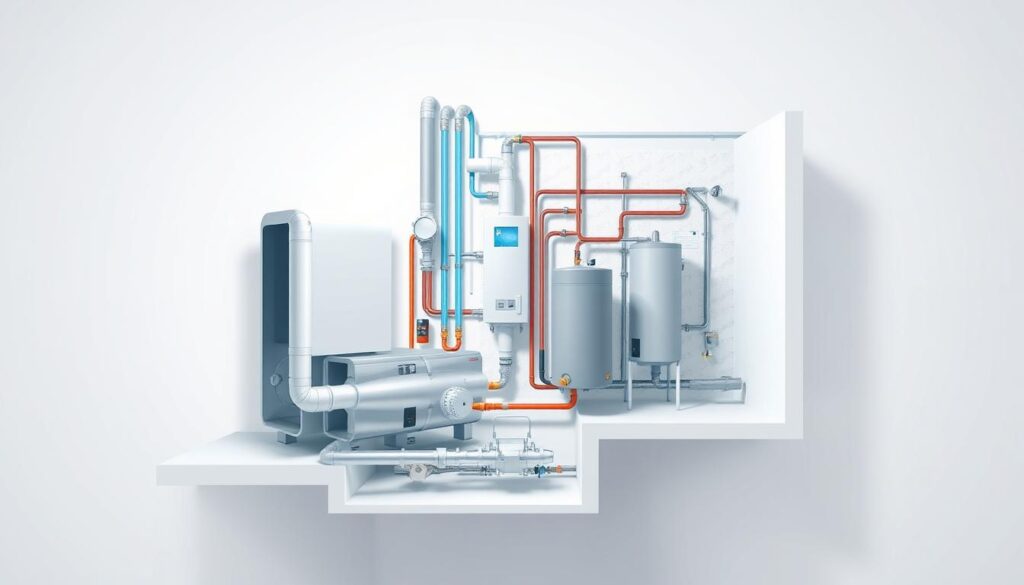
HVAC plumbing is key to keeping your home’s systems in check. It’s not just about pipes. It’s about heating, ventilation, air conditioning, and water management all working together. This ensures your home stays comfortable, efficient, and functional.
Professional HVAC techs know HVAC plumbing is more than just pipes. The debate between HVAC and plumbing shows how these systems are connected. They work together to keep your living or work space perfect.
Key Takeaways
- HVAC plumbing combines multiple technical systems
- Specialized skills are required for effective system management
- Modern buildings rely on integrated comfort solutions
- Proper maintenance ensures long-term system performance
- Understanding system connections improves overall efficiency
Understanding the Connection Between HVAC and Plumbing Systems
Modern buildings have complex networks of hvac and plumbing systems. These systems work together to make living spaces comfortable and functional. They are key to keeping your home comfortable, efficient, and well-performing.
Combining hvac and plumbing systems needs special knowledge and careful design. Experts know how these systems interact to support your home’s needs.
Key System Components
The main parts of integrated hvac and plumbing systems are:
- Water heaters
- Boiler systems
- Drainage pipes
- Ventilation networks
- Cooling and heating equipment
Integration Points in Modern Buildings
Specific areas where hvac and plumbing systems connect include:
| System | Integration Point | Function |
|---|---|---|
| HVAC | Condensate Drainage | Water removal from cooling systems |
| Plumbing | Water Circulation | Supporting heating mechanisms |
| Combined System | Boiler Connections | Heating water and space |
Basic Functionality Overview
Your home’s comfort relies on hvac and plumbing systems working well together. Skilled technicians make sure these systems work efficiently. They prevent problems and keep everything running smoothly.
“The art of home comfort lies in understanding how different systems work together.” – HVAC Professional
Is HVAC Plumbing Different from Traditional Plumbing?
Knowing the difference between HVAC and traditional plumbing is key for everyone. Both deal with water systems, but they are not the same. They have unique features that make them different.
Traditional plumbers mainly work on your home’s water and waste pipes. They do things like:
- Repairing water pipes
- Installing fixtures
- Unclogging drains
- Managing water supply lines
HVAC technicians, on the other hand, need special skills. They handle complex systems that go beyond simple plumbing tasks.
| Traditional Plumbing | HVAC Plumbing |
|---|---|
| Water supply management | Temperature regulation systems |
| Drain cleaning | Condensate drainage |
| Fixture installation | Complex system integration |
| Leak repair | Refrigerant line management |
HVAC plumbing experts need deep technical knowledge. They work with systems that mix water management, electrical parts, and temperature control.
Your home’s comfort relies on knowing the differences between traditional and HVAC plumbing services.
Core Functions of HVAC Systems in Your Home
Understanding HVAC systems is key to appreciating your home’s comfort. Your HVAC does more than just control temperature. It also keeps the air clean and makes your home comfortable.
HVAC systems are complex, combining plumbing and heating/cooling. This integration makes your home comfortable and energy-efficient.
Heating and Cooling Mechanisms
Modern HVAC systems use advanced tech for heating and cooling. They include:
- Heat pumps that transfer thermal energy
- Furnaces generating warm air
- Central air conditioning units for cooling
- Refrigeration cycles for temperature control
When you ask if HVAC includes plumbing, think about water’s role. HVAC systems need water for the best performance.
Ventilation Requirements
Good ventilation is vital for clean indoor air. Your HVAC system moves and filters air, removing:
- Dust and allergens
- Excess moisture
- Potential pollutants
- Stale air
Temperature Control Systems
Advanced thermostats and zoning tech offer precise temperature control. Smart home integration lets you control your home’s climate with great accuracy. This ensures comfort and saves energy.
Essential Plumbing Components in HVAC Operations
Understanding plumbing in HVAC work means looking closely at special parts that make these systems work well. The difference in HVAC plumbing is seen in the detailed network of pipes, drains, and connections. These support heating and cooling.
Key plumbing parts are vital in HVAC systems:
- Condensate Drain Lines: Remove moisture from air conditioning units, preventing water buildup
- Boiler Piping Systems: Circulate heated water through radiators and underfloor heating networks
- Chilled Water Pipes: Distribute cooled water for temperature regulation
Your HVAC system needs precise plumbing connections to work best. Boilers, for example, use special water circulation that’s different from home plumbing.
Professionals know that HVAC success needs both plumbing and thermal management skills.
Putting plumbing parts into HVAC systems needs special knowledge. Technicians must get how water flow, drainage, and heat transfer work together. This creates comfortable indoor spaces.
The Role of Water in HVAC Systems
Water is key in hvac and plumbing systems. It affects how well these systems work. Knowing how water and HVAC systems interact can make your home more comfortable and efficient.
Exploring hvac plumbing shows water’s importance. It’s not just a medium; it’s vital for heating and cooling. Your home’s comfort depends on good water management in these systems.
Boiler Systems and Water Circulation
Boiler systems need precise water circulation to work well. This involves:
- Heating water to specific temperatures
- Pumping heated water through radiators or underfloor heating
- Maintaining consistent thermal distribution
Condensate Drainage Management
Good condensate drainage is key to avoid moisture problems. Your HVAC system makes condensation when cooling. This must be removed well to keep the system working right.
Water Quality Impact
Water quality affects hvac and plumbing system performance and life. Mineral buildup, corrosion, and impurities can lower system efficiency. Regular water treatment and filtration are important for upkeep.
Effective water management is the cornerstone of high-performing HVAC systems.
Professional Requirements for HVAC Plumbing Technicians
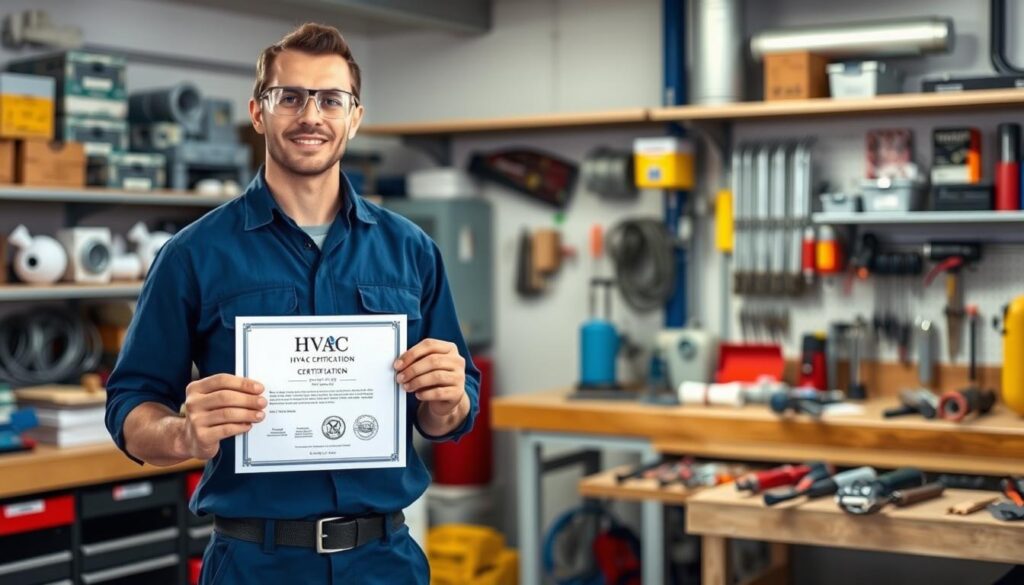
To become a professional hvac plumbing technician, you need to get the right training and meet certain qualifications. This career path requires more than just basic trade skills. It involves deep education and skill building.
Here’s what you need to start your journey:
- High school diploma or equivalent educational background
- Technical training program in HVAC and plumbing systems
- Comprehensive apprenticeship program
- State-specific hvac plumbing certification
The apprenticeship lasts 4-5 years. It includes both classroom learning and practical training. You’ll learn essential skills in installing, maintaining, and fixing systems.
Getting your hvac plumbing certification shows you’re an expert. Most states require passing a tough exam. This exam checks your technical knowledge and practical skills.
Professional development doesn’t stop after initial certification. Continuous learning is key in this fast-changing field.
Key areas for certification include understanding complex HVAC and plumbing systems. Technicians must keep up with new technologies and rules to keep their credentials.
- Technical knowledge
- Practical skill assessment
- Safety protocol understanding
Investing in your education as an hvac plumbing technician leads to great career chances. You can work in homes, businesses, and industries.
Common HVAC Plumbing Maintenance Tasks
Keeping your home’s HVAC and plumbing systems in top shape is key. It needs regular checks and expert knowledge. Plumbing services that include HVAC require a detailed approach to ensure everything works well.
It’s important to remember that HVAC and plumbing are connected. Regular upkeep stops expensive fixes and keeps systems running at their best.
Regular Inspection Protocols
Good maintenance means following a set of steps to check your home’s systems:
- Inspect drain lines for blockages
- Check water pressure and quality
- Look for leaks in pipe connections
- Test how well the system works
Preventive Maintenance Schedule
Having a plan for maintenance is smart. Here are some steps to follow:
- Do quarterly checks on HVAC and plumbing
- Get a professional to evaluate your systems every six months
- Have a full system tune-up once a year
- Change filters and clean drainage systems
“Preventive maintenance is always cheaper than emergency repairs.” – HVAC Professional Wisdom
Professional tip: Schedule maintenance during shoulder seasons when HVAC systems are less stressed.
Troubleshooting HVAC Plumbing Issues
When you mix HVAC and plumbing, you face special challenges. These need a deep understanding of both fields. The difference is clear when you’re trying to fix complex problems.
Spotting issues in these systems takes a detailed approach. Both homeowners and techs must catch problems early to avoid big fixes.
- Water leakage around HVAC equipment
- Condensate line blockages
- Irregular temperature performance
- Unusual system noises
- Unexpected pressure fluctuations
Experts use advanced tools to find and fix system problems. They know how heating, cooling, and water work together.
| Issue Type | Potential Cause | Recommended Action |
|---|---|---|
| Condensate Drain Clog | Algae/Mineral Buildup | Professional Cleaning |
| Boiler Pressure Drop | Seal Deterioration | Component Replacement |
| Water Heater Inefficiency | Sediment Accumulation | System Flush |
Fixing problems in HVAC and plumbing systems needs a strategic approach. Spotting issues early helps avoid expensive repairs and keeps systems running well.
Energy Efficiency Considerations in HVAC Plumbing
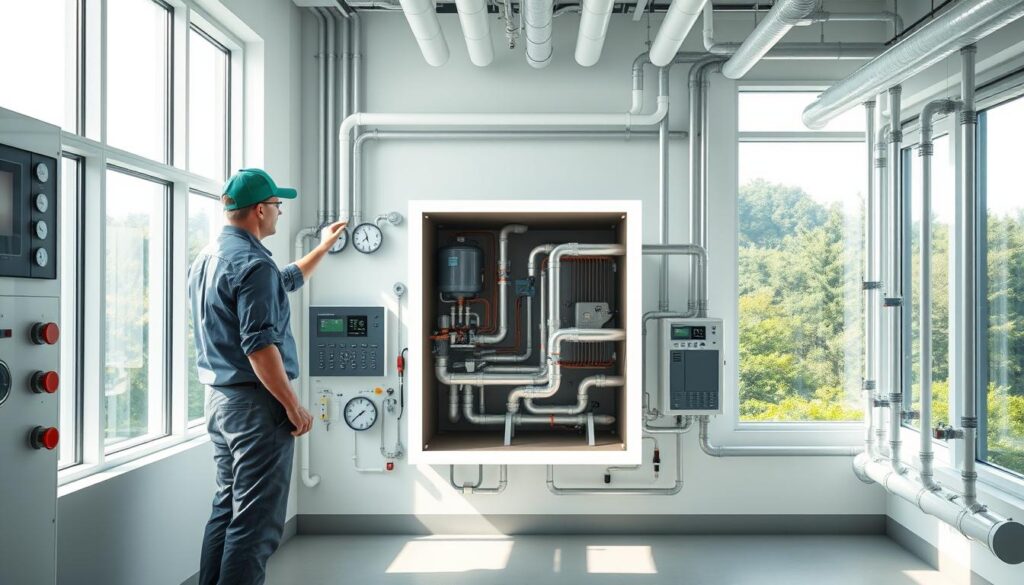
Improving energy efficiency in your home’s HVAC and plumbing systems can cut down on costs and environmental harm. More homeowners are looking for plumbing services that also handle HVAC to boost their home’s energy use.
Smart Cost-Saving Strategies
There are smart ways to lower energy use in your HVAC plumbing setup. Here are some top tips:
- Install high-efficiency water heaters
- Upgrade pipe insulation
- Use programmable thermostats
- Conduct regular system maintenance
System Performance Optimization
For your HVAC and plumbing systems to work well, they need good design and ongoing checks. Experts can fine-tune your systems for better performance.
| Optimization Technique | Energy Savings |
|---|---|
| Thermal insulation upgrades | 15-20% reduction |
| Water heater efficiency improvements | 10-15% reduction |
| Smart thermostat installation | 8-12% reduction |
Getting help from professional plumbing services with HVAC knowledge can change how your home uses energy. It leads to big savings and helps the planet.
Modern Innovations in HVAC Plumbing Technology
The world of HVAC and plumbing is changing fast with new tech. Today’s HVAC plumbing experts use advanced systems. These systems change how buildings handle temperature, water, and comfort.
Smart tech is making big changes in the field. It brings smart solutions that make things more efficient and better. Some of these new things include:
- IoT-enabled water management systems
- Advanced leak detection technologies
- Integrated climate control platforms
- Energy-efficient water circulation mechanisms
Chilled water systems are a big step forward in HVAC plumbing. They use complex pipe systems to move cooled water. This helps control indoor temperatures very well.
New tech lets HVAC plumbing experts control systems from afar. Wireless sensors and cloud platforms help with real-time checks, maintenance, and tracking.
Smart water heaters show how HVAC and plumbing tech work together. They can talk to home systems, adjusting water temperature and use based on home habits and energy needs.
The future of HVAC plumbing is about smart, connected systems that focus on being green and making people comfortable.
As tech keeps getting better, HVAC plumbing pros need to keep up. They must learn about these new solutions to offer the best service and use the latest in building management tech.
Safety Considerations and Building Codes
Working with HVAC plumbing is complex. It needs a good grasp of safety rules and building codes. For your home and family’s safety, getting professional certification is key.
Certified HVAC plumbers follow strict safety rules. Their skills and training are what keep you safe.
Compliance Requirements You Should Know
- Get proper hvac plumbing certification from known industry groups
- Follow local and state building codes
- Keep up with the latest safety standards
- Use only approved materials and methods
Critical Emergency Protocols
Certified pros know how to handle emergencies. They follow these steps:
- They know how to shut down systems fast
- They can spot and stop gas leaks
- They prevent water damage
- They manage electrical hazards
Don’t risk your home’s safety by cutting corners. Always choose certified pros who put safety first.
Conclusion
HVAC plumbing is key in modern buildings, blending heating, cooling, and water systems. The field has grown, needing special skills and a deep understanding of complex systems. Your home or business relies on these networks for comfort and efficiency.
The difference between HVAC and plumbing is clear when you look at how they work together. Technicians must know how to manage water, air, and temperature. This knowledge keeps systems running smoothly and prevents breakdowns.
Choosing professional HVAC plumbing services protects your property and ensures it works well for years. As technology improves, the need for skilled technicians grows. Knowing about these systems can save you money and time in the long run.
Think of HVAC plumbing as more than just a service—it’s a way to make your space comfortable and efficient. Choose experts who understand the connections between heating, cooling, and water systems.
FAQ
What exactly is HVAC plumbing?
HVAC plumbing combines heating, ventilation, air conditioning, and plumbing. It deals with water parts in these systems. This includes condensate lines, boiler systems, and water flow. These are key for comfort and system efficiency.
How is HVAC plumbing different from traditional plumbing?
HVAC plumbing focuses on water parts in heating and cooling systems. It needs knowledge of both HVAC and plumbing. This includes managing condensate lines and water-based cooling systems.
Do I need a special technician for HVAC plumbing?
Yes, you need a technician with HVAC and plumbing skills. They know how to work with heating, cooling, and water systems. This ensures systems are installed and maintained right.
What are the key components of HVAC plumbing?
Important parts are condensate lines, boiler systems, and chilled water piping. Also, water circulation and heating systems are key. They manage water flow and temperature in buildings.
How does water quality impact HVAC systems?
Water quality is very important for HVAC systems. Bad water can cause problems like scale buildup. It can also damage equipment and affect heat transfer.
Can HVAC plumbing help improve energy efficiency?
Yes, it can! HVAC plumbing helps by improving water heating and insulation. It also uses new technologies to save energy and cut costs.
What certifications are required for HVAC plumbing technicians?
Technicians need HVAC and plumbing certifications. They also need training in both fields. This includes apprenticeships and ongoing learning to keep up with new tech.
What are common HVAC plumbing maintenance tasks?
Maintenance tasks include system checks and condensate line inspections. Also, cleaning filters, testing water quality, and checking boilers are important. It’s about keeping systems running well.
How often should HVAC plumbing systems be serviced?
Systems should be checked twice a year, before heating and cooling seasons. But, it depends on the system’s age, use, and what the maker says.
What are some emerging technologies in HVAC plumbing?
New tech includes smart water heaters and advanced leak detection. There’s also IoT monitoring, energy-saving pumps, and better temperature control. These improve comfort and save energy.