

Affiliate Disclosure
Plumber Guide Guys is a participant in the Amazon Services LLC Associates Program, an affiliate advertising program designed to provide a means for sites to earn advertising fees by advertising and linking to Amazon.
How to Become a Plumber Ohio? Did you know plumbers in Ohio can make up to $70,000 a year without a college degree? Becoming a plumber in Ohio is a great and profitable career choice. It’s perfect for those who love working with their hands and solving problems.
Choosing to become a plumber in Ohio is a smart move. It combines practical skills, technical training, and real-world experience. You’ll turn your passion for fixing things and working with machines into a fulfilling job.
This guide will show you how to become a licensed plumber in Ohio. You’ll learn about education, apprenticeships, and licensing. It’s your roadmap to success in this important and exciting trade.
Key Takeaways
- No college degree required to become a plumber in Ohio
- Multiple career progression paths available
- Competitive salary in skilled trades
- Apprenticeship programs offer structured learning
- High demand for skilled plumbing professionals
Table of Contents
Overview of the Plumbing Career in Ohio
The plumbing industry in Ohio is booming, with lots of job opportunities for skilled workers. Plumbers are key in keeping homes and businesses running smoothly. With new buildings and repairs, the demand for plumbers is high.
Being a plumber in Ohio is more than a job. It’s a career that needs technical skills, problem-solving, and hard work. You’ll face new challenges every day and have chances to grow professionally.
Current Industry Demand
Ohio’s construction and infrastructure projects need skilled plumbers. The state’s strong economy means there are many jobs in different places:
- Residential construction projects
- Commercial building maintenance
- Industrial facility installations
- Municipal infrastructure development
Average Salary Expectations
Plumbers in Ohio can expect good pay based on their experience and skills. Salaries change as you move up in your career:
| Career Stage | Average Annual Salary |
|---|---|
| Apprentice Plumber | $35,000 – $45,000 |
| Journeyman Plumber | $55,000 – $75,000 |
| Master Plumber | $75,000 – $100,000 |
Career Growth Opportunities
Ohio’s plumbing industry offers great chances for career growth. By improving your skills and getting more certifications, you can:
- Move from apprentice to master plumber
- Focus on commercial or industrial plumbing
- Start your own plumbing business
- Teach or consult as a plumbing expert
Investing in your plumbing career in Ohio can lead to a stable, lucrative, and fulfilling professional journey.
Educational Requirements and Prerequisites
Starting a career in plumbing requires a solid educational base. Plumbing trade schools in Ohio provide essential paths for those eager to join this field.
First, you need to meet some basic requirements. A high school diploma or GED is essential for entering these schools. High school courses like math, physics, and computer technology are also important. Classes in shop and mechanical drawing can be very helpful too.
- Mathematics (algebra and geometry)
- Physics
- Computer technology
- Shop and mechanical drawing classes
Plumbing trade schools in Ohio offer more than just basic education. Their programs last from six months to two years. You’ll learn about pipe system design, blueprint reading, safety, and hands-on technical skills.
- Pipe system design
- Blueprint reading
- Safety protocols
- Practical hands-on technical skills
Pro tip: Many trade schools partner with local apprenticeship programs. This makes it easy to move from classroom to real-world experience.
Becoming a professional plumber can take up to five years. This includes both education and apprenticeship. The journey is demanding but the job stability in Ohio’s plumbing industry makes it worth it.
Education is the cornerstone of a successful plumbing career in Ohio.
How to Become a Plumber Ohio: Step-by-Step Process
Starting a career as a plumber in Ohio needs careful planning and hard work. The journey to becoming a professional plumber has key steps. These steps will help you build a strong career in the trades.
High School Preparation
Your journey to become a plumber in Ohio starts in high school. Focus on core subjects that lay a strong technical foundation:
- Mathematics (algebra and geometry)
- Physics
- Basic computer skills
- Shop or technical education classes
Technical School Pathways
Technical schools are key for aspiring plumbers in Ohio. They offer specialized training that goes hand-in-hand with apprenticeships. Look for accredited programs that cover:
- Comprehensive plumbing theory
- Blueprint reading
- Pipe system design
- Safety protocols
Apprenticeship Programs
Apprenticeship programs in Ohio are vital for professional growth. They last 4-5 years, mixing classroom learning with real-world training. Local unions and trade groups like the Ohio Pipe Trades Association provide these opportunities.
Apprenticeships offer about 2,000 hours of paid training and 144 hours of technical classes each year.
To become a plumber in Ohio, you must:
- Finish a state-approved apprenticeship program
- Get the needed certifications
- Pass required exams
- Keep up with ongoing professional development
By taking these steps, you can lay a solid base for a fulfilling career in plumbing in Ohio’s lively job market.
Ohio Plumber Licensing Requirements
Understanding the ohio plumber licensing requirements can seem tough. But, it’s key for those wanting to be plumbers in Ohio. The state has a clear process for plumbing certification. This ensures plumbers are skilled and keep everyone safe.

To legally work as a plumber in Ohio, you must meet certain standards. The licensing process has several steps. These steps show your skills and knowledge.
- Obtain a high school diploma or GED
- Complete an approved plumbing apprenticeship program
- Pass the state licensing examination
- Submit required documentation
- Pay necessary licensing fees
Ohio has different plumbing licenses for various levels of experience:
| License Type | Requirements | Duration |
|---|---|---|
| Apprentice Plumber | Entry-level training under supervision | 1-4 years |
| Journeyman Plumber | Completed apprenticeship, passed exam | Renewable every 3 years |
| Master Plumber | Advanced certification, additional experience | Renewable every 3 years |
“Proper licensing is your gateway to a successful plumbing career in Ohio.” – Ohio State Contractors Board
Keeping your license means you must keep learning. You also need to know the latest building codes and rules. The ohio plumber licensing requirements are in place to protect everyone.
Apprenticeship Programs and Training
Starting a plumbing apprenticeship in Ohio needs careful planning. It’s about understanding the training process. Aspiring plumbers can grow their careers through apprenticeships that mix hands-on experience with technical skills.
Finding Your Apprenticeship Opportunity
Finding the right plumbing apprenticeship in Ohio requires several steps:
- Contact local plumbers’ unions in major Ohio cities
- Explore apprenticeship programs through vocational schools
- Check Ohio State Apprenticeship Council resources
- Network with professional plumbing associations
Program Duration and Requirements
Plumbing apprenticeships last four to five years. They include tough training:
| Training Component | Annual Hours |
|---|---|
| On-the-Job Training | 2,000 hours |
| Technical Classroom Instruction | 144 hours |
| Total Program Duration | 4-5 years |
Compensation During Training
Plumbing apprentices in Ohio earn good wages that grow over time. Your starting wage is usually 40-50% of a journeyman plumber’s rate. Wages increase as you meet training goals.
“An apprenticeship is your pathway to a stable, rewarding career in the skilled trades.” – Ohio Trades Council
By exploring plumbing apprenticeships in Ohio, you can lay a strong foundation for a plumbing career.
Journeyman Plumber Certification Process
To become a licensed journeyman plumber in Ohio, you must follow a detailed process. The ohio journeyman plumber exam is a key step in your plumbing career.
You need to meet certain requirements to take the ohio journeyman plumber exam. These include finishing an apprenticeship and gaining lots of on-the-job experience. This shows you know your stuff and can do the job well.
- Complete 4-5 years of apprenticeship training
- Document minimum 8,000 hours of verified work experience
- Prepare for a detailed licensing exam
The exam tests your knowledge in important areas of plumbing. This includes:
| Exam Section | Key Topics |
|---|---|
| Technical Knowledge | Plumbing codes, safety rules, system design |
| Practical Skills | How to install and fix things, choosing materials |
| Legal Requirements | State and local plumbing laws |
Those who pass must show they really get plumbing systems, local codes, and professional rules. You should study hard, practice with exams, and look at Ohio’s plumbing rules.
Once you pass, you get your official certification. But, don’t forget, you must keep learning and renew your license to stay up-to-date with new tech and rules.
Master Plumber License Requirements
Getting a master plumber license is the top goal for skilled tradespeople in Ohio. It shows you’re an expert and serious about plumbing.
Getting a master plumber license in Ohio means you’ve passed many tests. These tests show you know a lot about plumbing and have lots of experience.
Experience Requirements
To get a master plumber license in Ohio, you need a lot of experience:
- At least 4-5 years as a licensed journeyman plumber
- Proof of your plumbing work
- Experience in both homes and businesses
Examination Details
The master plumber test in Ohio checks your deep plumbing knowledge:
| Exam Component | Focus Areas | Passing Score |
|---|---|---|
| Written Exam | Advanced plumbing codes and rules | 70% or higher |
| Practical Assessment | Technical skills and solving problems | Show you can do it |
License Maintenance
To keep your master plumber license in Ohio, you must keep learning:
- Take 8 continuing education hours every year
- Renew your license every three years
- Keep up with new plumbing codes and tech
“Becoming a master plumber is not just about technical skills, but about commitment to professional excellence.” – Ohio Plumbing Board
Working hard to become a master plumber opens many doors. You can take on more complex jobs or even start your own plumbing business.
Essential Skills and Tools for Ohio Plumbers
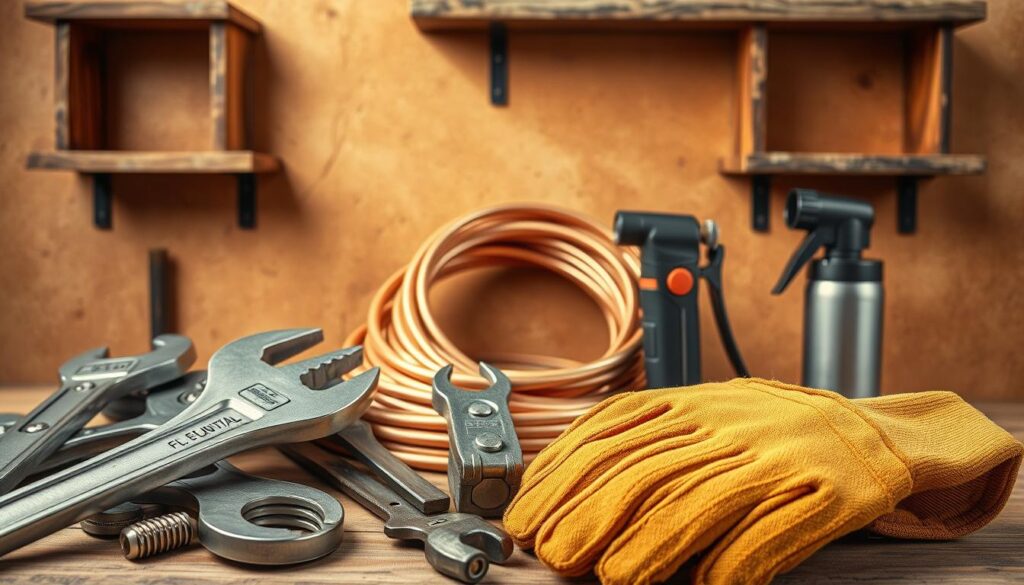
To be a top plumber in Ohio, you need to know a lot. You must understand the ohio plumbing code well. This includes knowing the rules and being good at technical stuff.
Having the right tools is very important. Plumbers use many tools to fix tough plumbing problems.
Critical Technical Skills
- Pipe fitting and soldering techniques
- Reading and interpreting technical blueprints
- Understanding hydraulic systems
- Troubleshooting complex plumbing issues
Essential Plumbing Tools
| Tool Category | Specific Tools | Primary Purpose |
|---|---|---|
| Cutting Tools | Pipe cutters, hacksaws | Precise pipe sizing |
| Fastening Tools | Pipe wrenches, adjustable wrenches | Tightening and securing connections |
| Measuring Tools | Tape measure, levels | Accurate installation |
Soft skills are also very important. You need to be good at talking to people, solving problems, and helping customers. These skills help you do well in your job.
Professional Development
Keep learning to grow in your career. Stay up-to-date with the ohio plumbing code. Go to workshops and find mentors to improve your skills.
Business Opportunities and Self-Employment
Starting a plumbing business in Ohio is a great chance for skilled professionals. With an ohio plumbing certification, you can earn more. Licensed master plumbers can make up to six figures, more than entry-level technicians.
To start your plumbing business, you need to think about a few important things:
- Get business insurance and liability coverage
- Register your business with Ohio state authorities
- Make a good marketing plan
- Buy professional equipment and technology
Your ohio plumbing certification is a big plus. It shows you’re skilled and serious about quality service. Clients look for licensed pros like you.
Strategic business tips for aspiring plumbing entrepreneurs:
- Create a strong online presence with a professional website
- Connect with local contractors and home improvement pros
- Offer special services like emergency repairs or energy-efficient installs
- Keep improving your skills and certifications
With hard work and professional growth, you can turn your plumbing skills into a successful business. It will help your local community too.
Conclusion
Starting a career as a plumber in Ohio is both exciting and rewarding. This guide shows you how to turn your passion for skilled trades into a successful plumbing career. It takes dedication, technical training, and a commitment to keep learning.
The plumbing job market in Ohio is strong, with good pay and stable work. You’ll learn a lot by going through technical school and apprenticeships. Mastering the skills needed will set you up for long-term success.
Ohio’s construction and maintenance sectors need skilled plumbers. Getting the right license and staying up-to-date with training are key. Your path to becoming a plumber in Ohio involves understanding education, licensing, and practical skills.
Being a great plumber is not just about knowing how to fix pipes. It’s also about solving problems, being professional, and keeping up with new tech and practices. Your plumbing career is as far as you want it to go, if you’re ready to learn and grow.