
Affiliate Disclosure
Plumber Guide Guys is a participant in the Amazon Services LLC Associates Program, an affiliate advertising program designed to provide a means for sites to earn advertising fees by advertising and linking to Amazon.
What Do You Need to Be a Plumber? Are you ready to dive into a career that keeps America’s infrastructure flowing smoothly? What if you could turn your passion for problem-solving into a stable, in-demand job? This job offers both challenge and opportunity.
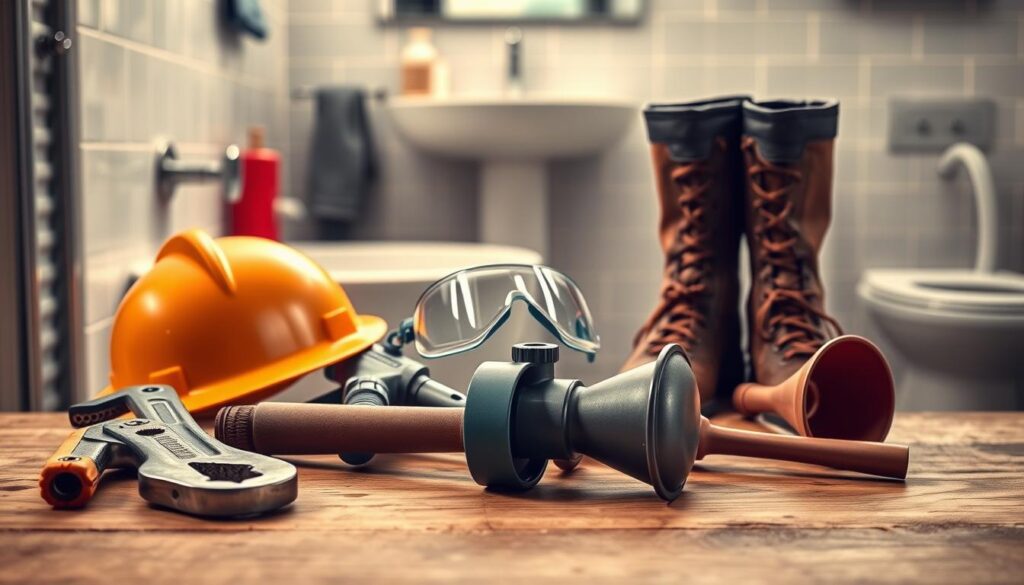
The plumbing industry is an exciting career path for those who love hands-on work and technical challenges. The U.S. Bureau of Labor Statistics says there are 473,400 plumbers in the U.S. and the job is growing 6% from 2023 to 2033. This makes plumbing a promising career for those interested.
Plumbing is more than fixing pipes. It’s about understanding complex systems, delivering critical services, and keeping public health and safety. To become a professional plumber, you need dedication, specific education, and a commitment to learning.
Key Takeaways
- Plumbing offers a stable career with significant growth.
- Technical skills and hands-on training are key to success.
- Licensing and certification are essential steps in the career path.
- Physical fitness and problem-solving abilities are important.
- Continuous learning is key to advancing in plumbing.
Table of Contents
The Essential Requirements for Becoming a Licensed Plumber
To become a licensed plumber, you must meet several key requirements. These ensure you’re ready for a successful career in the trades. Knowing the plumber licensing requirements is vital for those wanting to join this important profession.
The path to becoming a licensed plumber includes several important steps. These test your skills, knowledge, and readiness for the job.
Basic Educational Prerequisites
Your journey begins with basic education. Most states require certain educational steps to become a licensed plumber:
- High school diploma or equivalent GED
- Minimum age requirement of 18 years
- Basic mathematics and algebra skills
- Strong reading and comprehension abilities
Physical Requirements and Skills
Plumbing is a physically demanding job that needs specific abilities. You’ll need:
- Good physical strength and stamina
- Ability to lift heavy equipment
- Mechanical aptitude
- Problem-solving skills
- Excellent hand-eye coordination
Legal Requirements and Documentation
Understanding the legal side of plumber licensing involves preparing important documents:
- Valid government-issued identification
- Background check clearance
- Proof of completed educational requirements
- State-specific application forms
- Proof of apprenticeship or training hours
Each state has its own rules. So, it’s important to research your state’s specific requirements for becoming a licensed plumber.
Understanding Plumbing License Types and Classifications
Exploring plumber certification can be tricky. There are different license types that show your career growth in plumbing. Knowing these levels helps you plan your career and see what skills you need at each step.
Plumbing licenses mainly fall into three main categories:
- Apprentice Plumber
- Journeyman Plumber
- Master Plumber
Each level builds on the last one, needing more technical skills and hands-on experience. For example, in California, a Plumbers License is a C-36 Plumbing Contractor license. It needs certain skills and knowledge.
| License Type | Required Experience | Key Responsibilities |
|---|---|---|
| Apprentice | 0-4 years | Learning basic skills under supervision |
| Journeyman | 4-8 years | Independent work, complex installations |
| Master Plumber | 8+ years | Advanced projects, business ownership |
Reaching master plumber status is the highest achievement. These experts can handle big projects, design complex systems, and even run their own plumbing companies.
Remember, licensing rules for plumbers differ by state. So, check your local laws to find out what you need to get licensed.
What Do You Need to Be a Plumber: Training and Education Path
To become a professional plumber, you need a solid education and training plan. Your path to success includes learning both theory and practical skills.
There are many ways to start your plumbing career. The best paths usually mix education with real-world experience.
Exploring Plumbing Trade School Options
Plumbing trade schools offer detailed training programs. They prepare you for a career in plumbing. These schools teach essential skills and technical knowledge in a structured setting.
- Vocational programs last 6-24 months
- They cover blueprint reading and system design
- Technical courses teach pipe installation and repair
- Hands-on labs mimic real-world situations
Comprehensive Plumbing Apprenticeship Programs
Plumbing apprenticeships are the top choice for training. They mix classroom learning with on-the-job experience.
| Apprenticeship Program Details | Annual Requirements |
|---|---|
| Classroom Instruction | 144 hours |
| Practical Working Hours | 2,000 hours |
| Total Program Duration | 4-5 years |
On-the-Job Training Requirements
Getting hands-on experience is key to improving your plumbing skills. Apprenticeships often work with experienced plumbers for mentorship.
- Work under licensed plumber supervision
- Learn safety and industry standards
- Gain technical skills through real projects
- Expand your professional network
Staying committed to learning is vital for success in plumbing. Choosing the right mix of school and apprenticeships can lead to a fulfilling career.
Essential Tools and Equipment for Professional Plumbers
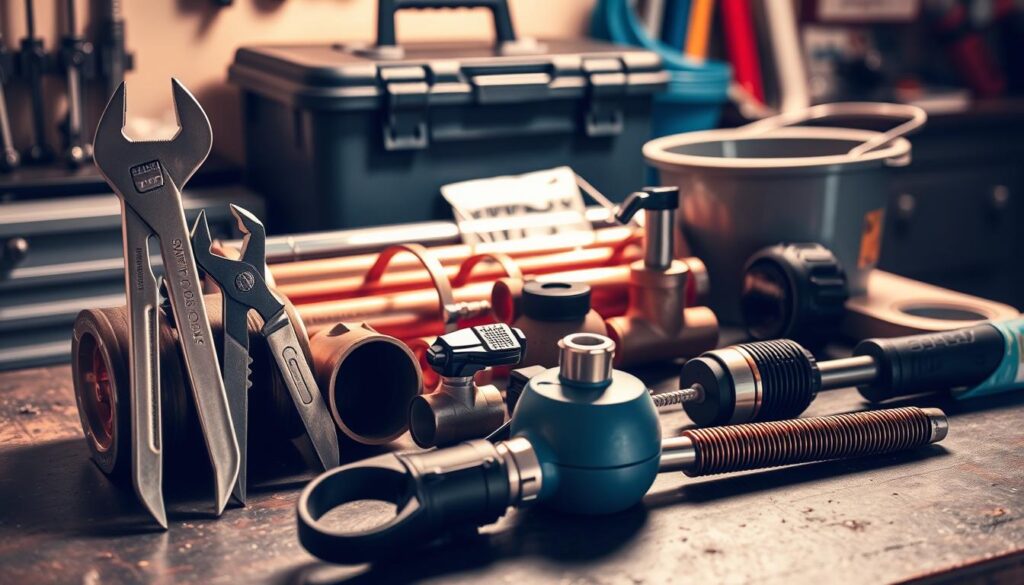
Professional plumbers need a wide range of tools to do their job well. Your toolkit is key to your success in plumbing. It requires both money and knowledge.
The tools plumbers use fall into several main groups:
- Hand Tools
- Pipe wrenches
- Adjustable wrenches
- Pliers
- Hacksaw
- Tape measure
- Specialized Plumbing Tools
- Pipe cutters
- Drain snake
- Basin wrench
- Tube bender
- Pipe threading machine
Buying top-notch tools is vital for doing a great job. Your toolkit will grow as you tackle harder projects and gain more experience.
| Tool Category | Estimated Cost Range | Professional Importance |
|---|---|---|
| Basic Hand Tools | $100 – $300 | Essential for entry-level work |
| Specialized Plumbing Tools | $500 – $1,500 | Critical for advanced repairs |
| Power Tools | $300 – $800 | Increases efficiency and capability |
Don’t forget about safety gear when using plumbing tools. Always wear safety glasses, gloves, and steel-toed boots to stay safe on the job.
“A professional plumber is only as good as the tools in their toolkit.” – Master Plumber, 20-year industry veteran
Plumbing technology keeps getting better. Keeping up with new tools and methods will help you stay ahead in the field.
Plumbing Certifications and Licensing Examinations
Getting a plumber license can be tricky. You need to know about plumber certification and state rules.
Plumbing certifications show you’re skilled. Each state has its own rules you must follow.
State-Specific Licensing Requirements
Plumber certification changes from state to state. Here are some things to keep in mind:
- Minimum age requirements (typically 18 years old)
- High school diploma or equivalent
- Completed apprenticeship hours
- Passing a licensing exam
Exam Preparation Strategies
Getting ready for your plumber exam takes work. Here are some tips:
- Learn about your state’s exam
- Study technical manuals and code books
- Take practice tests
- Go to workshops
Continuing Education Requirements
To keep your license, you need to keep learning. Most states want you to take courses to stay up-to-date.
| State | Exam Sections | Continuing Education Hours |
|---|---|---|
| California | 5 Technical Sections | 4-8 Hours Annually |
| Texas | 4 Technical Sections | 6-10 Hours Annually |
| New York | 6 Technical Sections | 5-9 Hours Annually |
“Professional certification is not just a requirement—it’s a commitment to excellence in your craft.” – Master Plumbers Association
By focusing on plumber licensing and keeping your certifications up-to-date, you’ll stand out in the plumbing field.
Career Advancement and Specialization Opportunities
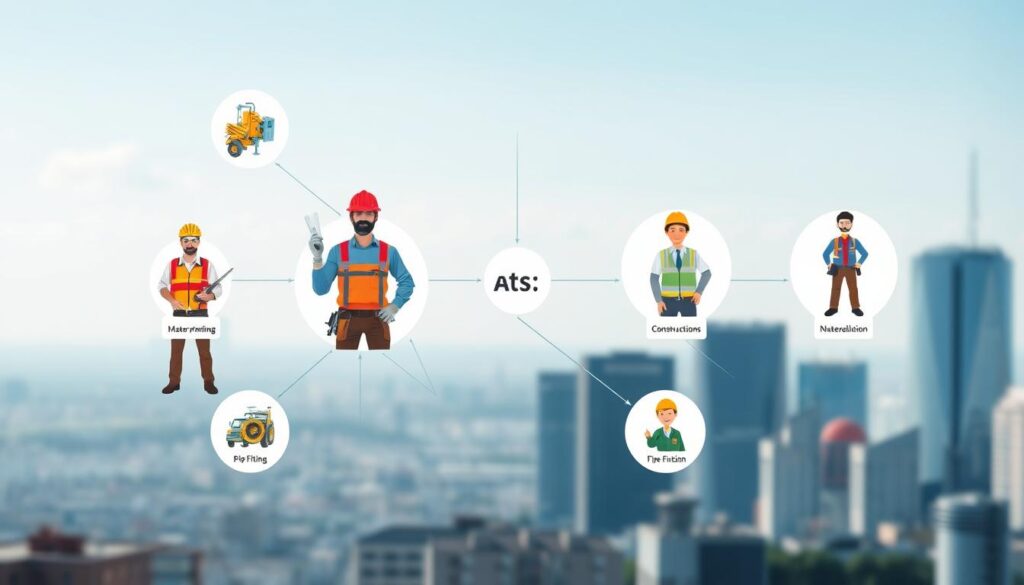
Being a plumber opens up many paths for growth and specialization. Moving from apprentice to journeyman plumber is a big step. You can keep moving up, each level needing different skills and certifications.
Getting your master plumber credentials opens up many career doors. Plumbers can choose from several specializations:
- Residential Plumbing
- Commercial Plumbing
- Industrial Plumbing Systems
- Green Plumbing Technologies
- Fire Sprinkler Installation
Each area needs its own set of skills and knowledge. Looking into different plumbing careers can help you find the best fit for you.
| Career Level | Experience Required | Key Responsibilities |
|---|---|---|
| Apprentice | 0-4 years | Learning basic skills, supervised work |
| Journeyman | 4-8 years | Independent work, complex projects |
| Master Plumber | 8+ years | Advanced projects, supervision, consulting |
You can aim to start your own plumbing business, become a project manager, or focus on cutting-edge plumbing technologies. Keep learning and getting more certifications to grow in your career.
Salary Expectations and Employment Outlook
Understanding the financial landscape is key when thinking about a plumbing career. Your earnings can change a lot based on experience, location, and specialty. Plumbing offers good pay and steady job chances for those interested in becoming plumbers.
Entry-Level Earnings for New Plumbers
At the start of your plumbing career, your pay will show your skills and training. Apprentice plumbers make about $15 to $25 an hour. This means they earn around $30,000 to $40,000 a year. As you gain more experience and finish your apprenticeship, your pay will go up.
Experienced Plumber Compensation
More experienced plumbers make a lot more money. Journeyman plumbers with years of experience earn between $50,000 and $75,000 a year. Master plumbers, with even more skills, can make over $90,000 a year.
Regional Salary Variations
Your location affects how much you can earn. Plumbers in big cities and areas with lots of building work make more. Places like California, New York, and Illinois pay plumbers more than rural areas.
- Urban areas: Higher demand, better compensation
- Construction-heavy regions: More opportunities
- Specialized skills: Increased earning
The Bureau of Labor Statistics says plumbers make a median of $60,090 a year. They also expect a 2% job growth in the next few years. This makes plumbing a solid career choice for those looking for reliable work.
Professional Skills and Technical Knowledge Requirements
To be a top-notch plumber, you need more than basic skills. Your education covers a wide range of professional abilities. These include technical know-how, problem-solving, and excellent customer service.
Plumbers must master several key areas:
- Blueprint reading and interpretation
- Understanding complex plumbing system designs
- Mathematical calculations for precise measurements
- Knowledge of local and state plumbing codes
- Familiarity with various pipe materials and installation techniques
Technical proficiency is just the beginning of your plumbing career. You’ll need to be great at solving complex problems fast. This means having a sharp eye for detail and being able to find solutions that aren’t obvious.
Good communication skills are also vital. You’ll talk to clients, contractors, and other pros every day. Being able to explain technical stuff clearly and providing top-notch service can make you stand out in the plumbing world.
Successful plumbers never stop learning. Technology and techniques in the plumbing industry are constantly evolving, demanding continuous skill development.
It’s important to keep up with new tech, tools, and industry standards. Think about getting extra certifications and going to workshops to stay sharp and in demand.
Insurance, Bonding, and Business Requirements
Learning to become a licensed plumber is more than just technical skills. You must also understand legal and financial responsibilities. This is key for success.
Insurance is vital for protecting your plumbing business. As a professional plumber, you’ll need several types of coverage:
- General Liability Insurance
- Professional Liability Insurance
- Workers’ Compensation Insurance
- Commercial Vehicle Insurance
Bonding is also critical. Most states require contractors to have a surety bond. This bond protects your clients from financial losses. In California, for instance, plumbers must have a $15,000 contractor’s bond to operate legally.
“Proper insurance and bonding are not just legal requirements – they’re a mark of a professional, trustworthy plumbing business.” – Professional Contractors Association
When starting your plumbing business, you’ll face several administrative tasks:
- Register your business with state authorities
- Obtain necessary local and state permits
- Set up proper tax reporting
- Maintain accurate financial records
Understanding these business requirements will help you launch a successful plumbing career. It also protects your professional interests.
Industry Safety Standards and Regulations
Understanding industry safety standards is key when you’re getting your plumber license. Plumbing is a job with many dangers. You must follow strict safety rules to stay safe.
OSHA safety training is a big part of learning to be a plumber. You’ll learn important safety skills. These include:
- Proper protective equipment usage
- Electrical safety procedures
- Handling hazardous materials
- Personal injury prevention techniques
Your training will cover all the risks you might face at work. This training helps you spot and avoid dangers like:
- Exposure to toxic chemicals
- Working in confined spaces
- Potential water contamination risks
- Equipment-related accidents
Professional plumbers must always put safety first. You need to keep up with new safety rules and follow them closely.
Safety isn’t just a requirement—it’s a professional commitment that protects you, your colleagues, and your clients.
By following these safety standards, you’ll not only get your plumber license. You’ll also be seen as a reliable and safe plumber.
Conclusion
To become a professional plumber, you need dedication, skill, and a plan. You must understand the full requirements, from education to technical training. Your path will require learning complex skills and getting professional certifications.
The plumbing field offers great chances for those who want to grow in their career. It’s not just about knowing how to fix pipes. You also need to be physically fit, good at solving problems, and passionate about hands-on work. Plumbers must have technical skills, communicate well, and provide great customer service.
Getting licensed as a plumber involves several steps. You need to finish trade school, get apprenticeships, pass licensing tests, and keep learning new skills. Investing in your career will pay off with good pay, job security, and the joy of helping your community.
If you love technical work and solving tough problems, plumbing might be for you. Start by looking into local training, talking to professional plumbers, and finding apprenticeships near you.