
Affiliate Disclosure
Plumber Guide Guys is a participant in the Amazon Services LLC Associates Program, an affiliate advertising program designed to provide a means for sites to earn advertising fees by advertising and linking to Amazon.
How to Winterize Home Plumbing? Are you ready to protect your home from frozen pipes this winter? Winterizing your home plumbing is a must. It keeps you safe from costly water damage and unexpected repairs.
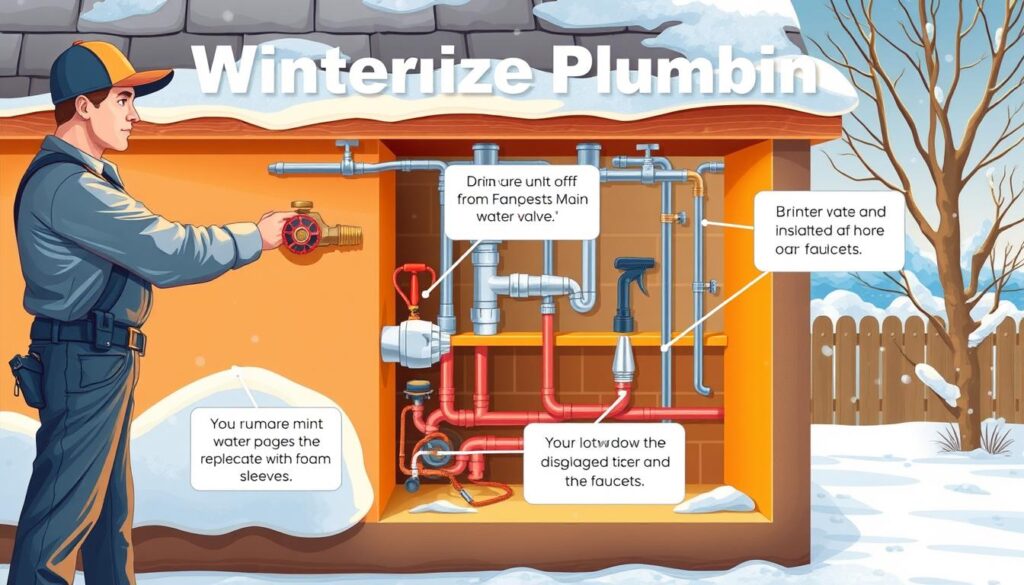
Learning to winterize your plumbing can save you thousands. The cold weather poses a big risk to your pipes. Water inside can freeze and expand, causing damage.
By following a strategic approach to prevent frozen pipes, you can protect your home. This guide will show you five key steps to keep your plumbing safe from winter’s cold.
Key Takeaways
- Winterizing prevents expensive water damage
- Simple steps can protect your entire plumbing system
- Professional preparation reduces repair costs
- Early preparation is key for home maintenance
- Temperature management is vital for pipe protection
Understanding the Importance of Plumbing Winterization
Winter can be tough on your home’s plumbing, even more so in empty houses. It’s key to keep your pipes from freezing and getting damaged. This helps keep your home safe and saves you from expensive fixes.
As it gets colder, water in pipes can freeze and swell. This swelling puts a lot of pressure on the pipes, which can make them burst. It’s vital to winterize your home to avoid these problems.
Why Pipes Freeze and Burst
Water expands by about 9% when it freezes. This expansion puts a lot of pressure on pipes, which can cause serious damage. Pipes most at risk include:
- Pipes in unheated spaces
- Exterior walls
- Crawl spaces
- Attics
Risks of Neglecting Winter Preparation
Not winterizing your plumbing can lead to big problems. Burst pipes can cause:
- Big water damage
- Mold growth
- Structural damage
- High repair costs
Cost Benefits of Preventive Maintenance
| Maintenance Action | Estimated Cost | Potential Savings |
|---|---|---|
| DIY Pipe Insulation | $50-$200 | Up to $5,000 in water damage savings |
| Professional Inspection | $100-$300 | Prevent major pipe failures |
Spending a little on winterization can save you a lot. By being proactive, you protect your home and avoid unexpected bills.
Essential Tools and Materials for Winterization
Getting your home ready for winter means using special tools and materials. This helps stop pipes from freezing and keeps your home safe. Having the right stuff before winter starts can save you from big repair bills and sudden problems.
To keep your water pipes safe from cold, you need a good toolkit. This set is made to shield your plumbing from freezing weather.
- Foam pipe insulation sleeves
- Plumbing antifreeze
- Heat tape
- Faucet covers
- Caulking gun and weatherproof sealant
Using plumbing antifreeze is key to stop water lines from freezing. This special liquid keeps pipes safe in hard-to-drain spots.
| Material | Purpose | Estimated Cost |
|---|---|---|
| Foam Pipe Insulation | Wrap and protect water pipes | $10-$25 per pack |
| Plumbing Antifreeze | Prevent freezing in vulnerable pipes | $5-$15 per gallon |
| Heat Tape | Provide active heating for pipes | $20-$50 per roll |
You can find these winter tools at stores like Home Depot and Lowe’s. Pro tip: Buy your supplies early to avoid running out during the winter rush.
Proper preparation prevents pipe emergencies and expensive repairs.
How to Winterize Home Plumbing: Complete System Overview
Keeping your home’s plumbing safe in winter is key to avoid expensive repairs. You need to prepare both inside and outside your home.
Your plumbing system is complex and can be damaged by cold weather. To protect it, start by understanding your system. Look for weak spots and areas that need extra care.
Interior Plumbing Components
Inside your home, plumbing needs winter care to avoid big problems. Focus on these areas:
- Basement pipe networks
- Crawl space plumbing
- Kitchen and bathroom water lines
- Pipes near exterior walls
“Prevention is always cheaper than repair when it comes to home plumbing winter preparation.” – Professional Plumbing Experts
Exterior Plumbing Systems
Outdoor plumbing is more at risk from cold. Your winter plan should cover:
- Disconnecting garden hoses
- Draining outdoor irrigation systems
- Insulating exterior faucets
- Sealing air leaks around exterior pipes
Critical Areas Requiring Protection
Some plumbing spots need extra help to stay safe from freezing. Spotting and fixing these weak points can save you a lot of money. Pay close attention to:
- Unheated areas like garages and attics
- Pipes through uninsulated walls
- Areas with little heat
- External pipe connections
Knowing your home’s plumbing layout and using the right winter care can protect it from winter damage.
Shutting Off and Draining Your Water System
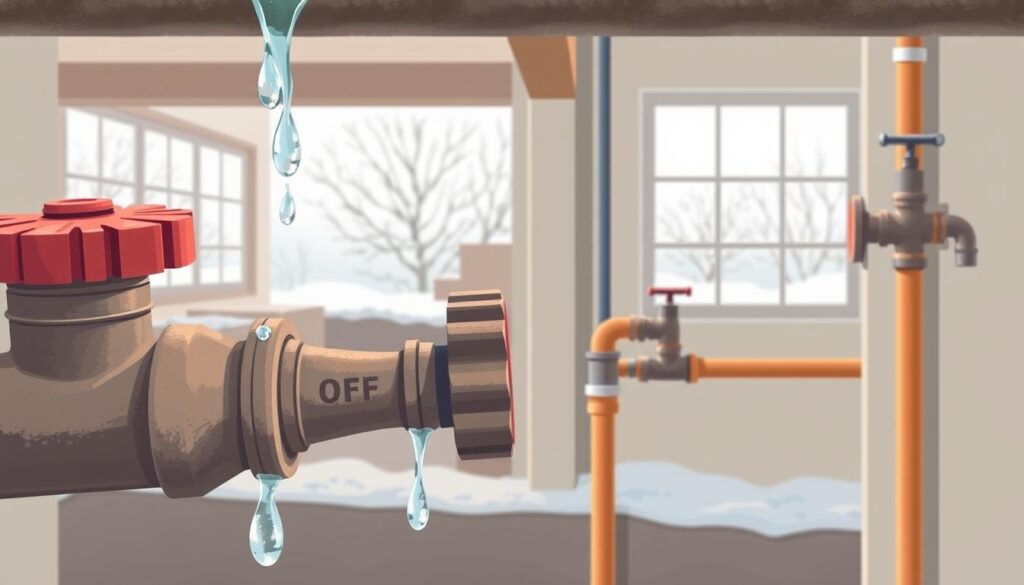
Getting ready to drain your water system for winter needs careful planning. This is even more important when you’re winterizing plumbing in a vacant house. First, find your home’s main water shut-off valve. It’s usually in the basement, crawl space, or mechanical room.
Before you start draining, make sure you have these tools:
- Adjustable wrench
- Bucket
- Towels or rags
- Compressed air (optional)
To winterize your plumbing system well, follow these steps:
- Find the main water shut-off valve and turn it off completely
- Open all faucets in your home to let out the water pressure
- Flush toilets to empty the water from tanks and bowls
- Drain the water heater by connecting a garden hose to the drain valve
For vacant houses, extra steps are key to avoid water damage. Use compressed air to blow out any water left in pipes. This makes sure your system is dry.
Pro tip: Always disconnect and drain outdoor hoses, irrigation systems, and other exterior water connections. This prevents freezing and pipe bursts.
Insulating Pipes and Protecting Vulnerable Areas
Keeping your home’s plumbing safe from winter’s cold is key to avoiding expensive damage. DIY home winterization helps by insulating water pipes to prevent freezing and burst pipes. Knowing the right methods can save you a lot of money and trouble during the cold months.
There are various pipe insulation options to protect your plumbing. Your choice depends on the type and material of your pipes.
Types of Pipe Insulation Materials
- Foam Sleeves: Lightweight and easy to install for most residential pipes
- Fiberglass Wraps: Excellent for high-temperature areas and industrial settings
- Rubber Insulation: Flexible and moisture-resistant for challenging spaces
- Self-Sealing Tape: Quick solution for small pipe sections
Identifying Cold Spots in Your Home
Finding vulnerable areas is essential for effective pipe protection. Inspect these key spots when insulating your water pipes:
- Basement and crawl spaces
- Exterior walls
- Unheated garage areas
- Attic and roof adjacent spaces
Professional vs DIY Installation
| Aspect | DIY Home Winterization | Professional Service |
|---|---|---|
| Cost | Lower initial expense | Higher upfront investment |
| Expertise | Limited technical knowledge | Advanced technical skills |
| Time Investment | More personal time required | Quick and efficient |
| Guarantee | No professional warranty | Guaranteed workmanship |
When choosing insulation, think about your budget, skill level, and plumbing system complexity. Some might mix DIY and professional advice for full protection.
Winterizing Outdoor Plumbing Fixtures
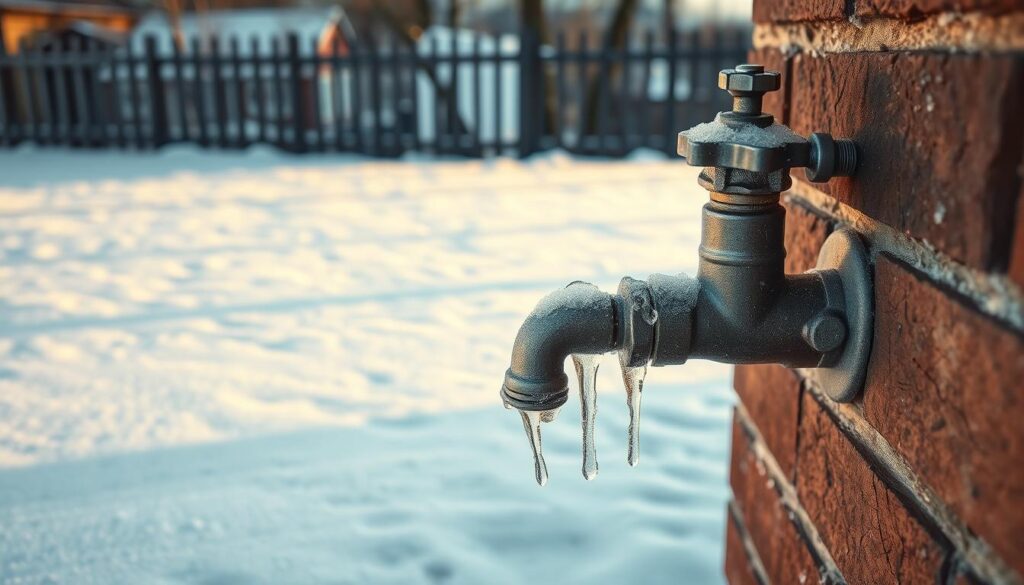
It’s important to protect your outdoor plumbing from freezing. This helps avoid expensive damage in winter. Winterizing your outdoor plumbing keeps your home’s water system safe from damage.
To keep pipes from freezing, start with your exterior water connections. Here are the main steps to winterize your outdoor plumbing:
- Disconnect all garden hoses from exterior faucets
- Drain and store hoses in a warm, dry location
- Install frost-proof hose bibbs or insulated covers
- Shut off interior water valves connected to outdoor fixtures
Your sprinkler system needs extra care in winter. Make sure to drain underground pipes and irrigation systems. This stops water from expanding and damaging pipes.
| Outdoor Fixture | Winterization Action | Difficulty Level |
|---|---|---|
| Garden Hoses | Disconnect and drain completely | Easy |
| Exterior Faucets | Install insulated covers | Medium |
| Sprinkler System | Blow out water with compressed air | Advanced |
Pro tip: Use heat tape on vulnerable outdoor pipes for extra freeze protection. By following these steps, you’ll lower the chance of burst pipes and water damage in winter.
Maintaining Proper Indoor Temperature Settings
Keeping your home safe from frozen pipes starts with the right indoor temperature. It’s important to know how temperature affects your plumbing system.
It’s key to keep your home at a steady temperature during winter. Cold weather can harm your plumbing if you don’t control the temperature well.
Optimal Thermostat Settings
Experts say to keep your home warm to protect your plumbing. Here are some important tips:
- Set your thermostat no lower than 55°F when home
- Keep temperature consistent, even when away
- Program smart thermostats to maintain steady heat
Heat Distribution Strategies
Good heat distribution is vital to stop frozen pipes in your home. Try these methods:
- Open cabinet doors near exterior walls to allow warm air circulation
- Use space heaters carefully in cold zones
- Seal air leaks around windows and doors
- Insulate areas with minimal heating
Pro tip: Unheated spaces like basements, attics, and crawl spaces need extra care during winter.
Consistent temperature management is your first line of defense against costly pipe damage.
Professional Inspection and Maintenance Tips
Winterizing your home’s plumbing is more than a DIY task. Professional plumbers have the skills to prevent expensive repairs and water damage. They are key to keeping your plumbing safe during the cold months.
When should you call a professional? Look for these signs:
- Older homes with original plumbing systems
- Previous history of frozen pipes
- Complex plumbing configurations
- Limited personal experience with plumbing antifreeze usage
A professional will check your entire plumbing system. They will:
- Find weak points in your pipes
- Check if insulation is good
- Offer winterization strategies
- Use specialized antifreeze in key areas
Choosing the right plumber is important. Look for:
- Proven winter plumbing expertise
- Valid licensing and insurance
- Good local customer reviews
- Clear pricing
Professional services may cost more, but they offer peace of mind. They can save you thousands of dollars in repairs. Getting expert help is a smart investment for your home’s safety and your wallet.
Conclusion
Winterizing your home plumbing is key to avoiding expensive damage and keeping your property safe. By learning how to winterize your plumbing, you can save a lot of money. This is important for protecting your biggest investment.
We’ve looked at five important steps to prevent frozen pipes and reduce winter risks. These steps include insulating pipes and keeping your home warm. Each step is vital for protecting your home’s water system from cold weather.
Being proactive now can prevent emergencies in the cold months. Even if you’re not sure about winterizing, you can always get help from professionals. Your home needs strong protection, and these steps will save you money and stress.
As winter gets closer, make sure to follow these winterization tips. You can do it yourself or get help from experts. Keeping your plumbing safe is a big part of taking care of your home.