
Affiliate Disclosure
Plumber Guide Guys is a participant in the Amazon Services LLC Associates Program, an affiliate advertising program designed to provide a means for sites to earn advertising fees by advertising and linking to Amazon.
How to Vent Plumbing in a Basement Bathroom? Ever wondered why your basement bathroom smells or drains slowly? The answer is in proper venting. Below-grade bathrooms need special care to avoid renovation nightmares.
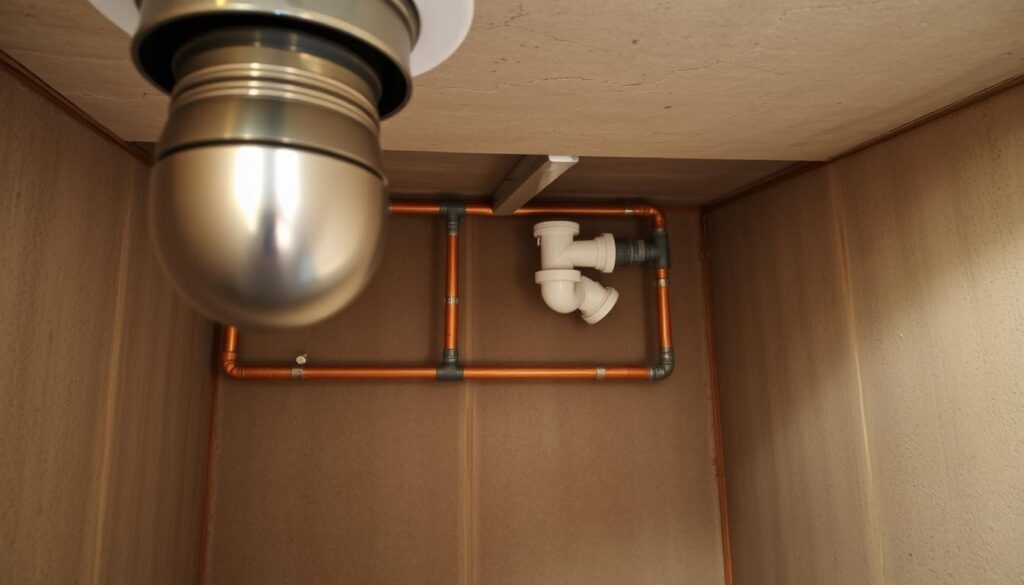
Getting the plumbing vent right is key for a healthy bathroom. Without it, you face sewer gas, slow drains, and health risks. No one wants that.
Experts say basement bathrooms need special venting. It’s different from regular bathrooms. Your underground bathroom needs careful planning for the best results.
Key Takeaways
- Basement bathrooms require specialized venting solutions
- Proper ventilation prevents sewer gas and drainage problems
- Understanding building codes is critical for successful installation
- Unique challenges exist for below-grade bathroom plumbing
- Professional planning can prevent costly future repairs
Table of Contents
Understanding Basement Bathroom Ventilation Basics
Proper venting for a below-grade bathroom is key for a healthy plumbing system. It’s vital for a basement bathroom to understand drain ventilation basics. This helps prevent problems and keeps things running smoothly.
Basement bathroom drain ventilation does more than just move air. It’s essential for keeping your home’s plumbing safe and your living space healthy.
The Role of Proper Ventilation
Effective ventilation in your basement bathroom prevents several issues:
- Eliminates harmful sewer gases from entering your living space
- Equalizes air pressure within the plumbing system
- Prevents water from becoming trapped in pipes
- Reduces the risk of possible drain clogs
Basic Components of a Plumbing Vent System
A good basement bathroom ventilation system has:
- Vent pipes
- Connection points
- Roof or horizontal venting terminals
- Trap mechanisms
Building Code Requirements
Local building codes have rules for basement bathroom drain ventilation. These rules make sure your plumbing is safe and works well. Always check with local building authorities to know the specific rules for your area.
Proper ventilation is not just a recommendation—it’s a critical aspect of maintaining a safe and functional basement bathroom.
Essential Tools and Materials for Basement Vent Installation
Starting a diy basement plumbing ventilation project needs careful planning and the right tools. You must gather the correct tools and materials before you begin. This is key for installing a plumbing vent pipe for basement toilet systems.
When you work on your basement bathroom ventilation, you’ll need a detailed toolkit. It should have both basic and specialized plumbing tools. Here are the must-haves:
- Pipe cutters or hacksaw for precise pipe sizing
- Tape measure for accurate measurements
- Level to ensure proper pipe alignment
- Pipe wrenches in various sizes
- Drill with masonry bits for concrete penetration
For materials, choose high-quality components that follow local building codes. Key materials include:
- PVC pipes (3-inch or 4-inch diameter)
- Vent pipe connectors and elbows
- Pipe sealant and waterproof tape
- Pipe supports and hangers
- Flashing for roof or wall penetrations
Your diy basement plumbing ventilation project needs specific pipe materials. These should be designed to handle underground conditions. Choose corrosion-resistant pipes that can stand up to moisture and temperature changes in basements.
Pro Tip: Always check local building codes before purchasing materials for your plumbing vent pipe for basement toilet installation.
Investing in quality tools and materials upfront will save you time and effort. This is important for your basement bathroom ventilation project.
Planning Your Basement Bathroom Vent Layout
Creating a good vent system for your basement bathroom needs careful planning. The success of your underground bathroom vent options depends on a well-designed layout. This layout must meet the requirements for basement bathroom rough-in vents.
Proper planning involves several critical steps. These steps ensure your plumbing system works well and meets local building codes.
Mapping Vent Pipe Routes
When mapping your vent pipe routes, consider several key factors:
- Existing structural elements
- Potential obstacles in the basement
- Shortest and most direct path to the main vent stack
- Minimizing bends and turns in the piping
Calculating Proper Pipe Sizes
Accurate pipe sizing is key for effective ventilation. Different fixtures need specific vent pipe diameters to work right.
| Fixture Type | Recommended Vent Pipe Diameter |
|---|---|
| Toilet | 50mm (2 inches) |
| Sink | 40mm (1.5 inches) |
| Shower | 40mm (1.5 inches) |
| Bathtub | 40mm (1.5 inches) |
Determining Fixture Locations
Strategic placement of fixtures is important for your vent system’s efficiency. Consider the proximity to existing plumbing and the main vent stack when placing toilets, sinks, and other bathroom fixtures.
Your goal is to create a vent layout that provides optimal airflow. It should also meet all local building code requirements for basement bathroom installations.
How to Vent Plumbing in a Basement Bathroom: Step-by-Step Guide
Setting up a basement bathroom plumbing vent needs careful planning and precise steps. Knowing the key steps will help you succeed in this complex task.
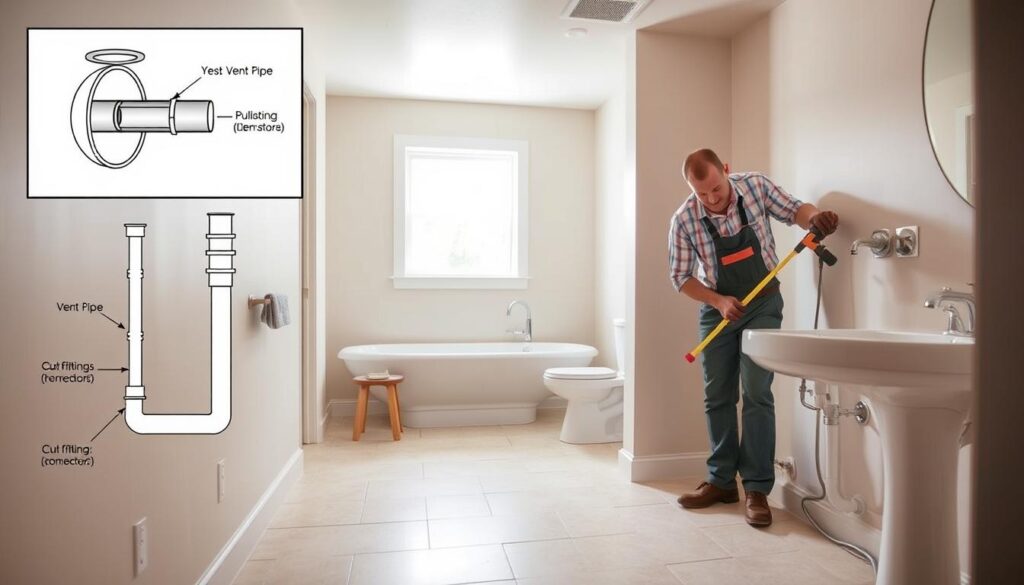
Before you start, make sure you have all the tools and materials ready. Good preparation is key for a smooth venting project.
- Locate the Main Vent Stack
- Find the existing primary vertical vent pipe
- Find the best spot to connect
- Measure and Mark Vent Pipe Routes
- Use a laser level for accurate alignment
- Make sure the slopes are right
- Cut and Prepare Pipe Connections
- Use the right pipe cutters
- Clean and smooth out pipe edges
When venting plumbing in a basement bathroom, focus on pipe size and connection methods. The wrong size can cause drainage problems.
| Pipe Size | Recommended Use | Maximum Fixture Units |
|---|---|---|
| 1.5 inches | Small bathroom fixtures | 2-3 fixtures |
| 2 inches | Standard bathroom setup | 4-5 fixtures |
| 3 inches | Large bathroom or multiple fixtures | 6-8 fixtures |
Always follow local building codes for your basement bathroom plumbing vent. Proper venting stops sewer gases and ensures good drainage.
After installing, test your vent system well. Check for leaks or bad connections that could harm your bathroom’s use.
Different Types of Venting Methods for Below-Grade Bathrooms
Creating a basement bathroom needs careful thought about ventilation. Your basement’s unique layout requires special venting to ensure good air flow and drainage. Knowing the different venting methods helps you pick the best one for your basement bathroom.
Basement bathrooms face special plumbing ventilation challenges. Wet venting basement bathroom fixtures need careful planning to avoid drainage problems.
Wet Venting Systems
Wet venting is a smart choice for small basement spaces. It uses one pipe for different drainage needs:
- Uses existing drain pipes for various fixtures
- Makes pipe installation simpler
- Perfect for tight basement bathroom setups
Dry Venting Techniques
Dedicated dry venting systems are another option for underground bathrooms. They offer a separate air path for plumbing fixtures:
- Ensures independent air flow
- Helps avoid drainage blockages
- Allows for more flexible fixture placement
| Venting Method | Pros | Cons |
|---|---|---|
| Wet Venting | Space-efficient | Limited fixture connections |
| Dry Venting | Flexible installation | More complex piping |
Loop Venting Options
Loop venting is another way to set up basement bathrooms. This method uses a U-shaped vent system for multiple fixtures while keeping air flow right.
Good ventilation is key to avoiding moisture buildup and keeping your basement bathroom healthy.
Connecting to the Main Vent Stack
Connecting your basement bathroom plumbing vent pipe to the main vent stack is key. It ensures proper drainage and air circulation. The main vent stack is the main path for sewer gases and keeps air pressure balanced in your home’s plumbing.
When installing a plumbing vent pipe for basement toilets, follow these steps:
- Locate the existing main vent stack in your home
- Determine the most direct route for connection
- Prepare the necessary cutting and connection tools
- Ensure proper slope and alignment
The connection process needs precision to avoid leaks or ventilation issues. Use wye fittings or sanitary tees for a secure join between your basement bathroom plumbing vent and the main stack.
| Connection Method | Difficulty Level | Required Tools |
|---|---|---|
| Wye Fitting | Moderate | Pipe cutter, measuring tape, level |
| Sanitary Tee | Advanced | Pipe wrench, soldering equipment |
Professional plumbers suggest testing the connection well. This ensures it’s aligned and sealed right. Wrong installation can cause drainage problems and code issues in your basement bathroom plumbing.
Proper Sizing and Slope Requirements for Vent Pipes
When planning basement bathroom rough-in vent requirements, understanding pipe sizing and slope is key. It’s important for a good plumbing system. Proper venting for below-grade bathroom installations needs careful attention to technical details.
Your vent pipes are vital for your home’s drainage system. Professional plumbers suggest specific guidelines for pipe dimensions and angles. This helps prevent problems.
Minimum Pipe Diameter Guidelines
Choosing the right pipe diameter is essential for basement bathroom ventilation. Here are important considerations for vent pipe sizing:
- Main vent stacks typically require 3-4 inch diameters
- Secondary stack pipes should be 2-3 inches wide
- Branch drainpipes connecting fixtures work best at 1½-2 inches
Calculating Correct Vent Slopes
The slope of your vent pipes greatly affects wastewater movement. Drain venting experts recommend a minimum upward slope of 1:50 toward the main vent stack. This angle prevents water from pooling and ensures smooth air circulation.
Pro tip: Always measure and mark your pipe slopes carefully during installation. This ensures the best performance of your below-grade bathroom venting system.
Common Ventilation Challenges in Basement Bathrooms
Basement bathroom drain ventilation can be tricky for homeowners. It’s important to plan well for underground bathroom vents. This is because below-grade spaces have their own set of challenges.
Spotting ventilation problems early can save you a lot of time and money. Look out for these warning signs:
- Persistent gurgling sounds when water drains
- Slow drainage in sinks and toilets
- Unpleasant sewer odors in the bathroom
- Water backing up in fixtures
The biggest hurdle in basement bathroom ventilation is the limited vertical space. Concrete and existing structures make it hard to route vent pipes. This makes traditional venting methods tough to use.
Here are some possible solutions for underground bathroom vents:
- Installing horizontal vent pipes with special fittings
- Using air admittance valves for proper drainage
- Trying alternative venting methods that fit within space limits
Professional plumbers say regular checks are key to avoiding long-term ventilation problems in basement bathrooms.
Getting a proper diagnosis means looking closely at your basement bathroom’s layout. Every space has its own set of challenges. You need a ventilation plan that fits your space perfectly.
Underground Bathroom Vent Installation Techniques
Installing underground bathroom vents needs precision and planning. Basement bathroom plumbing vents require complex steps. You need technical skills and attention to detail.
- Accurate measurement of proposed vent line routes
- Selection of appropriate pipe materials
- Precise cutting of concrete slab
- Proper pipe positioning and support
Cutting and Preparing the Concrete Slab
Your basement bathroom plumbing vent installation starts with cutting the concrete. Use professional-grade concrete saws with diamond-tipped blades for accurate cuts. Mark your pathway carefully to avoid damage.
Installing Below-Grade Vent Lines
When installing underground vents, place pipes carefully. PVC pipes are best for below-grade installations because they’re durable and resist moisture. Keep the slope consistent and use pipe supports to prevent settling.
| Pipe Material | Underground Suitability | Cost Effectiveness |
|---|---|---|
| PVC | Excellent | High |
| Cast Iron | Good | Medium |
| ABS | Very Good | Medium-High |
Seal all penetrations well and use waterproofing to prevent moisture. This is important during your basement bathroom plumbing vent installation.
Testing and Troubleshooting Your Vent System
After finishing your diy basement plumbing ventilation project, it’s key to test your vent system. This step ensures it works right. It helps avoid future problems and makes sure your installation is effective.
Begin with an air pressure test. This test finds leaks or blockages in your vent system. You’ll need some tools:
- Smoke machine
- Pressure gauge
- Rubber stoppers
- Compressed air
The test seals all pipe openings and adds compressed air. Look for pressure drops, which mean leaks. A steady pressure shows your system is set up right.
| Test Type | Duration | Pressure Range |
|---|---|---|
| Air Pressure Test | 15-20 minutes | 2-5 PSI |
| Smoke Leak Detection | 10-15 minutes | Visual inspection |
Watch out for signs of trouble like:
- Unusual gurgling sounds
- Slow drainage
- Persistent sewer odors
- Visible moisture around pipe connections
Pro tip: If you find any issues, don’t worry. Most problems can be fixed with a good look and some tweaks to your ventilation system.
Conclusion
Learning to vent plumbing in a basement bathroom needs careful planning and precise steps. Knowing how to vent properly can prevent drainage issues, bad smells, and expensive fixes later. This article has given you the tools to create a good and safe bathroom ventilation system.
The success of your basement bathroom plumbing depends on understanding venting basics. This includes picking the right pipe sizes and making sure they’re sloped and connected right. Venting a below-grade bathroom is not just about the tech; it’s about making a safe and functional space that follows local building codes.
Whether you’re doing it yourself or hiring pros, you now have a strong base to handle basement bathroom ventilation. Every step, from planning to testing, is important for the system’s best performance and avoiding plumbing problems.
Your effort to learn these ventilation methods will be worth it in the long run. A well-made vent system ensures good drainage, gets rid of bad sewer smells, and gives you peace of mind. Your basement bathroom will be safe and work well.