
Affiliate Disclosure
Plumber Guide Guys is a participant in the Amazon Services LLC Associates Program, an affiliate advertising program designed to provide a means for sites to earn advertising fees by advertising and linking to Amazon.
How to Plumb a Swimming Pool? Ever wondered why a swimming pool’s water is so clear and flows perfectly? The answer is in mastering pool plumbing. It turns a simple backyard pool into a stunning aquatic oasis.
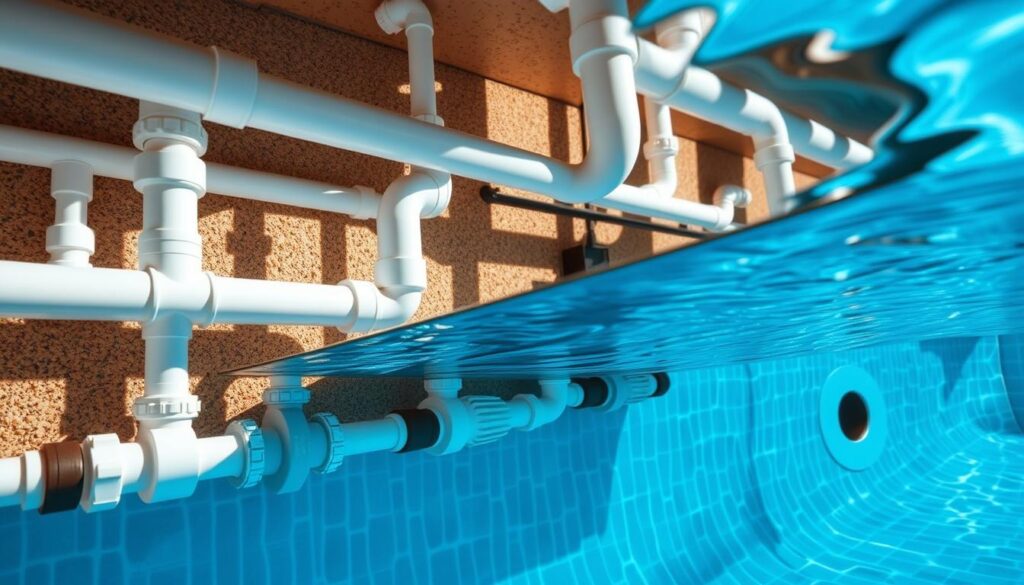
Pool plumbing is more than just pipes. It’s a complex system that keeps your pool clean and ready for fun. Your pool’s plumbing system is like the human body’s circulatory system. It makes sure every drop of water is clean and evenly distributed.
This guide will show you how to build a strong pool plumbing system. It’s perfect for DIY fans or homeowners who want to know how their pool works. You’ll learn the key steps for professional pool plumbing installation.
Key Takeaways
- Understanding pool plumbing is key to keeping water quality high
- Right installation stops leaks and ensures water flows well
- A good plumbing system makes your pool last longer
- DIY pool plumbing needs careful planning and exact steps
- Getting help from pros can save you from expensive errors
Table of Contents
Understanding Pool Plumbing System Basics
Creating a good swimming pool plumbing system is key for clear water and the best pool performance. Your pool’s plumbing is like your heart, keeping water clean and healthy.
A detailed swimming pool plumbing diagram shows how all parts work together. Knowing how to size pool pipes is vital for a smooth water flow system.
The Importance of Proper Water Circulation
Good water flow stops water from standing and spreads chemicals evenly. Without it, dirt and harmful bacteria can build up. The pump is the heart of this system, pushing water through filters.
- Prevents water stagnation
- Distributes chemicals uniformly
- Reduces bacterial growth
- Maintains water clarity
Essential Components Overview
Your pool’s plumbing system has many important parts. Each part is key to keeping water quality and pool function good.
- Skimmers
- Suction lines
- Pumps
- Filters
- Return lines
- Main drains
Role of Plumbing in Pool Maintenance
Good pool plumbing does more than move water. It affects how well your pool filters and keeps chemicals balanced. The right pipe size means better water flow, less wear on your equipment, and longer life.
A well-designed plumbing system is the foundation of a healthy, enjoyable swimming pool.
Planning Your Pool Plumbing Layout
Creating a good inground pool plumbing layout needs careful planning. Your swimming pool plumbing diagram is key to a successful setup. Before starting, map out every detail for the best water flow and system efficiency.
When making your swimming pool plumbing diagram, think about these important points:
- Pool dimensions and shape
- Planned equipment locations
- Water flow requirements
- Future expansion possibilities
The best inground pool plumbing layout cuts down on pipe lengths and friction points. Place components like:
- Skimmers
- Main drains
- Return jets
- Pump and filtration system
“A well-planned pool plumbing system is the foundation of a trouble-free swimming experience.”
Experts suggest making a detailed swimming pool plumbing diagram. It should consider gravity, water pressure, and hydraulic challenges. Your layout should ensure efficient water flow and easy equipment access for maintenance.
Essential Equipment and Materials for Pool Plumbing
When you start a DIY pool plumbing project, picking the right tools and materials is key. Knowing about pool pipe sizing and the tools you need helps your project go smoothly. Here’s what you’ll need to build a strong pool plumbing system.
Types of PVC Pipes and Fittings
Choosing the right PVC pipes is very important. You should use Schedule 40 PVC pipes for most home pools. The pipe size usually ranges from 1.5 to 2 inches, based on your pool’s design and pump needs.
- Schedule 40 PVC pipes (1.5″ and 2″ diameters)
- PVC elbows and connectors
- Union fittings for easy maintenance
- Flexible pipe sections for complex layouts
Required Tools and Supplies
Before you start your DIY pool plumbing, make sure you have these tools:
- PVC pipe cutter
- Pipe primer and cement
- Measuring tape
- Level
- Sandpaper for pipe preparation
Safety Equipment Checklist
Keeping yourself safe while working on pool plumbing is very important. Always prioritize safety with these items:
- Safety glasses
- Chemical-resistant gloves
- Respirator mask
- Long-sleeved clothing
- Work boots
By choosing the right tools and following safety rules, you’ll be ready to take on your pool plumbing project. Remember, getting the pool pipe sizing right and paying attention to details are essential for a good water flow system.
How to Plumb a Swimming Pool: Main Installation Steps
Starting a DIY pool plumbing project needs careful planning and skill. It involves several key steps that require attention to detail and technical knowledge.
Your project begins with a strategic layout. Experts suggest a systematic approach for the best water flow and efficiency.
- Begin with precise excavation for underground pipes
- Prepare trenches with proper slope for drainage
- Select appropriate PVC pipe diameters
- Map out connection points for skimmers and drains
For a successful pool plumbing job, keep pipe angles consistent and avoid leak points. Proper pipe support and alignment are key for long-term performance.
Important steps include:
- Installing main drain lines
- Connecting skimmer pipes
- Setting up return line connections
- Preparing equipment pad for pump and filter
Always check local building codes and get necessary permits before starting. Precision in the beginning saves money and ensures water flows well.
Setting Up the Plumbing Pad and Equipment Placement
Creating a solid foundation for your pool equipment is key for a great inground pool plumbing layout. The plumbing pad is the heart of your pool’s mechanical parts. It needs careful planning and the right spot.
When picking a spot for your pool equipment, think about these important things:
- How close it is to the pool
- If the ground is level
- If it’s out of direct sunlight
- If it’s easy to get to for upkeep
Concrete Pad Construction
Your equipment pad needs a strong concrete base to hold heavy pool machines. Here’s what it should have:
- At least 4 inches thick
- Reinforced with wire mesh or rebar
- A perfectly level surface
- A slope for water to drain
Equipment Spacing Strategy
Spacing out your pool equipment right is important for good performance and easy upkeep. Make sure there’s enough space between them for:
- Good air flow
- Easy access to filters and pumps
- Room for future upgrades
Ventilation Considerations
Your pool equipment area needs good air flow to avoid overheating and make your equipment last longer. Try to keep it open with at least 24 inches of space around each piece.
Installing Skimmers and Main Drains
Skimmers and main drains are key in keeping your pool water clean and moving. They are vital for a good inground pool plumbing setup. This setup is important for safe and clean swimming.
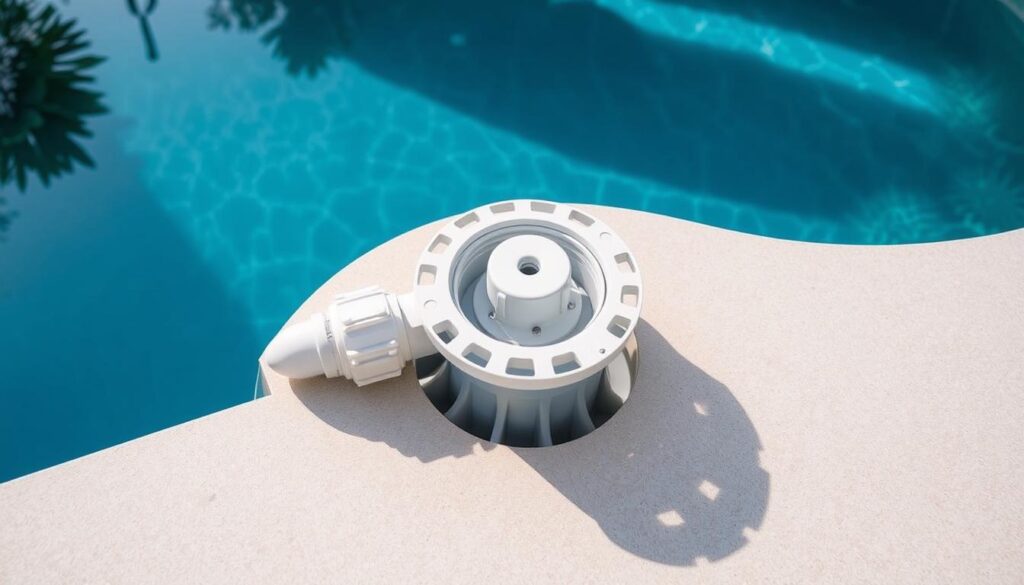
Skimmers sit on the pool’s wall and catch surface debris. They pull leaves and bugs into the filter system. This helps keep the water clean.
- Position skimmers strategically to maximize debris collection
- Ensure proper sealing to prevent water leakage
- Align skimmers with the pool’s water circulation pattern
Main drains are at the pool’s bottom. They remove water from the bottom. This helps with water circulation and filtration.
| Component | Function | Installation Considerations |
|---|---|---|
| Skimmer | Surface debris removal | Proper wall alignment, secure fitting |
| Main Drain | Bottom water circulation | Deepest pool point, safety compliance |
When installing, always think about safety. Follow the Virginia Graeme Baker Pool and Spa Safety Act. This ensures water moves well and keeps your pool safe.
Return Line Installation and Jet Positioning
The swimming pool plumbing system needs return jets to move clean, filtered water well. Knowing how to set up and place these jets can greatly boost your pool’s water quality and performance.
Return jets are key for keeping water moving and spreading chemicals evenly in your pool. The right spot for them makes sure every part of your pool gets fresh, clean water.
Optimal Return Jet Placement
When planning your pool return plumbing, keep these tips in mind:
- Place jets at a 45-degree angle for a circular water flow
- Spread return jets out evenly around the pool’s edge
- Point jets slightly down to stop water from staying on the surface
Water Flow Patterns
Good water flow stops dead zones where dirt can gather. Your pool plumbing should make water move in a steady circle. This pushes dirt towards the skimmer and main drain.
Installation Best Practices
Here are some tips for installing pool return plumbing well:
- Measure and mark jet spots before cutting
- Choose the right PVC pipe sizes for best water pressure
- Seal all connections with top-notch waterproof sealant
- Check water flow after you’ve installed
“Proper return jet placement is the secret to crystal-clear pool water” – Professional Pool Installer
By designing your return line setup carefully, you’ll make your swimming area more efficient and fun.
Connecting Pool Pump and Filtration System
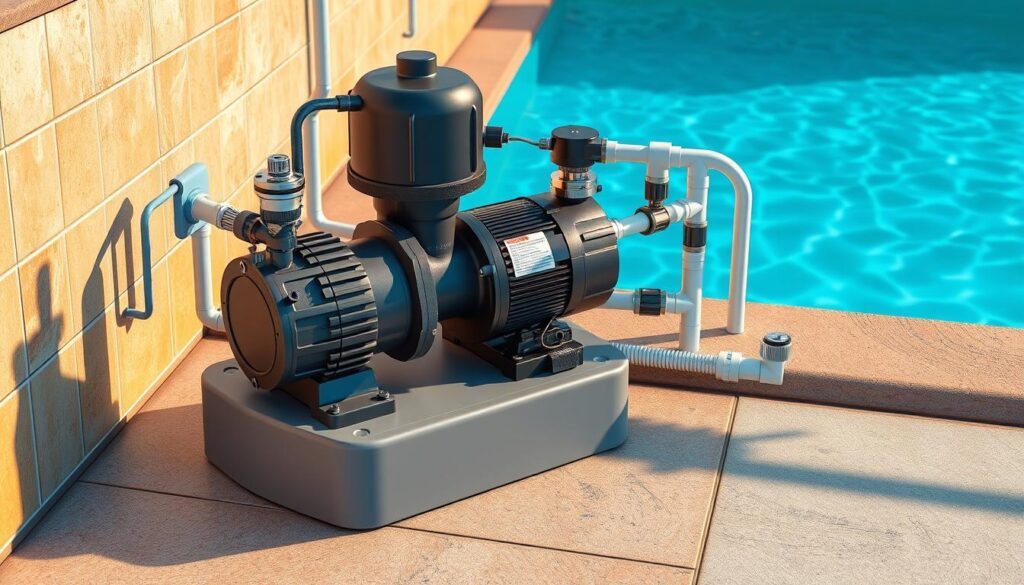
Your pool pump is the heart of your pool setup. It keeps the water clean and healthy. Choosing the right pump means matching its power to your pool’s size and water flow needs.
Setting up your pool system involves several important parts:
- Pump size and horsepower
- Filter type (sand, cartridge, or diatomaceous earth)
- Plumbing connections and valve configurations
- Electrical requirements
Pro tip: Always check the manufacturer’s specs for the right pump and filter match.
Installing the pump needs care. Place the pump near the filter to cut down on pipe length. This helps water flow better. Make sure all connections are tight to avoid leaks.
“A well-installed pool pump is the difference between crystal-clear water and constant maintenance headaches.” – Pool Engineering Experts
Electrical connections must be done by a pro. Make sure your electrical setup fits the pump’s voltage needs. It should also have the right circuit protection and grounding for safety.
Getting your pool to work right depends on a good installation. Learn how each part works together. This ensures clean and flowing water in your pool.
Pressure Testing and Leak Detection Methods
Finishing your diy pool plumbing project means doing a final step: pressure testing your system. This step is key to check if your pipes are working right. It stops water damage and saves you from expensive fixes.
Pressure testing finds leaks before you fill your pool. You’ll need some special tools for a good test:
- Pressure testing gauge
- Air compressor or hand pump
- Pressure plugs
- Soapy water solution
To do a full pressure test, follow these steps:
- Seal all pipe ends well
- Connect your testing gear
- Build up pressure slowly to the right level
- Watch the gauge for any changes
“A thorough pressure test can save thousands in future repair costs.” – Professional Pool Installer
There are ways to find leaks, like looking for them, using soap bubbles, or electronic tools. Watch for bubbles, listen for sounds, and check for pressure drops during your test.
If you find leaks, don’t worry. Most can be fixed with sealants or new fittings. Fixing leaks right keeps your pool safe and water flowing well.
Conclusion
Building a swimming pool plumbing system needs careful planning and precision. You’ve learned how to connect pipes, pumps, and filters. This knowledge helps you make a reliable water flow system.
Keeping your plumbing system in good shape is key. Regular checks can spot problems early, saving you money. Make sure to have annual inspections, before and after seasons change, to keep everything running smoothly.
While this guide is detailed, some jobs might need a pro. If you’re unsure or face tough challenges, get help from a licensed pool expert. This ensures your pool works well for years to come.
Creating a good pool plumbing system is an investment in your home and fun. By following expert advice and staying proactive, you’ll have a system that lasts and brings joy for years.