

Affiliate Disclosure
Plumber Guide Guys is a participant in the Amazon Services LLC Associates Program, an affiliate advertising program designed to provide a means for sites to earn advertising fees by advertising and linking to Amazon.
How to Become a Plumber in Michigan? Did you know Michigan’s plumbing industry supports over 8,500 professional plumbers? Job growth is expected to rise by 14% by 2026. Becoming a plumber in Michigan is a rewarding and stable career choice for those interested in skilled trades.

Your journey to becoming a plumber in Michigan begins with understanding the profession’s landscape. The plumbing career path in Michigan demands dedication, technical skills, and a commitment to ongoing learning.
This guide will cover every step to become a licensed plumber in Michigan. You’ll learn about educational needs, apprenticeship programs, licensing, and career growth. You’ll get all the key information to start your plumbing career.
Key Takeaways
- Michigan offers robust opportunities for plumbing professionals
- Licensing and apprenticeship are key steps in your career
- Technical skills and continuous learning are essential
- Plumbing provides stable employment with competitive wages
- Multiple career advancement paths exist in the industry
Table of Contents
Understanding Michigan’s Plumbing Industry Overview
The plumbing industry in Michigan is booming, with great opportunities for a stable and rewarding career. With a strong job market and constant demand for skilled workers, becoming a licensed plumber here is a smart choice.
Michigan’s plumbing career path is full of promise for those looking to start a new career. Market data shows the industry’s growth and what it means for you:
- Michigan employs 12,860 plumbers statewide
- Projected growth rate of 1% for plumbing professionals
- Annual mean wage of $69,550 for licensed plumbers
Current Market Demand and Growth Prospects
The need for skilled plumbers is growing in homes, businesses, and factories. With Michigan’s construction and infrastructure projects, there’s always work for licensed plumber salary michigan pros.
| Plumbing Career Level | Average Hourly Wage | Annual Earnings |
|---|---|---|
| Apprentice Plumber | $20.23 | $42,078 |
| Journeyman Plumber | $30.34 | $63,106 |
| Master Plumber | $35.50 | $73,840 |
Average Salary Expectations in Michigan
Your salary as a plumber depends on your experience, skills, and certification. Beginners start at about $42,000, while top earners can make over $73,840 a year.
“The plumbing industry offers a stable career with continuous learning opportunities and competitive compensation.” – Michigan Trades Council
Career Growth Opportunities
Michigan’s plumbing career path offers many ways to grow. From apprentice to master plumber, you can build a rewarding career by gaining skills and expertise in the plumbing career path michigan.
How to Become a Plumber in Michigan
Starting a career as a plumber in Michigan is exciting. It’s a stable and rewarding trade. To become a professional plumber, you need to plan carefully and dedicate yourself to your craft.
Your journey begins with meeting educational requirements. Most employers and training programs require a high school diploma or GED certification.
Educational Requirements
- Complete high school diploma or GED
- Take mathematics and physics courses
- Develop strong problem-solving skills
- Consider technical drawing classes
Training Programs in Michigan
Michigan has many plumbing trade schools. They offer training programs to prepare you for a successful career. These programs mix classroom learning with hands-on training.
- Community colleges with vocational plumbing courses
- Technical institutes with specialized programs
- Apprenticeship-based training opportunities
- Online and in-person certification programs
Licensing Process Steps
To become a plumber in Michigan, you must follow the state’s licensing process. This involves training, exams, and professional certification.
- Register as an apprentice plumber
- Complete required training hours
- Pass state licensing examinations
- Obtain journeyman plumber credentials
- Consider advancing to master plumber status
Being a plumber requires commitment, technical skills, and a love for learning. Michigan offers great opportunities for those passionate about plumbing.
Michigan Plumbing License Requirements and Regulations
Understanding the michigan plumbing license requirements can be tricky. But, it’s key for your career success. Michigan sets strict rules to ensure plumbers are safe and skilled.
To get plumbing certification in Michigan, you must follow several steps. Your career level and goals will determine what you need to do.
- Apprentice Plumber License: For those starting their plumbing journey
- Journeyman Plumber License: Needs work experience and a big exam
- Master Plumber License: For the most experienced plumbers
The state has tough rules to keep everyone safe and ensure plumbers are good at their job. Important parts of the michigan plumbing license requirements include:
- Finishing approved classes
- Gaining needed work hours under a mentor
- Passing exams set by the state
- Keeping your certification up to date with more classes
Michigan’s plumbing certification focuses on both hands-on skills and book smarts. You must show you know local building codes, safety rules, and new plumbing methods.
Tip: Keep up with new rules and renewal needs to stay on top of your game.
Apprenticeship Programs in Michigan
Becoming a professional plumber in Michigan starts with a detailed apprenticeship program. This program gives you the skills and hands-on experience needed to succeed in plumbing.
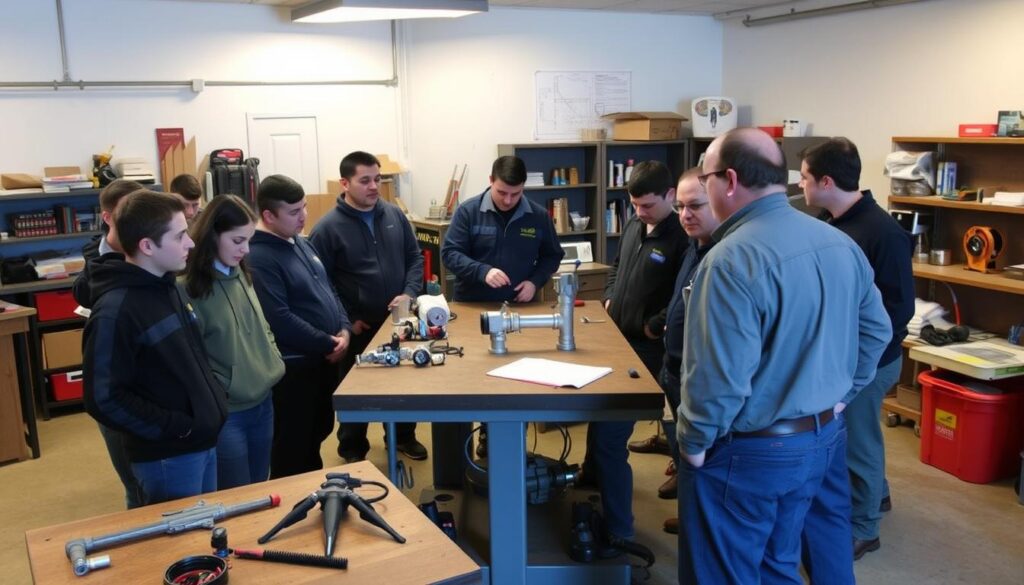
To become a plumber in Michigan, you need to know the apprenticeship process. These programs mix practical training with classroom learning. This creates a strong learning environment for future plumbers.
Finding an Apprenticeship Sponsor
Finding a good apprenticeship sponsor is key for your plumbing career. Here are some tips:
- Contact local plumbing unions in Michigan
- Reach out to professional trade associations
- Network with established plumbing contractors
- Explore community college apprenticeship programs
Required Work Hours
Plumber apprenticeship programs in Michigan need a lot of work experience. Most programs require:
| Apprenticeship Stage | Annual Work Hours | Total Program Hours |
|---|---|---|
| First Year | 1,000-1,500 hours | 144 classroom hours |
| Second Year | 1,500-2,000 hours | 144 classroom hours |
| Third Year | 2,000-2,500 hours | 144 classroom hours |
On-the-Job Training Components
Your plumber apprenticeship in Michigan will teach you many skills:
- Blueprint reading and interpretation
- Installation of residential and commercial plumbing systems
- Understanding local building codes
- Safety protocols and equipment usage
- Advanced pipe fitting techniques
By finishing a tough apprenticeship, you’ll go from a beginner to a skilled professional. You’ll be ready to shine in Michigan’s plumbing industry.
Michigan Plumbing Code and Compliance Standards
Knowing the Michigan plumbing code is key for plumbers. Your certification in Michigan relies on understanding these rules. They ensure safety, quality, and meet professional standards.
The Michigan plumbing code is a vital guide for plumbers. It deals with important plumbing topics like:
- Installation procedures
- Material specifications
- Safety requirements
- Inspection protocols
Keeping up with the Michigan plumbing code keeps your reputation strong. It also avoids legal issues. Plumbers must check for updates often to stay in line with state rules.
“Mastering the plumbing code is not just about following rules, it’s about ensuring public safety and quality workmanship.” – Michigan Plumbing Association
Important standards include:
- Choosing the right pipe materials
- Using correct installation methods
- Following local rules
- Keeping work records
By focusing on the Michigan plumbing code, you show you care about quality and safety. This makes you stand out in your field.
Journeyman Plumber Certification Process
To become a journeyman plumber in Michigan, you must follow a specific process. This journey includes several important steps. These steps show your skills and dedication to plumbing.
Examination Requirements
To get your journeyman plumber certification in Michigan, you must pass a detailed exam. This exam checks your technical knowledge and practical skills. It covers:
- Plumbing codes and regulations
- Installation techniques
- Safety protocols
- Blueprint reading
- Michigan-specific plumbing standards
Application Procedures
Getting your plumbing certification in Michigan involves several steps:
- Complete required apprenticeship hours
- Gather documentation of work experience
- Submit official application to state licensing board
- Pay required examination and certification fees
| Requirement | Details |
|---|---|
| Minimum Apprenticeship Hours | 8,000 hours |
| Exam Fee | $150-$250 |
| Certification Duration | 3 years |
Continuing Education Requirements
To keep your journeyman plumber michigan certification, you must keep learning. The state requires continuing education courses. These courses help you stay up-to-date with new plumbing technologies and rules.
- Minimum 16 continuing education hours per renewal cycle
- Courses must be approved by state licensing board
- Topics include code updates, safety innovations, and technical advances
Staying informed and continually improving your skills is the hallmark of a true professional in the plumbing certification michigan landscape.
Master Plumber License Requirements and Benefits
Getting a master plumber license in Michigan is the top honor for plumbers. It shows you’re a true expert in plumbing. This license opens many doors for your career.
To become a master plumber in Michigan, you must meet certain requirements. Here’s what you need to do:
- Complete a lot of experience as a journeyman plumber.
- Pass a tough state exam.
- Show you know a lot about plumbing.
- Keep your certifications up to date.
Being a master plumber comes with big perks. You can:
- Start your own plumbing business.
- Lead big plumbing projects.
- Make more money.
- Offer expert advice.
Your master plumber license proves you know all about Michigan’s plumbing rules. Being seen as a pro is key to success in plumbing.
Invest in your future by getting your master plumber certification. Your future self will be grateful.
Getting ready for the master plumber test takes hard work and smart studying. Use practice tests, expert advice, and keep learning to boost your success.
Essential Tools and Equipment for Michigan Plumbers
Starting a plumbing career in Michigan is more than just knowing how to fix pipes. You need the right tools and to know how to use them. Good plumbers use top-notch equipment to handle different jobs well.
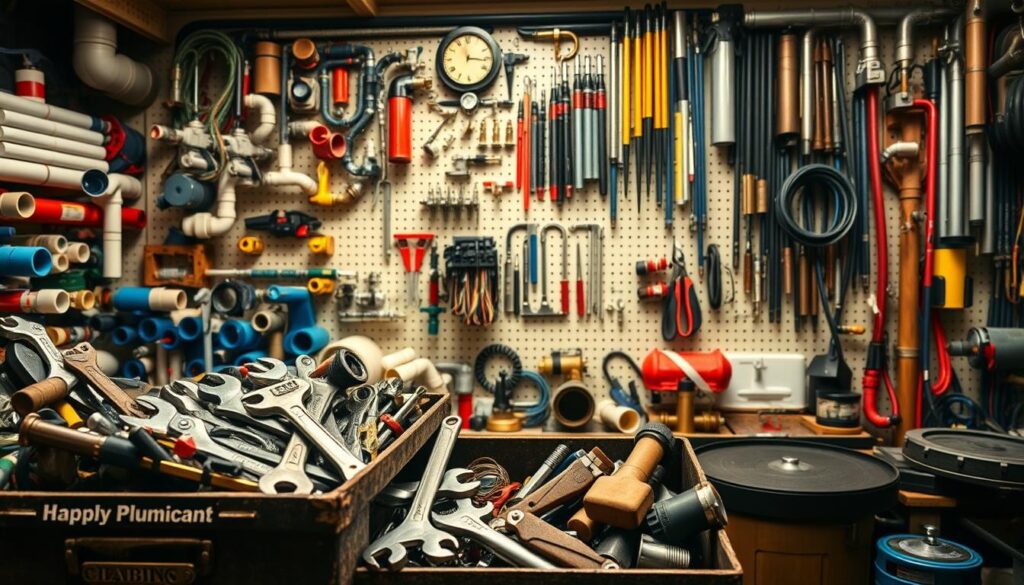
As you learn to be a plumber in Michigan, you’ll see your tools are key. Plumbers use a wide range of tools for accuracy and efficiency.
Basic Tool Requirements
- Pipe wrenches in multiple sizes
- Adjustable pipe cutters
- Pliers and channel locks
- Tape measure and level
- Hacksaw with replaceable blades
Safety Equipment Needs
Safety is critical in the Michigan plumbing industry. You’ll need:
- Safety glasses
- Steel-toed work boots
- Work gloves
- Hard hat for construction sites
- Hearing protection
Advanced Technology and Tools
Today’s plumbing needs tech skills. New tools like digital pipe locators and thermal cameras are common in Michigan.
- Thermal imaging cameras for detecting hidden leaks
- Digital pipe mapping systems
- Electronic drain inspection cameras
- Pressure testing equipment
Buying quality tools and keeping up with new tech will help you succeed in Michigan.
Business Opportunities and Self-Employment Options
Starting your own plumbing business is exciting in Michigan. As a licensed plumber, you can explore many entrepreneurial paths. These paths can greatly increase your salary.
To start a plumbing business, you need a good plan and to know the local market. Here are some important steps for self-employment:
- Develop a detailed business plan
- Get the right business licenses and insurance
- Make a strong marketing plan
- Build a loyal customer base
- Invest in top-notch tools and equipment
There are different business models to consider:
- Solo Operator: Low costs, personal client ties
- Small Team Business: More services offered
- Specialized Services: Focus on certain plumbing areas
| Business Model | Initial Investment | Potential Annual Revenue |
|---|---|---|
| Solo Operator | $5,000 – $10,000 | $50,000 – $85,000 |
| Small Team Business | $20,000 – $50,000 | $100,000 – $250,000 |
| Specialized Services | $15,000 – $30,000 | $75,000 – $150,000 |
Your success comes from learning, great customer service, and keeping up with trends. Networking and a strong reputation are key to growing your plumbing business in Michigan.
Insurance Requirements and Business Regulations
Understanding insurance and regulations is key to protecting your plumbing business in Michigan. You need to know the Michigan plumbing license requirements. These include getting the right insurance to keep your business safe and follow state laws.
When you start your plumbing business, you must pay attention to insurance and legal matters. These steps help protect you and your clients.
Liability Insurance Requirements
Michigan plumbing laws require certain liability insurance. Your business needs strong insurance to cover any damages or accidents:
- General liability insurance ($500,000 – $1 million coverage)
- Professional liability protection
- Property damage coverage
- Vehicle insurance for work-related transportation
Workers’ Compensation Guidelines
Michigan has rules for workers’ compensation in plumbing businesses with employees. Important points include:
- Mandatory coverage for all full-time employees
- Protection against workplace injuries
- Compliance with state employment regulations
Business Registration Process
Starting your plumbing business requires several steps:
| Registration Step | Required Documentation |
|---|---|
| Business Name Registration | Unique business name certificate |
| Tax ID Acquisition | Federal Employer Identification Number (FEIN) |
| State Business License | Michigan Department of Licensing application |
Getting the right insurance and registering your business properly is vital. It protects your reputation and gives you peace of mind in Michigan’s competitive plumbing market.
Conclusion
Starting a plumbing career in Michigan is exciting for those ready to work hard. You’ll need dedication, technical skills, and a drive to grow professionally. The path includes training, getting certifications, and learning more as you go.
To become a plumber in Michigan, follow clear steps. First, meet educational needs, then get an apprenticeship. Next, pass licensing exams and keep improving your skills. The plumbing job market in Michigan is strong, with good pay and chances to move up.
Your success in plumbing in Michigan depends on being well-prepared and always learning. The field offers many opportunities, from homes to big buildings. Start by looking into training, joining local plumbing groups, and getting ready for your apprenticeship.
Being a licensed plumber is a respected job that needs skill, problem-solving, and a focus on quality. Your journey in Michigan’s plumbing industry begins today. Each step will lead you to a rewarding and possibly lucrative career.