
Affiliate Disclosure
Plumber Guide Guys is a participant in the Amazon Services LLC Associates Program, an affiliate advertising program designed to provide a means for sites to earn advertising fees by advertising and linking to Amazon.
How Much Is Plumbing for a New House? Did you know plumbing for a new house can cost between $4,000 and $15,000? This price range is for a typical single-family home. To understand the cost, you need to look at several factors.
Exploring the cost of plumbing in new construction can be tough. This guide will cover everything about plumbing for your dream home. We’ll talk about material choices and how prices change by location. This will help you plan your plumbing budget wisely.
Your home’s plumbing system is very important. It affects your comfort, water use, and your home’s value over time. Knowing what to expect can help you choose the best options without breaking the bank.
Key Takeaways
- Plumbing costs vary widely based on house size and location
- Material quality significantly impacts overall installation expenses
- Professional planning can help optimize your plumbing budget
- Regional labor rates affect total new construction plumbing cost
- Invest in quality materials for long-term home performance
Table of Contents
Understanding New Construction Plumbing Basics
Creating a home plumbing system needs careful planning and expert knowledge. Your plumbing is key for a comfortable and safe home. Knowing the basics helps you understand costs better.
Types of Plumbing Systems
Most homes have three main plumbing systems:
- Potable Water System: Brings clean drinking water to your home
- Drainage System: Takes away wastewater from sinks, showers, and toilets
- Sewage System: Moves waste to treatment facilities
Essential Components
Each system has important parts that work well together:
| Component | Function | Typical Materials |
|---|---|---|
| Pipes | Carries water and waste | Copper, PVC, PEX |
| Fixtures | Provides water access | Sinks, toilets, showers |
| Water Heater | Makes hot water | Tankless, traditional storage |
Building Code Requirements
Your plumbing must follow local and national codes. These rules ensure safety and efficiency. Plumbers know these rules and can help manage costs.
Average Plumbing Installation Costs by Region
Knowing the average cost of plumbing installation in different areas helps with budgeting for your new home. Plumbing costs vary a lot based on where you live. Cities usually have higher prices than rural areas.
Several factors cause these cost differences:
- Local labor market dynamics
- Cost of living differences
- Regional building code requirements
- Material transportation expenses
We’ve put together a detailed look at plumbing installation costs in major US regions:
| Region | Average Plumbing Installation Price | Plumbing Contractor Rates |
|---|---|---|
| Northeast | $15,000 – $22,000 | $85 – $120 per hour |
| West Coast | $18,000 – $25,000 | $95 – $135 per hour |
| Midwest | $12,000 – $18,000 | $70 – $100 per hour |
| Southern States | $10,000 – $16,000 | $65 – $90 per hour |
Pro tip: Always get multiple quotes from local plumbing contractors to ensure you’re getting competitive rates for your specific location.
Factors Affecting New Home Plumbing Costs
When planning your new home’s plumbing, you need to think about several things. Your budget for plumbing in a new build depends on important factors. These factors can greatly change how much you’ll spend.
Knowing what affects your plumbing costs is key. This knowledge helps you make smart choices about your plumbing investment. The complexity of your project will affect how much you’ll need to spend for a good installation.
House Size and Layout Impact
The size and design of your home are big factors in plumbing costs. Bigger homes with more bathrooms and complex layouts need:
- More extensive piping networks
- Additional fixture connections
- Increased material requirements
- Longer installation times
Material Quality Considerations
The materials you choose can greatly impact your plumbing costs. Different materials have different levels of:
- Durability
- Corrosion resistance
- Longevity
- Initial and long-term costs
Labor Rates and Availability
Local market conditions also play a big role in your plumbing budget. Plumbers’ rates vary by region, influenced by:
- Regional labor market dynamics
- Contractor expertise
- Seasonal demand
- Local economic conditions
By carefully looking at these factors, you can create a realistic plumbing budget for your new home.
How Much Is Plumbing for a New House
Knowing the cost of plumbing in a new house is key for homeowners. Plumbing usually takes up 10-15% of your home’s total budget. This amount can change based on several important factors.
When figuring out plumbing costs for a new house, consider these:
- Square footage of your home
- Complexity of the plumbing system
- Quality of materials selected
- Local labor rates
- Specific regional building requirements
The cost for plumbing in a new home varies. It usually ranges from $4,000 to $15,000 for a standard-sized home. Smaller homes might cost less, while bigger or more complex homes could cost more.
Pro tip: Always budget an extra 10-15% above initial estimates to account for unexpected challenges during installation.
Your plumbing costs will depend on your home’s design. Custom layouts, multiple bathrooms, and special fixtures can raise costs. A professional plumber can help you create a budget that fits your project.
Breaking Down Plumbing Material Costs
When planning your new home pipe installation, it’s key to know the costs of plumbing materials. Your budget will depend on the materials you pick and their quality.
Exploring plumbing materials can be tricky. Each has its own benefits and prices, affecting your plumbing system costs.
Pipe Materials and Pricing
Different pipe materials have varying costs and performance:
- Copper Pipes: Most expensive, costing $2-$5 per foot
- PVC Pipes: More affordable at $0.50-$1 per foot
- PEX Pipes: Priced moderately at $1-$3 per foot
Fixture Cost Analysis
Plumbing fixtures are another big expense in your new home. Basic ones start at $50, while top models can be over $500.
Additional Hardware Expenses
Remember, you’ll also need valves, fittings, and mounting brackets. These small parts can increase your costs by $200-$500.
Pro tip: Always budget 10-15% extra for unexpected material expenses during installation.
Labor Costs for Plumbing Installation
When planning for plumbing work in your home, knowing the costs is key. Labor costs usually make up 40-50% of the total cost. This is a big part of your budget for the project.
Plumbing labor rates vary a lot in the United States. In big cities, you might pay $100 to $150 per hour for skilled workers. In smaller towns and rural areas, rates can be $50 to $80 per hour.
- Apprentice plumbers: $20-$40 per hour
- Journeyman plumbers: $40-$80 per hour
- Master plumbers: $80-$150 per hour
Several things affect the cost of plumbing labor:
- How complex the project is
- The local market rates
- The plumber’s experience
- Whether it’s an emergency or a scheduled job
To find the best deal, ask for quotes from different plumbing contractors. Look at their rates, experience, and customer feedback. This way, you’ll know you’re getting good work for a fair price.
Rough-In Plumbing Expenses
Building a new home means reaching a key stage: rough-in plumbing. This phase is about 30% of the plumbing cost for new homes. It lays the groundwork for your home’s water and waste systems.
Knowing the costs of rough-in plumbing helps homeowners plan their budgets. The costs can change a lot based on several important factors.
Foundation Plumbing Costs
Foundation plumbing is the start of your home’s water system. Costs at this stage include:
- Excavation and site preparation
- Main water line installation
- Sewer line connections
- Underground pipe placement
Wall and Floor Installation Expenses
The next step is installing plumbing inside your home. Plumbers place pipes before walls and floors are built.
| Plumbing Area | Average Cost Range | Key Considerations |
|---|---|---|
| Kitchen Rough-In | $500 – $1,500 | Multiple fixture connections |
| Bathroom Rough-In | $750 – $2,000 | Complex pipe routing |
| Laundry Area | $300 – $800 | Washer/dryer connections |
Experts say planning is key during the rough-in phase. This helps avoid costly changes later. Your total cost will depend on your home’s size, layout, and materials chosen.
Fixture Installation and Finishing Costs
Fixture installation is a big part of your home plumbing costs. The price varies based on the quality and type of fixtures you pick.
Your choice of fixtures affects your home’s look and function. Each type has its own installation needs:
- Kitchen sinks range from $200 to $1,500
- Bathroom toilets cost between $150 and $800
- Shower installations can run $1,000 to $5,000
- Bathtub setups range from $1,200 to $4,000
Professional plumbers charge $45 to $200 an hour for installation. The type of fixture you choose affects the cost. Custom or high-end fixtures need more skill and time to install right.
When planning your budget, think about these things:
• Material quality
• Brand reputation
• Installation complexity
• Local labor rates
Smart homeowners balance aesthetic preferences with practical budget constraints when selecting plumbing fixtures.
Choosing quality fixtures can boost your home’s value and save on maintenance costs. Pick wisely to get both style and function in your plumbing system.
Water Heater and Special Systems Installation
Choosing the right water heating system is key when planning your plumbing for a new home. It affects both your initial costs and your energy savings over time. You must weigh the costs of traditional versus modern systems.
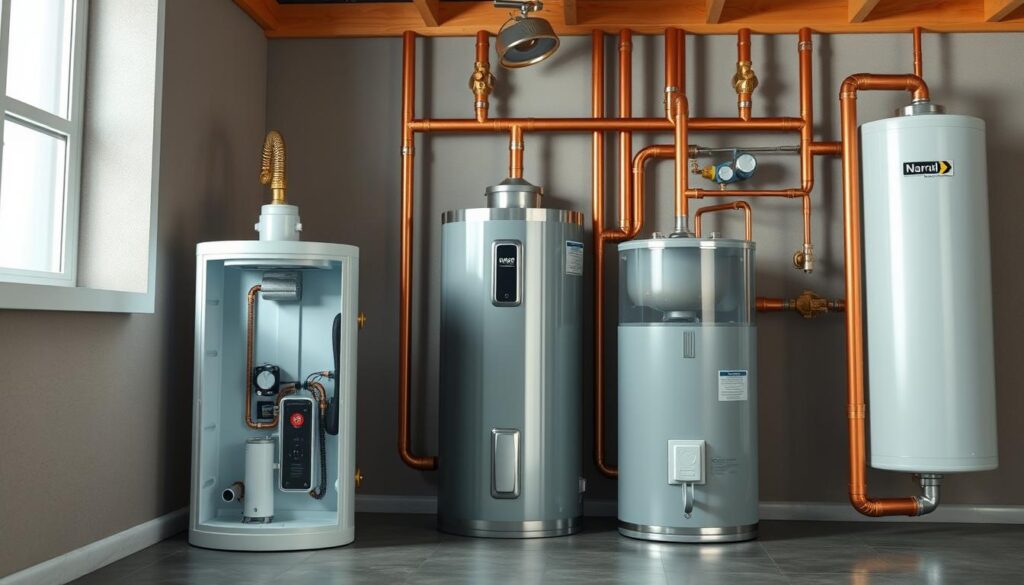
Water heaters are a big investment in your home. The cost to install them ranges from $500 to $1,800. This depends on the type and how complex it is. You have a few options:
- Traditional Tank Water Heaters: The cheapest to start with
- Tankless Water Heaters: More expensive upfront but saves energy
- Hybrid/Heat Pump Systems: Uses advanced tech for long-term savings
Traditional vs Tankless Water Heating Solutions
Traditional tank water heaters store hot water but use more energy. Tankless systems, on the other hand, heat water as needed, saving energy. When picking a system for your residential plumbing installation, think about your household’s hot water needs.
Energy Efficiency Considerations
Modern water heating tech can save a lot of energy. Even though they might cost more at first, they can cut your bills by 10-15% each year. Choose systems with high Energy Factor (EF) ratings for better long-term savings.
Permits and Inspection Fees
When planning your new home’s plumbing, understanding permits and inspections is key. Knowing these costs helps you budget better and avoid surprises.
Permit fees for plumbing work change based on where you are and the project’s size. Plumbing contractors usually cover some of these costs. But, you should also set aside money for these important approvals.
- Municipal permit fees range from $50 to $500
- Inspection costs typically run between $100 and $300
- Some jurisdictions charge based on the total project value
Your local building department needs certain documents for new plumbing. This usually includes:
- Detailed plumbing system plans
- Proof of licensed contractor certification
- Site-specific technical drawings
Pro tip: Always check with your local building authority early in the planning process. Some municipalities have complex permit requirements that can impact your project timeline and budget.
Ignoring permit rules can lead to big problems. You might face fines, have to remove work, or run into issues when selling your home. Working with experienced plumbing contractors who know local rules can make things easier.
Ways to Save on New Home Plumbing
Planning your plumbing budget for a new home can be tough. But, with smart planning, you can save money without losing quality. Choosing the right materials and timing can cut down on costs for new home pipe installation.
There are smart ways to lower plumbing costs without sacrificing performance. Here are some practical tips to make your investment go further:
Material Selection Strategies
- Choose cost-effective pipe materials like PEX or CPVC
- Compare quality versus price for long-term durability
- Purchase materials during seasonal sales
- Buy in bulk to receive volume discounts
Timing Your Installation
The time you choose for your new home pipe installation can greatly affect costs. Contractors often charge less during off-peak seasons.
| Season | Potential Savings | Availability |
|---|---|---|
| Winter | 15-25% | High contractor availability |
| Late Fall | 10-20% | Moderate demand |
| Spring/Summer | 0-10% | Peak construction season |
By using these strategies, you can manage your plumbing budget for a new home well. And you’ll get a top-notch installation.
Conclusion
Understanding the cost of plumbing in a new house is complex. It involves careful planning and smart decisions. Your plumbing system is a big investment that affects both upfront costs and your home’s value over time. Knowing the details of plumbing expenses helps you choose wisely, balancing quality, efficiency, and budget.
Managing plumbing costs starts with thorough research and planning ahead. Costs vary based on location, materials, and your home’s design. Getting expert advice and detailed assessments is key. This ensures your plumbing fits your needs, looks good, and saves money.
Think about the long-term benefits of your plumbing system. Choose high-quality materials and consider energy-saving options. Working with skilled professionals who know local codes and best practices is important. A well-planned plumbing system boosts your home’s function and value.
Every home is different, with unique plumbing needs. Factors like size, local rules, and your lifestyle play a role. By being informed and making smart choices, you can have a reliable plumbing system. This will also help you manage your budget well.
FAQ
How much does plumbing typically cost for a new house?
What are the main types of plumbing pipes used in new construction?
How do regional differences affect plumbing installation costs?
What factors most impact the total plumbing installation cost?
Are tankless water heaters worth the extra cost?
How much does plumbing typically cost for a new house?
What are the main types of plumbing pipes used in new construction?
How do regional differences affect plumbing installation costs?
What factors most impact the total plumbing installation cost?
Are tankless water heaters worth the extra cost?
FAQ
How much does plumbing typically cost for a new house?
Plumbing for a new house can cost between ,000 and ,000. This depends on the house size, location, and material quality. For a 2,000 square foot home, expect to spend ,000 to ,000 for full plumbing.
What are the main types of plumbing pipes used in new construction?
New homes often use PEX, copper, and PVC pipes. PEX is flexible and cost-effective. Copper is durable. PVC is affordable and resistant to corrosion.
How do regional differences affect plumbing installation costs?
Plumbing costs vary by region. Urban areas like California and New York have higher prices. The Midwest and South have lower costs due to lower labor and material prices.
What factors most impact the total plumbing installation cost?
Costs are influenced by house size, material quality, and plumbing system complexity. Local labor rates and the number of fixtures also play a role. Larger homes with more bathrooms cost more.
Are tankless water heaters worth the extra cost?
Tankless water heaters cost
FAQ
How much does plumbing typically cost for a new house?
Plumbing for a new house can cost between $4,000 and $15,000. This depends on the house size, location, and material quality. For a 2,000 square foot home, expect to spend $8,000 to $12,000 for full plumbing.
What are the main types of plumbing pipes used in new construction?
New homes often use PEX, copper, and PVC pipes. PEX is flexible and cost-effective. Copper is durable. PVC is affordable and resistant to corrosion.
How do regional differences affect plumbing installation costs?
Plumbing costs vary by region. Urban areas like California and New York have higher prices. The Midwest and South have lower costs due to lower labor and material prices.
What factors most impact the total plumbing installation cost?
Costs are influenced by house size, material quality, and plumbing system complexity. Local labor rates and the number of fixtures also play a role. Larger homes with more bathrooms cost more.
Are tankless water heaters worth the extra cost?
Tankless water heaters cost $1,000 to $3,000 upfront but save money over time. They last longer and use less energy, saving 24-34% on hot water costs.
How much should I budget for plumbing permits and inspections?
Permit and inspection fees are $500 to $2,000. They ensure your plumbing meets local codes and standards.
Can I save money by doing some plumbing work myself?
Some DIY tasks can save money. But, most plumbing in new homes needs a pro for code compliance. You can save by choosing materials and getting quotes.
What are the most expensive plumbing fixtures?
High-end fixtures like smart toilets and luxury showers are pricey. Designer faucets also cost a lot. Mid-range options can balance cost and quality.
How long does a typical plumbing installation take in new construction?
Plumbing installation takes 1-2 weeks, depending on the home’s size and complexity. The rough-in phase is 3-5 days, with more time for fixture installation and final connections.
What maintenance should I plan for after plumbing installation?
Annual maintenance is key. Check for leaks, inspect pipes, test water pressure, and have a pro inspect every 1-2 years. Budget $100-$300 annually for maintenance to avoid expensive repairs.
,000 to ,000 upfront but save money over time. They last longer and use less energy, saving 24-34% on hot water costs.
How much should I budget for plumbing permits and inspections?
Permit and inspection fees are 0 to ,000. They ensure your plumbing meets local codes and standards.
Can I save money by doing some plumbing work myself?
Some DIY tasks can save money. But, most plumbing in new homes needs a pro for code compliance. You can save by choosing materials and getting quotes.
What are the most expensive plumbing fixtures?
High-end fixtures like smart toilets and luxury showers are pricey. Designer faucets also cost a lot. Mid-range options can balance cost and quality.
How long does a typical plumbing installation take in new construction?
Plumbing installation takes 1-2 weeks, depending on the home’s size and complexity. The rough-in phase is 3-5 days, with more time for fixture installation and final connections.
What maintenance should I plan for after plumbing installation?
Annual maintenance is key. Check for leaks, inspect pipes, test water pressure, and have a pro inspect every 1-2 years. Budget 0-0 annually for maintenance to avoid expensive repairs.