
Affiliate Disclosure
Plumber Guide Guys is a participant in the Amazon Services LLC Associates Program, an affiliate advertising program designed to provide a means for sites to earn advertising fees by advertising and linking to Amazon.
Can You Use Liquid Plumber in Toilet? Ever looked at a tough toilet clog and thought Liquid Plumber could save the day? Before you pour it in, know the risks and what it might do to your toilet.
Drain cleaners like Liquid Plumber are common, but toilets need extra care. Many wonder: can you use liquid plumber in a toilet without harm? The answer is not simple.
To figure out if Liquid Plumber is safe for toilets, you must understand how it works with your plumbing. These chemicals might seem like a fast fix, but they can lead to more issues.
Key Takeaways
- Liquid Plumber is not recommended for toilets
- Chemical drain cleaners can damage toilet pipes
- Alternative unclogging methods are safer
- Professional plumbers offer the most reliable solutions
- Preventive maintenance helps avoid severe clogs
Table of Contents
Understanding Toilet Clogs and Chemical Cleaners
Dealing with toilet blockages can be frustrating for homeowners. To unclog a toilet with liquid plumber, you need to understand plumbing challenges and chemical solutions.
Toilet clogs are more than just annoying. They are complex plumbing issues that need careful solutions.
Types of Common Toilet Blockages
Toilet blockages usually fall into a few main categories:
- Organic waste accumulation
- Non-flushable materials
- Mineral buildup
- Tree root intrusions
How Chemical Cleaners Operate
Chemical drain cleaners, like liquid plumber, work through complex chemical reactions. They contain strong ingredients to break down organic materials and dissolve tough blockages.
The main way they work is by creating a corrosive chemical reaction. This reaction targets and breaks down waste materials that block water flow. Different chemicals are made to tackle specific types of clogs.
Safety Considerations for Chemical Usage
When using chemical drain cleaners, safety is key. Wear rubber gloves and eye protection. Good ventilation is also important to avoid chemical exposure risks.
Always read the product instructions and follow the recommended use for liquid plumber products. Chemical cleaners are effective but must be used responsibly and with care.
Safety first: Chemical drain cleaners are powerful tools that demand respect and careful handling.
Can You Use Liquid Plumber in Toilet?
Many homeowners face a tough toilet clog and wonder about using drain cleaner. Liquid plumber toilet unclogging might seem like a fast fix. But, it’s important to know the risks and limits.
Experts say to avoid using regular liquid drain cleaners in toilets. These chemicals can harm your toilet’s plumbing system. They might corrode pipes, damage toilet seals, and lead to costly long-term issues.
- Chemical drain cleaners can damage porcelain surfaces
- Toxic fumes may pose health risks
- Repeated use can weaken pipe infrastructure
Different clogs need different solutions. Drain cleaner might clear minor blockages, but it’s not good for serious clogs. Most drain cleaners aren’t made for toilet plumbing’s unique challenges.
Always read manufacturer instructions carefully before attempting any chemical unclogging method.
If you have frequent clogs, try other methods first. Plunging, using a toilet auger, or getting a pro plumber are safer options. They can find and fix the real problem without harming your toilet.
The Risks of Using Chemical Drain Cleaners in Toilets
When looking for the best liquid plumber for toilet clogs, it’s key to know the dangers of chemical drain cleaners. They might seem like a fast solution, but they can harm your plumbing and pose risks.
Chemical drain cleaners can damage your toilet and plumbing. The harsh chemicals don’t just vanish after use. They can lead to long-term problems that might cost a lot to fix.
Potential Damage to Plumbing Systems
Does liquid plumber work on toilets without causing harm? The answer is no. These chemicals can lead to serious problems:
- Corrosion of metal pipes
- Degradation of rubber seals and gaskets
- Permanent damage to porcelain fixtures
- Breaking down pipe materials over time
Health and Safety Hazards
Your safety is a top concern with chemical drain cleaners. These products can be very risky:
- Potential chemical burns from splashback
- Toxic fumes in enclosed bathroom spaces
- Respiratory irritation
- Skin and eye contact dangers
Environmental Impact
| Environmental Concern | Potential Consequences |
|---|---|
| Water System Contamination | Chemical residues pollute local water sources |
| Ecosystem Disruption | Harmful chemicals affect aquatic life |
| Long-term Environmental Damage | Persistent chemical accumulation in sewage systems |
Ultimately, the dangers of using chemical drain cleaners are greater than any temporary benefit. It’s important to protect your plumbing, health, and the environment.
Best Practices for Using Liquid Plumber Products
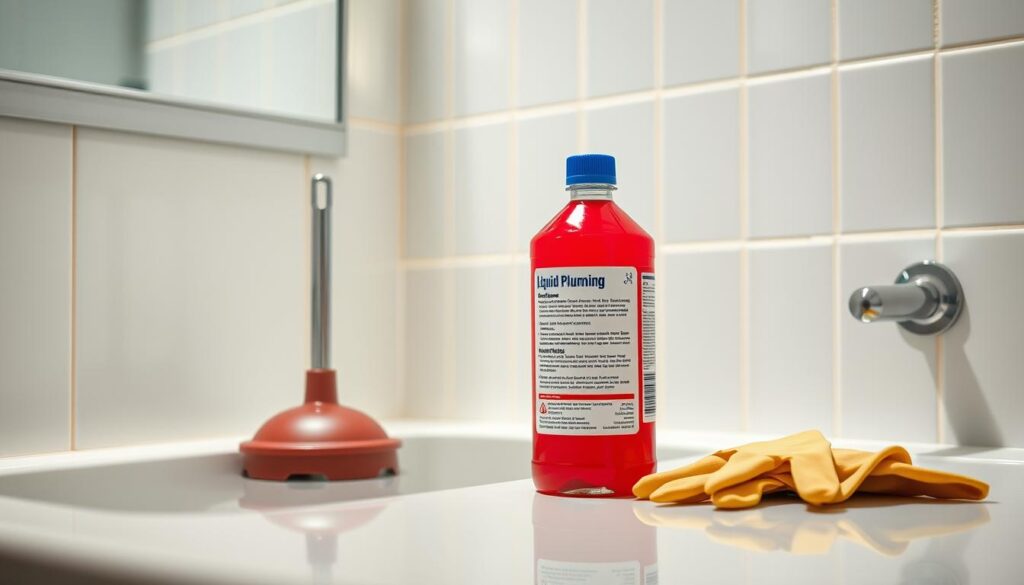
Dealing with toilet clogs can be tricky. Knowing the difference between liquid plumber and a toilet auger can save you time and prevent damage. Always read and follow the manufacturer’s instructions before using any chemical drain cleaner. This ensures safe and effective use.
Here are some critical guidelines for using liquid plumber products:
- Wear protective gloves and eye protection
- Ensure proper ventilation in the bathroom
- Measure the recommended dosage precisely
- Never mix different chemical cleaners
It’s important to know how long to leave liquid plumber in the toilet. Most products suggest waiting 15-30 minutes. But, never leave it longer than the manufacturer says. Leaving the product too long can damage your plumbing system.
When choosing between liquid plumber and a toilet auger, consider these points:
| Liquid Plumber | Toilet Auger |
|---|---|
| Chemical solution | Mechanical tool |
| Best for minor clogs | Effective for stubborn blockages |
| Quick application | Requires physical effort |
Keep liquid plumber products in a safe place, away from kids and pets. Always have the original container with instructions and safety info.
Alternative Solutions for Unclogging Toilets
Chemical drain cleaners like Liquid Plumber might not always solve a stubborn toilet clog. Plumbers suggest safer, more effective ways to clear blockages without harming your plumbing.
Before using Liquid Plumber in your toilet, consider these alternatives. They are effective and gentle on your plumbing:
Plunger Techniques for Effective Clearing
A plunger is the first defense against toilet clogs. Here’s how to use it effectively:
- Make sure the plunger seals well around the toilet bowl
- Apply firm, consistent pressure while pushing and pulling
- Do quick, sharp plunges to build suction
- Repeat 4-6 times before checking the clog again
Toilet Augers: A Professional-Level Solution
Is Liquid Plumber safe for toilets? Often, it’s not. A toilet auger is a safer mechanical solution. It can:
- Reach deeper into pipes than a plunger
- Deal with stubborn blockages
- Prevent pipe damage from harsh chemicals
Natural Cleaning Methods
For minor clogs, try these eco-friendly options:
- Hot water and dish soap can soften light blockages
- Baking soda and vinegar create a gentle cleaning reaction
- Enzyme-based cleaners offer a chemical-free option
These methods are safer and more effective than chemical drain cleaners for toilet clogs.
Signs Your Toilet Needs Professional Attention
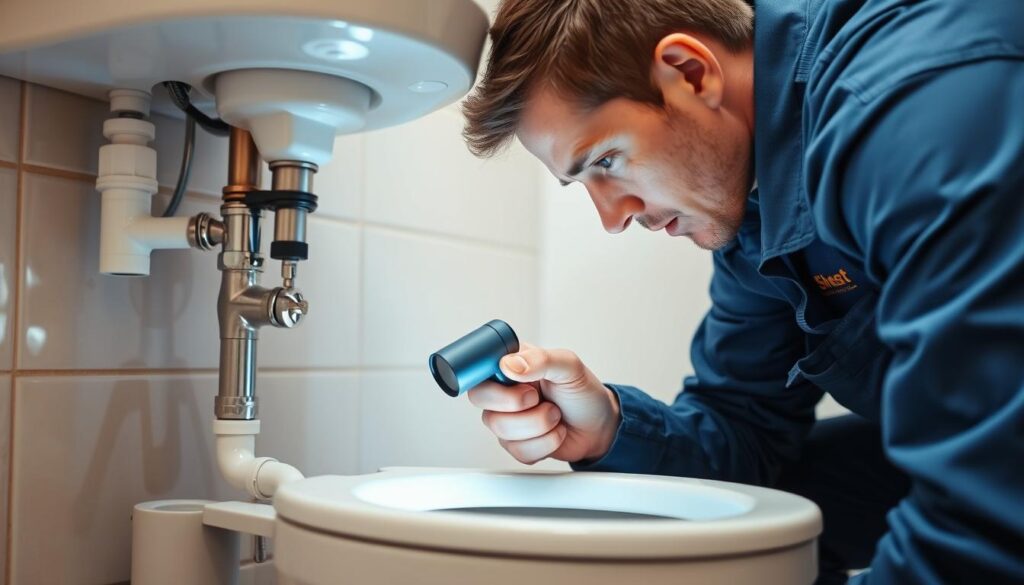
Using liquid plumber in the toilet bowl might not fix all problems. It’s important to know when you need a pro. Your toilet’s behavior can show deeper plumbing issues.
- Recurring clogs despite multiple attempts to unclog toilet with liquid plumber
- Unusual gurgling sounds from drain pipes
- Water backing up in multiple fixtures simultaneously
- Persistent slow drainage across bathroom fixtures
- Foul sewage odors emanating from toilet or drains
These signs often mean there’s a bigger problem. Chemical cleaners can’t fix deep or complex blockages.
| Warning Sign | Potential Underlying Issue | Recommended Action |
|---|---|---|
| Frequent Toilet Clogs | Potential Tree Root Invasion | Professional Camera Inspection |
| Sewage Backup | Main Line Blockage | Immediate Professional Intervention |
| Multiple Fixture Drainage Problems | Sewer Line Damage | Comprehensive Plumbing Assessment |
Ignoring these signs can lead to extensive and expensive damage to your home’s plumbing system. Plumbers have tools to find and fix problems that liquid plumber can’t.
Early detection of serious plumbing problems can save you thousands in future repairs.
If DIY and liquid plumber don’t work, call a licensed plumber. They can fix your toilet’s problems for good.
Preventing Future Toilet Clogs
Keeping your plumbing system healthy means taking care of it ahead of time. By using smart prevention methods, you can cut down on toilet clogs. This also means you won’t need to use drain cleaners as often.
Prevention starts with knowing what can and can’t go down your toilet. Clogs often happen when you flush things you shouldn’t. These items might seem harmless but can really mess up your plumbing.
Maintenance Best Practices
- Check your toilet every week
- Use soft, safe toilet paper for septic systems
- Get a toilet paper holder that only holds a small roll
- Do a drain check every month
- Always have a plunger ready for quick fixes
Items to Never Flush
Knowing what not to flush is key to avoiding clogs. Some things can seriously harm your plumbing.
- Baby wipes (even if they say they’re flushable)
- Feminine hygiene products
- Dental floss
- Cotton swabs and cotton balls
- Paper towels
- Cleaning wipes
- Medication
- Cigarette butts
By sticking to these rules, you’ll keep your plumbing in top shape. This saves you money on repairs and keeps you from dealing with annoying clogs.
Top Recommended Liquid Plumber Products for Toilets
Dealing with tough toilet clogs? The right liquid plumber can make a big difference. Not all chemical cleaners are good for toilets. You need products made for toilet care.
The top liquid plumbers for toilet clogs use enzymes. These enzymes break down organic matter safely. They are gentler than harsh chemicals, making them better for your toilet.
- Green Gobbler Drain Clog Dissolver: Environmentally friendly and safe for most plumbing systems
- Thrift Marketing Drain Cleaner: Powerful enzyme-based formula effective on organic clogs
- Bio-Clean Drain Septic Treatment: Natural bacteria-based solution for challenging blockages
Experts say to look for certain things when checking if liquid plumber works on toilets:
- Enzyme-based formulas
- Biodegradable ingredients
- Safe for septic systems
- Less likely to damage pipes and porcelain
Even with these products, they’re not a fix for all plumbing problems. Always use them carefully and follow the instructions.
When to Call a Professional Plumber
Dealing with toilet clogs can be really frustrating. While using liquid plumber or a toilet auger might seem easy, some problems need a pro. Knowing when to call a plumber can save you from big repair costs and damage to your plumbing.
- Multiple fixtures are clogged at once
- Toilets overflow often, even after plunging
- You hear strange gurgling sounds from drains
- Sewage backs up into sinks or toilets
- Stuck clogs that won’t go away with chemicals
Professional plumbers have tools you don’t. They use high-pressure water jets and rooter machines for tough clogs. They find and fix the real problems, so you don’t keep facing the same issues.
“Prevention is always cheaper than repair. A professional plumber can spot problems before they cost a lot.” – Expert Plumbing Association
Remember, using liquid plumber too much can harm your pipes. If DIY fixes don’t work, it’s time to call a pro.
Getting a professional plumber might seem pricey at first. But it can save you from big repair bills later. Trust the experts when your toilet problems are more than just a simple clog.
How Long to Leave Liquid Plumber in Toilet
When you face a tough toilet clog, knowing how long to use liquid plumber is key. It helps clean effectively and safely. Chemical drain cleaners need a certain time to work without harming your pipes.
For most cases, you should leave liquid plumber in the toilet for 15 to 30 minutes. This lets the solution break down organic stuff and small clogs. Always check the specific product instructions, as different ones might need different times.
- Standard wait time: 15-30 minutes
- Maximum recommended duration: Never exceed 30 minutes
- Potential risks of prolonged exposure: Pipe damage and chemical erosion
Before using liquid plumber in your toilet, think about these important points:
| Clog Type | Recommended Action | Wait Time |
|---|---|---|
| Light organic blockage | Standard chemical treatment | 15-20 minutes |
| Stubborn waste buildup | Extended treatment | 25-30 minutes |
| Severe blockage | Professional intervention recommended | Do not use chemical cleaner |
Watch out for these warning signs to stop treatment:
- No improvement after initial application
- Visible pipe or toilet bowl damage
- Persistent strong chemical odors
If clogs keep coming back, call a pro plumber. They can fix it safely without harming your pipes.
Conclusion
When you face toilet clogs, knowing if liquid plumber is safe is key to protecting your plumbing. Chemical drain cleaners might seem quick, but they can harm more than help.
It’s best to use liquid plumber for unclogging with care. Plumbers suggest trying plungers, toilet augers, or natural cleaners first. The right choice depends on your clog’s type.
Preventing problems is the best strategy. Clean regularly, flush wisely, and fix blockages early. DIY fixes work for small clogs, but big ones need a pro.
Choose long-term care over quick fixes for your toilet and pipes. Being informed and careful helps manage clogs without damaging your plumbing.