

Affiliate Disclosure
Plumber Guide Guys is a participant in the Amazon Services LLC Associates Program, an affiliate advertising program designed to provide a means for sites to earn advertising fees by advertising and linking to Amazon.
When Did Indoor Plumbing Become Common? Imagine it’s a crisp autumn morning in 1850. Sarah Miller walks into her kitchen and turns a handle. Clean water flows effortlessly. This simple act was once magic.
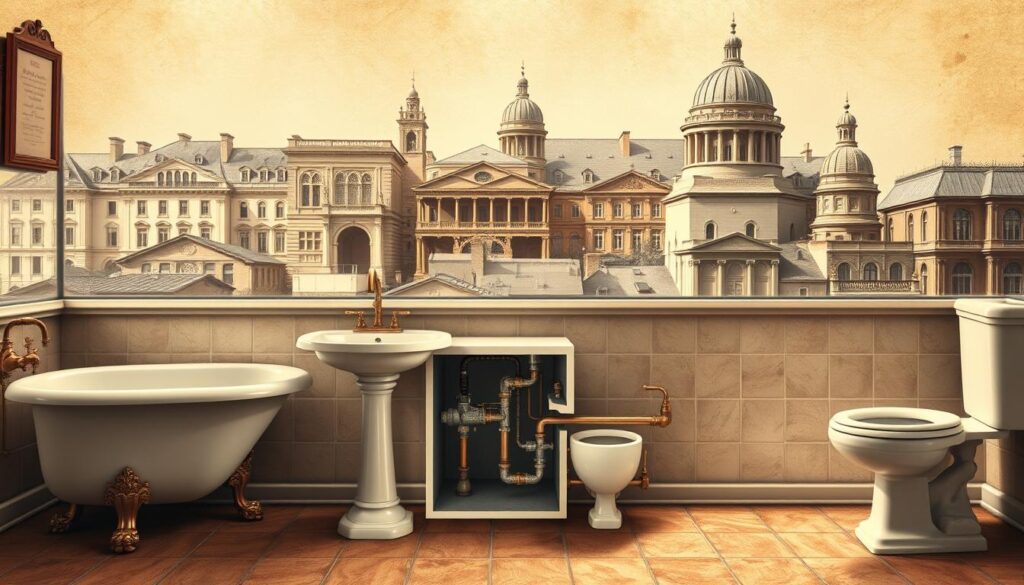
The story of indoor plumbing is one of human innovation and public health change. Before modern plumbing, most Americans used wells, outhouses, and collected water by hand. The shift was slow, changing how people lived and understood cleanliness.
Technological advances and urban growth were key in bringing running water to homes.
At first, indoor plumbing was a luxury for the wealthy. But as it spread, it changed American homes. It improved health, sanitation, and life quality in ways our ancestors couldn’t dream of.
Key Takeaways
- Indoor plumbing emerged as a revolutionary technology in the 19th century
- Initial plumbing systems were exclusively available to wealthy households
- Urban development significantly accelerated plumbing infrastructure
- Public health concerns drove widespread plumbing adoption
- Technological innovations made modern plumbing possible
Table of Contents
The Ancient Origins of Plumbing Systems
Ancient civilizations started the path to modern plumbing with amazing engineering feats. Their plumbing systems showed incredible skill long before today’s water management.
Looking into ancient sanitation methods gives us a peek into early societies’ water and waste solutions. These early steps are key to understanding our current water systems.
Early Egyptian Copper Pipe Systems
The ancient Egyptians were true pioneers in water management. They built copper pipe systems around 2500 B.C., mainly in pyramids and royal places.
- Copper pipes installed in pharaohs’ bathrooms
- Advanced drainage techniques in sacred buildings
- Precise engineering for water transportation
Roman Aqueducts and Public Bathhouses
The Roman Empire changed water systems with huge engineering projects. Their aqueducts stretched for hundreds of miles, bringing clean water to cities. They also built advanced public bathhouses.
| Roman Water Infrastructure | Key Features |
|---|---|
| Aqueduct Length | 250-300 miles typical |
| Public Bathhouses | Advanced heated water systems |
| Sewage Management | Complex underground drainage networks |
The Indus Valley Civilization’s Advanced Drainage
The Indus Valley Civilization showed incredible urban planning with their drainage systems. Their cities had advanced wastewater management, beating many modern societies.
- Networked underground sewage channels
- Brick-lined drainage systems
- Sophisticated waste management techniques
Exploring these ancient plumbing systems shows us the power of human ingenuity in solving big environmental problems.
Evolution of Sanitation Through the Middle Ages
In the Middle Ages, plumbing took a big step back from ancient times. European cities grew fast, but their sanitation couldn’t keep up. The Romans’ smart water systems were forgotten, making life hard for city folks.
Sanitation history shows big problems with waste and health. Cities were hotspots for sickness because of bad waste handling and little hygiene knowledge. Streets were like sewers, filled with trash and waste.
- Most buildings lacked proper drainage systems
- Open sewage channels were common in urban areas
- Water sources became increasingly contaminated
- Disease outbreaks were frequent and devastating
In the 14th century, some new ideas started to fix these issues. City planners worked on closed sewer systems to fight bad smells. These early steps were the start of modern urban sanitation.
Medieval communities slowly saw the need for better waste and water management. Their simple solutions were the start of better plumbing and health technologies.
The Birth of Modern Indoor Plumbing
The early 19th century was a game-changer for indoor plumbing in America. It brought comfort and cleanliness into homes. This new technology changed both homes and public places across the country.
At first, indoor plumbing was a slow change. Only the rich and famous had it. But soon, more people wanted this modern comfort.
Pioneering Hotels and Luxury Accommodations
In 1829, the Tremont Hotel in Boston made history. It was the first to offer private bathrooms for guests. The hotel had:
- Eight private bathrooms
- Running water on each floor
- Advanced drainage systems
Presidential Plumbing Innovations
In 1833, the White House got running water on the main floor. This move showed that indoor plumbing was becoming more accepted.
Early Residential Systems
At first, indoor plumbing was only for the wealthy. But as technology improved, it became more common. Soon, even middle-class families could have it.
The journey of indoor plumbing represents a remarkable transformation in American living standards.
When Did Indoor Plumbing Become Common?
The shift to indoor plumbing in the United States happened slowly between the late 19th and early 20th centuries. Your home’s bathroom wasn’t always a standard feature. Before 1900, most American families used outhouses or shared public bathrooms.
The timeline of plumbing adoption shows a remarkable change. This change was driven by several key factors:
- Urbanization led to better infrastructure
- Technological advancements made plumbing cheaper
- Concerns about public health pushed for better sanitation
By the 1920s, big cities started building full water and sewage systems. Wealthy areas of cities got indoor plumbing first. Then, middle-class homes followed. But, rural areas were slower to get plumbing, often waiting until the 1950s.
Important moments in indoor plumbing included:
- 1830s: First simple indoor water systems
- 1900: Less than 10% of homes had full plumbing
- 1940: About 55% of homes were fully plumbed
- 1960: Over 90% of American homes had full plumbing
Government efforts and new technologies were key in changing bathroom experiences. The Works Progress Administration during the Great Depression helped a lot. It expanded water systems, speeding up plumbing adoption for all.
Revolutionary Inventions in Plumbing Technology
The world of plumbing has changed a lot over the years. Inventors have come up with new ideas that have changed how we clean ourselves and build cities. These ideas have made our lives cleaner and better.
Modern plumbing started with big breakthroughs that solved big problems. Each new invention made things better and more efficient for getting rid of waste.
Sir John Harrington’s First Flush Toilet
In 1596, Sir John Harrington made the first working flush toilet for Queen Elizabeth I. His toilet had a special valve that let water wash away waste. This was a big step forward in making things cleaner.
- Created first functional flush mechanism
- Designed for royal use
- Introduced water-based waste removal concept
Alexander Cummings and the S-Trap Innovation
Alexander Cummings changed toilet technology in 1775 with the S-trap. This curved pipe kept sewer smells out of homes by keeping water in it. It made homes healthier and cleaner.
- Patented the S-shaped pipe design
- Blocked harmful sewer gases
- Enhanced indoor hygiene standards
Thomas Crapper’s Contributions
Thomas Crapper made modern toilets popular in the late 1800s. He didn’t invent the flush toilet, but he made it better. His work and marketing made plumbing famous.
These inventors turned simple waste disposal into advanced systems. They helped create the modern bathrooms we have today.
The Development of Urban Sewer Systems
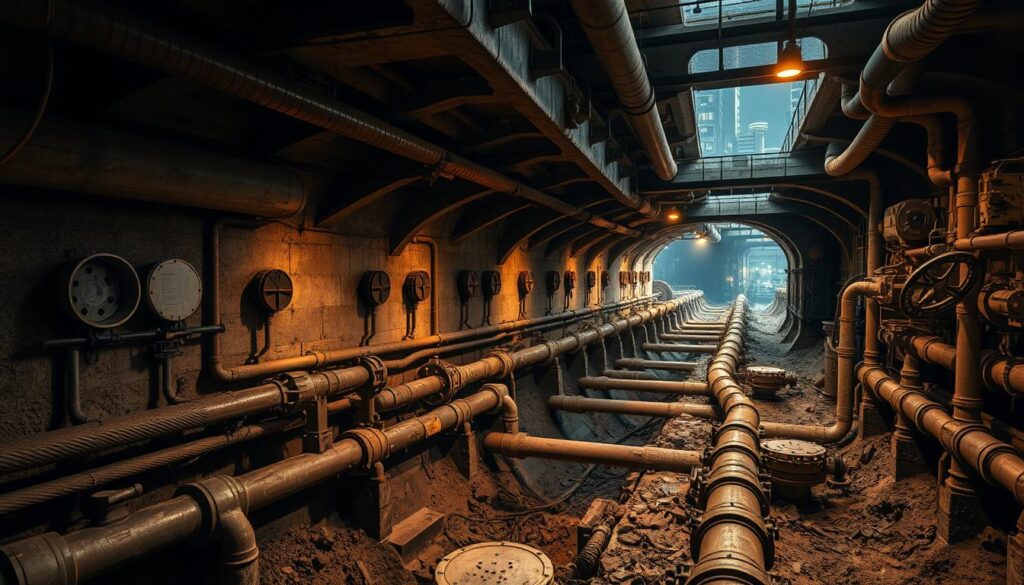
The change in city sanitation was a big deal in American history. Chicago was a leader in sewer development in the mid-1800s. They tackled public health issues with new solutions, changing how cities handle waste and water.
As cities grew fast, sewer systems became key. The engineering was tough, needing smart planning and lots of money. Cities had to build big waste management systems for growing populations.
- Cholera outbreaks led to quick fixes in infrastructure
- Engineers built complex underground drainage systems
- City planners focused on health with smart sewer designs
Chicago’s sewer system set a standard for other cities. It tackled big problems:
- Stopping water pollution
- Lowering disease spread
- Supporting growing cities
- Boosting public health
These early sewer systems were game-changers. They were more than just pipes. They were complex networks that greatly improved city life. The rise of urban sewer systems was a big step forward in health and engineering.
The sewer system is the unsung hero of modern urban infrastructure.
By the late 1800s, cities across the U.S. followed Chicago’s lead. They adopted sewer management plans, making cities healthier and more sustainable.
Public Health and the Push for Indoor Plumbing
In the early 20th century, plumbing became key to public health in America. As cities grew, the dangers of bad sanitation became clear. This led to a big push to make hygiene better.
Disease Outbreaks and Sanitation Awareness
Disease outbreaks in big cities showed the need for better sanitation fast. Cholera, typhoid, and dysentery spread quickly through dirty water. This created a health crisis that needed quick action.
- Urban populations faced significant health risks from poor water management
- Medical professionals documented direct links between unsanitary conditions and disease transmission
- Public awareness grew about the importance of clean water systems
Government Regulations and Standards
By the mid-1930s, governments started making strict rules for plumbing and health. These new rules changed how communities handled water and waste.
| Year | Regulatory Milestone | Impact |
|---|---|---|
| 1930 | First National Plumbing Codes | Standardized safe water delivery systems |
| 1935 | Public Health Service Plumbing Regulations | Established nationwide sanitation standards |
| 1938 | Comprehensive Waste Management Guidelines | Reduced waterborne disease transmission |
These important steps changed health infrastructure, making indoor plumbing essential for cities. We owe thanks to these early leaders for the safe, clean water we have today.
Materials and Manufacturing Evolution
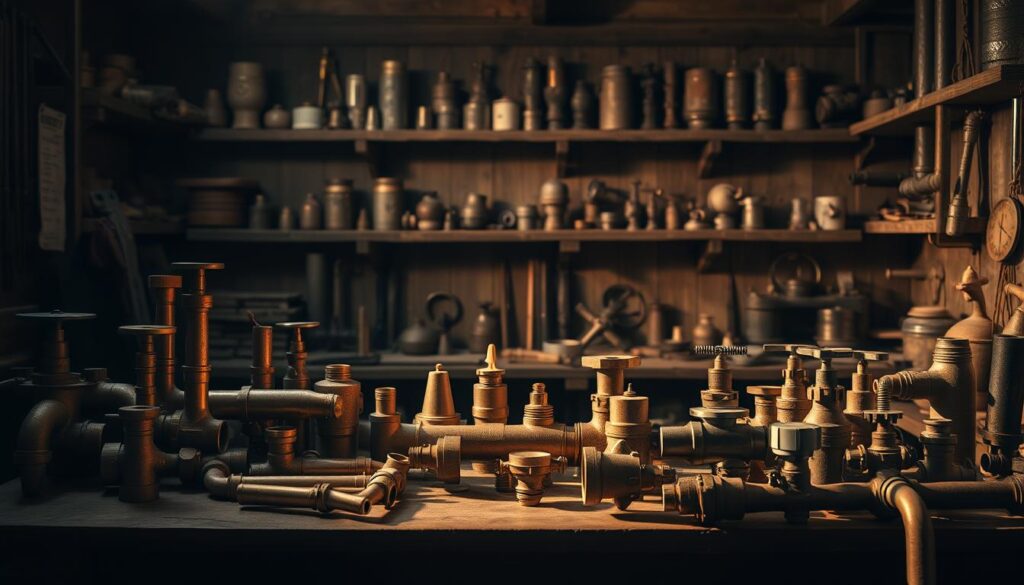
The history of plumbing materials is filled with innovation and progress. Before World War II, plumbers used lead and copper. These metals were not very durable or effective.
In the 1940s, the plumbing world changed. Wartime rules led to the discovery of new materials. These new finds were key for homes and businesses.
- Cast iron became a strong choice for pipes
- Plastics offered light, corrosion-free options
- Synthetic materials were cheaper
New materials brought big benefits:
- Pipes lasted longer
- Water flowed better
- Installation and upkeep costs went down
- They stood up better to the environment
Today’s plumbing systems owe a lot to these 20th-century breakthroughs. Now, makers use advanced composites and precise engineering that were once dreams.
The evolution of plumbing materials shows our creativity and technological growth.
The Impact of World War Era Restrictions
World War II changed the plumbing industry in big ways. It faced huge challenges because of material shortages. Iron, steel, and copper were in short supply.
The war led to new plumbing solutions. Companies turned to synthetic plastics as a quick fix. This was a big step forward, showing how the industry could adapt.
- Copper and steel were used for military needs.
- Plastic became widely accepted in industry.
- Lightweight plumbing parts were developed fast.
After the war, plumbing saw a huge boom. Veterans and government programs helped build many homes. This led to more homes with indoor plumbing.
The post-war economy helped plumbing grow. New ways to make plumbing were developed during the war. Now, modern plumbing was common in homes across the country.
Necessity truly became the mother of invention during this transformative period in American infrastructure.
The plumbing industry got stronger and more flexible because of these changes. It showed how innovation and adaptation can lead to success.
Conclusion
Indoor plumbing has become a key part of our lives. It has evolved from ancient copper pipes to today’s advanced systems. This shows how far we’ve come in making water safe and waste management better.
Looking ahead, new tech is changing how we think about plumbing. Smart homes now use sensors and save water in new ways. This shows plumbing is not just about working well, but also about being green and saving resources.
Now, saving water is a big deal in plumbing. Experts are working on systems that use less water and are better for the planet. They’re making things like low-flow toilets and smart leak detectors to help us save water.
The story of indoor plumbing is a big win for humanity. It started with simple systems and has grown into a complex network. It helps keep us healthy, protects the environment, and makes our homes comfortable. As we keep improving, plumbing will help solve big water problems worldwide.