
Affiliate Disclosure
Plumber Guide Guys is a participant in the Amazon Services LLC Associates Program, an affiliate advertising program designed to provide a means for sites to earn advertising fees by advertising and linking to Amazon.
How Much Does Plumbing Cost for a New House? Did you know the average American homeowner spends $4,000 to $12,000 on plumbing for new homes? Knowing the plumbing costs for a new house helps you budget better and avoid surprises.
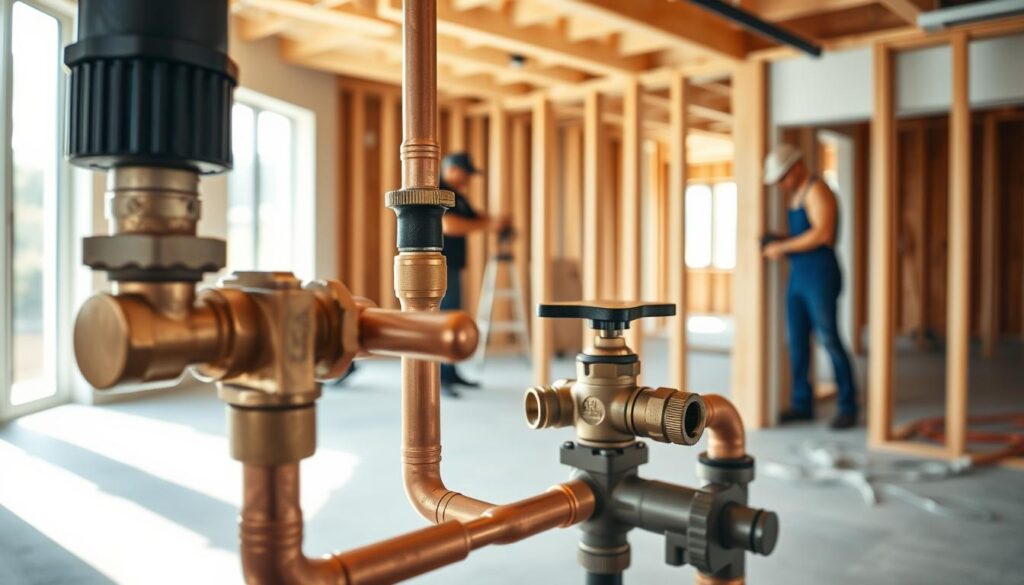
Several things affect the cost of plumbing in a new home. The size of your home, how many bathrooms, the kitchen’s complexity, and the materials you choose all play a role. It’s important to plan for these costs to make the building process smoother.
Your plumbing system is a key investment in your home. It affects your home’s function, comfort, and value over time. By understanding the costs and key factors, you can make choices that are both quality and affordable.
Key Takeaways
- New home plumbing costs range from $4,000 to $12,000
- Multiple factors influence overall plumbing expenses
- Proper planning helps manage installation costs
- Material selection impacts total project investment
- Professional consultation can provide accurate budget estimates
Table of Contents
Understanding New Home Plumbing Costs
Planning a new home? Knowing the cost of plumbing is key to a good budget. Plumbing is essential in any home. The cost to plumb a house changes based on several factors.
The plumbing system’s complexity affects the cost. Homeowners face a range of expenses. These depend on:
- Home square footage
- Number of bathrooms and fixtures
- Plumbing material selections
- Local labor rates
- Home layout and design complexity
National Average Costs Overview
The average cost to plumb a house is $4.50 to $5.50 per square foot. For a 2,000-square-foot home, expect to pay between $9,000 and $11,000.
Factors Affecting Total Expenses
Several elements influence your plumbing costs. Urban areas often have higher labor costs. Rural areas might be cheaper. The design and material quality also play a big role.
Cost Per Square Foot Breakdown
Understanding costs per square foot is helpful. Larger homes usually have lower costs per square foot. Smaller homes might have higher costs because fixed costs are spread over a smaller area.
Pro tip: Always get multiple quotes and discuss your specific home design with professional plumbers to get the most accurate estimate.
How Much Does Plumbing Cost for a New House
When planning your new home, knowing the plumbing costs is key. Plumbing costs for new homes vary based on several factors. For a 2,000-square-foot home with two or three bathrooms, expect to spend between $8,000 and $12,000 on plumbing.
“Proper planning of plumbing costs can save you thousands in unexpected expenses during home construction.”
Your plumbing investment includes several important parts:
- Rough-in plumbing installation
- Fixture connections
- Material expenses
- Labor costs
The design of your home affects plumbing costs. The number of bathrooms, kitchen layout, and special fixtures can change your total cost.
| Home Size | Estimated Plumbing Cost | Complexity Level |
|---|---|---|
| 1,500 sq ft | $6,500 – $9,000 | Low |
| 2,000 sq ft | $8,000 – $12,000 | Medium |
| 2,500 sq ft | $10,000 – $15,000 | High |
Pro tip: Always get multiple quotes from licensed plumbing contractors to ensure competitive pricing for your new home plumbing expenses.
Rough-In Plumbing Installation Expenses
Building a new home means knowing the cost of plumbing is key for your budget. The rough-in plumbing stage is vital. It sets up the home’s water and waste systems.
This stage involves putting in basic pipes and connections before walls are finished and fixtures are added. The cost to install pipes in a new home depends on several factors.
Kitchen Plumbing Considerations
Kitchen plumbing needs careful planning and precise installation. Costs for kitchen rough-in include:
- Water supply lines
- Drain and waste pipes
- Sink connection points
- Potential appliance hookups
Bathroom Installation Pricing
Bathroom plumbing is complex and can be pricey. Costs vary based on the number and type of fixtures.
| Bathroom Type | Rough-In Cost Range | Typical Fixtures |
|---|---|---|
| Half Bath | $1,500 – $2,000 | Toilet, Sink |
| Full Bathroom | $2,500 – $3,500 | Toilet, Sink, Shower/Tub |
| Master Bathroom | $3,000 – $4,500 | Toilet, Double Sinks, Shower, Tub |
Fixture Installation Breakdown
Installing fixtures can greatly affect your plumbing costs. Professional installation ensures proper connections and prevents future issues.
- Standard toilet installation: $150 – $300
- Sink installation: $200 – $500
- Shower/tub installation: $1,000 – $3,000
Always talk to a professional plumber for accurate estimates. They can consider your home design and local building rules.
Types of Plumbing Materials and Their Costs
Choosing the right plumbing materials is key for your new construction plumbing costs. Different materials have their own benefits and prices. These can greatly affect your plumbing budget.
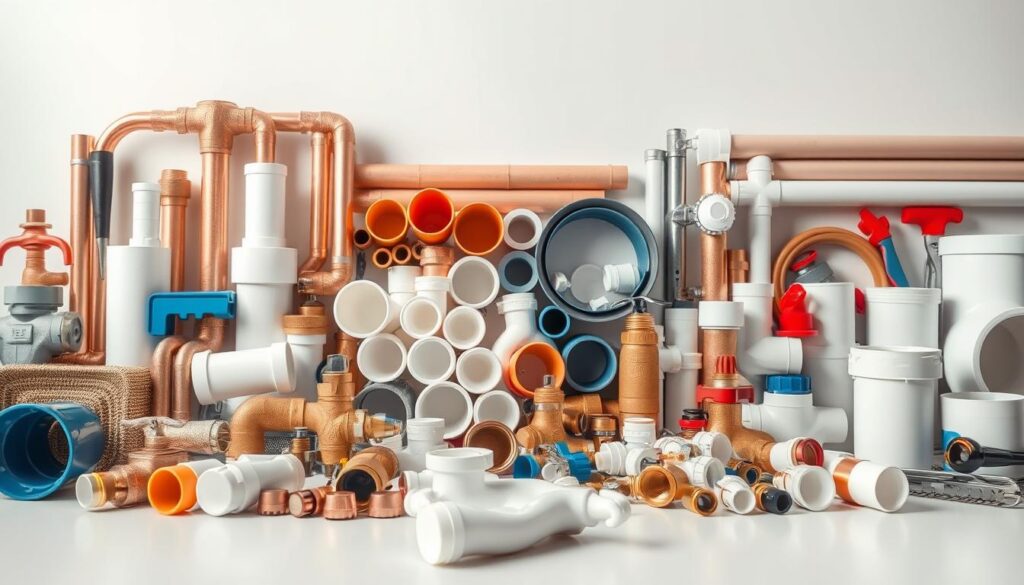
- PEX (Cross-Linked Polyethylene)
- Cost: $0.30-$0.82 per linear foot
- Flexible and easy to install
- Resistant to freezing and corrosion
- CPVC (Chlorinated Polyvinyl Chloride)
- Cost: $0.40-$1.56 per linear foot
- Good for hot and cold water lines
- Affordable alternative to copper
- Copper Pipes
- Cost: $1-$3 per linear foot
- Durable and long-lasting
- Traditional choice for residential plumbing
“The right plumbing material can save you money and prevent future headaches in your new home construction.” – Professional Plumbing Association
Your choice of plumbing material depends on your budget, local codes, and project needs. It’s wise to talk to a professional plumber. They can help pick the best option for your project.
Labor Costs and Professional Installation
When planning your new home’s plumbing, understanding labor costs is key for a good budget. Residential plumbing pricing varies based on several factors. These factors affect your project’s total cost.
Professional plumbing contractor rates for new builds vary widely. Homeowners need to carefully look at these rates. The total labor cost can greatly affect your project’s budget.
Hourly Rates for Plumbers
Plumbing professionals charge based on their skill and the local market. Rates usually fall into these categories:
- Apprentice plumbers: $20-$40 per hour
- Journeyman plumbers: $40-$100 per hour
- Master plumbers: $75-$150 per hour
Project Timeline Considerations
Your plumbing installation timeline affects labor costs. Factors influencing project duration include:
- Home square footage
- Complexity of plumbing design
- Number of bathrooms and fixtures
- Local building code requirements
Additional Labor Expenses
There are extra costs to consider in your plumbing pricing:
- Emergency or after-hours work
- Complex pipe routing
- Specialized equipment usage
- Permit acquisition and inspection fees
Good planning and clear talks with your plumber can help manage these extra costs.
Permits and Inspection Requirements
Understanding the permit and inspection process is key to managing your plumbing costs. Local building departments need certain documents and approvals. This ensures your plumbing system meets safety standards and building codes.
When planning your plumbing project, remember to include permit costs in your budget. Here are some important costs to consider:
- Building permits usually cost between $50 and $500
- Plumbing inspections are $40 to $120 per hour
- You might need multiple inspections at different stages
The cost of permits and inspections can change a lot. It depends on where you are and how complex your plumbing is. Some places have fixed fees, while others charge based on the project’s size and value.
| Permit Type | Typical Cost Range | Frequency |
|---|---|---|
| Initial Plumbing Permit | $100 – $300 | One-time |
| Rough-In Inspection | $75 – $150 | 1-2 times |
| Final Plumbing Inspection | $50 – $200 | Once |
“Always check with your local building department for specific permit requirements and associated costs,” advises professional plumbing contractor Mark Rodriguez.
To avoid surprise costs, start researching local rules early. Here are some steps to follow:
- Contact your local building department
- Get all the permit details
- Plan for inspection costs
- Book inspections ahead of time
Not getting the right permits can lead to big fines and expensive fixes. Spending time on permits now saves money and ensures your plumbing is safe and meets codes.
Water Main and Connection Costs
When planning your plumbing budget for a new home, knowing the costs of water main and connections is key. The cost to install pipes in new homes includes several important factors. These can affect your total investment.
Installing a water main is a big part of your plumbing setup. Homeowners might spend $1,700 to $3,000 for a new water main connection. This cost varies based on several things:
- How far the water main is from the municipal line
- The local terrain and soil
- Local rules and permits needed
- The type of pipe used
Your location greatly affects connection costs. Cities and rural areas have different prices. Important factors that raise the cost include:
- How hard it is to dig
- The size of the pipe needed
- Local labor costs
- Changes to other infrastructure
“Proper planning and understanding of water main connection costs can save homeowners significant unexpected expenses during new home construction.” – Professional Plumbing Association
To budget well, talk to local plumbers who know the area. They can give you a detailed estimate for your new home project.
Additional Plumbing Features and Upgrades
When planning your new home’s plumbing, think about advanced features. These can make your home more functional and comfortable. They might raise the cost, but they add value and convenience over time.
Water Heater Installation
Choosing the right water heater is key for your home’s efficiency and comfort. Costs vary from $400 to $1,800, based on type and size. You can choose from:
- Traditional tank water heaters
- Tankless water heating systems
- Heat pump water heaters
- Solar water heating units
Specialty Fixtures
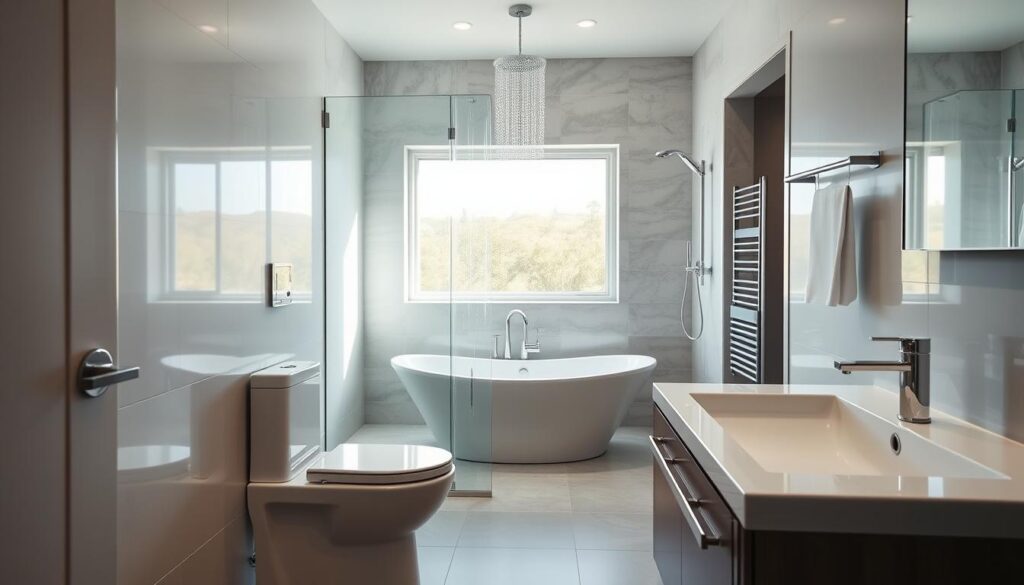
Upgrading to specialty fixtures can change your plumbing experience. High-end plumbing installations include:
| Fixture Type | Cost Range | Features |
|---|---|---|
| Rain Shower System | $500 – $2,000 | Luxurious overhead water distribution |
| Touchless Faucets | $250 – $700 | Hygienic, motion-activated controls |
| Whirlpool Tub | $1,500 – $5,000 | Therapeutic massage features |
Smart Plumbing Technologies
Smart technologies are changing home plumbing. Intelligent systems track water use, find leaks, and boost efficiency. Some top options are:
- Smart water leak detection systems
- WiFi-enabled water heaters
- Automated water shut-off valves
- Water quality monitoring devices
These upgrades might cost more upfront. But they offer long-term benefits like better efficiency, comfort, and savings.
Conclusion
Understanding the cost to plumb a house is key to smart planning and budgeting. The cost for plumbing in new homes is usually 10-15% of the total cost. This makes it a big part of your investment in a home.
Choosing the right materials and knowing labor costs are important. Also, prices can vary by region. This knowledge helps you make choices that are both good quality and affordable.
Planning for plumbing is more than just looking at costs. Think about how efficient your plumbing will be and if you might need upgrades later. Getting advice from professionals can help save money and ensure your plumbing meets current standards.
Investing in quality plumbing materials and expert installation saves money in the long run. Cutting corners can lead to costly repairs and inefficiencies later. Look for local plumbers, compare quotes, and focus on a system that fits your home’s needs.
Your home’s plumbing system is essential for comfort and value. With the right knowledge, planning, and budget, you can have a reliable and efficient water system for your home.
FAQ
What is the average cost of plumbing for a new house?
How do home size and layout affect plumbing costs?
What are the most common plumbing materials used in new construction?
What is the average cost of plumbing for a new house?
How do home size and layout affect plumbing costs?
What are the most common plumbing materials used in new construction?
FAQ
What is the average cost of plumbing for a new house?
Plumbing for a new house costs between ,000 and ,000. This depends on the home’s size and plumbing needs. For a 2,000 square foot home, expect to spend ,000 to ,000.
How do home size and layout affect plumbing costs?
Home size and layout affect plumbing costs a lot. Bigger homes need more pipes and fixtures, raising costs. Homes with many bathrooms or special plumbing features cost more to install.
What are the most common plumbing materials used in new construction?
Common plumbing materials are PEX, copper, and CPVC. PEX is affordable and flexible, copper is durable but pricey, and CPVC is cost-effective and resistant to corrosion. Prices vary from
FAQ
What is the average cost of plumbing for a new house?
Plumbing for a new house costs between $4,000 and $12,000. This depends on the home’s size and plumbing needs. For a 2,000 square foot home, expect to spend $8,000 to $10,000.
How do home size and layout affect plumbing costs?
Home size and layout affect plumbing costs a lot. Bigger homes need more pipes and fixtures, raising costs. Homes with many bathrooms or special plumbing features cost more to install.
What are the most common plumbing materials used in new construction?
Common plumbing materials are PEX, copper, and CPVC. PEX is affordable and flexible, copper is durable but pricey, and CPVC is cost-effective and resistant to corrosion. Prices vary from $0.50 to $2.50 per foot.
How much do labor costs typically run for plumbing installation?
Labor costs for plumbing range from $45 to $200 an hour. This depends on the project’s complexity and the contractor’s rates. Labor can make up 30-50% of the total plumbing cost.
Are permits necessary for new home plumbing installation?
Yes, you need permits for plumbing in new homes. Permit costs are $50 to $500. They ensure your plumbing meets local codes and safety standards.
What additional plumbing features can impact my budget?
Upgrades like tankless water heaters and smart systems can increase costs. They can add $1,000 to $5,000, depending on the quality and complexity.
How do water main connections affect overall plumbing costs?
Water main connections cost $1,000 to $5,000. This depends on the distance, terrain, and local rules. Complexity and regulations can affect the cost.
What should I budget for bathroom and kitchen plumbing?
Budget $1,500 to $3,000 per bathroom and $2,000 to $4,000 for kitchens. This includes fixtures, rough plumbing, and connections for sinks, toilets, and appliances.
How can I reduce plumbing costs in new home construction?
To save on plumbing, choose simple layouts and affordable materials like PEX. Limit fixtures and get quotes from different contractors. Planning and smart choices can lower costs.
What unexpected costs should I prepare for in plumbing installation?
Be ready for extra costs like site issues, code upgrades, and design changes. Budget 10-15% more than your initial estimate for surprises.
How much do labor costs typically run for plumbing installation?
Are permits necessary for new home plumbing installation?
What additional plumbing features can impact my budget?
FAQ
What is the average cost of plumbing for a new house?
Plumbing for a new house costs between ,000 and ,000. This depends on the home’s size and plumbing needs. For a 2,000 square foot home, expect to spend ,000 to ,000.
How do home size and layout affect plumbing costs?
Home size and layout affect plumbing costs a lot. Bigger homes need more pipes and fixtures, raising costs. Homes with many bathrooms or special plumbing features cost more to install.
What are the most common plumbing materials used in new construction?
Common plumbing materials are PEX, copper, and CPVC. PEX is affordable and flexible, copper is durable but pricey, and CPVC is cost-effective and resistant to corrosion. Prices vary from
FAQ
What is the average cost of plumbing for a new house?
Plumbing for a new house costs between $4,000 and $12,000. This depends on the home’s size and plumbing needs. For a 2,000 square foot home, expect to spend $8,000 to $10,000.
How do home size and layout affect plumbing costs?
Home size and layout affect plumbing costs a lot. Bigger homes need more pipes and fixtures, raising costs. Homes with many bathrooms or special plumbing features cost more to install.
What are the most common plumbing materials used in new construction?
Common plumbing materials are PEX, copper, and CPVC. PEX is affordable and flexible, copper is durable but pricey, and CPVC is cost-effective and resistant to corrosion. Prices vary from $0.50 to $2.50 per foot.
How much do labor costs typically run for plumbing installation?
Labor costs for plumbing range from $45 to $200 an hour. This depends on the project’s complexity and the contractor’s rates. Labor can make up 30-50% of the total plumbing cost.
Are permits necessary for new home plumbing installation?
Yes, you need permits for plumbing in new homes. Permit costs are $50 to $500. They ensure your plumbing meets local codes and safety standards.
What additional plumbing features can impact my budget?
Upgrades like tankless water heaters and smart systems can increase costs. They can add $1,000 to $5,000, depending on the quality and complexity.
How do water main connections affect overall plumbing costs?
Water main connections cost $1,000 to $5,000. This depends on the distance, terrain, and local rules. Complexity and regulations can affect the cost.
What should I budget for bathroom and kitchen plumbing?
Budget $1,500 to $3,000 per bathroom and $2,000 to $4,000 for kitchens. This includes fixtures, rough plumbing, and connections for sinks, toilets, and appliances.
How can I reduce plumbing costs in new home construction?
To save on plumbing, choose simple layouts and affordable materials like PEX. Limit fixtures and get quotes from different contractors. Planning and smart choices can lower costs.
What unexpected costs should I prepare for in plumbing installation?
Be ready for extra costs like site issues, code upgrades, and design changes. Budget 10-15% more than your initial estimate for surprises.
How do water main connections affect overall plumbing costs?
FAQ
What is the average cost of plumbing for a new house?
Plumbing for a new house costs between ,000 and ,000. This depends on the home’s size and plumbing needs. For a 2,000 square foot home, expect to spend ,000 to ,000.
How do home size and layout affect plumbing costs?
Home size and layout affect plumbing costs a lot. Bigger homes need more pipes and fixtures, raising costs. Homes with many bathrooms or special plumbing features cost more to install.
What are the most common plumbing materials used in new construction?
Common plumbing materials are PEX, copper, and CPVC. PEX is affordable and flexible, copper is durable but pricey, and CPVC is cost-effective and resistant to corrosion. Prices vary from
FAQ
What is the average cost of plumbing for a new house?
Plumbing for a new house costs between $4,000 and $12,000. This depends on the home’s size and plumbing needs. For a 2,000 square foot home, expect to spend $8,000 to $10,000.
How do home size and layout affect plumbing costs?
Home size and layout affect plumbing costs a lot. Bigger homes need more pipes and fixtures, raising costs. Homes with many bathrooms or special plumbing features cost more to install.
What are the most common plumbing materials used in new construction?
Common plumbing materials are PEX, copper, and CPVC. PEX is affordable and flexible, copper is durable but pricey, and CPVC is cost-effective and resistant to corrosion. Prices vary from $0.50 to $2.50 per foot.
How much do labor costs typically run for plumbing installation?
Labor costs for plumbing range from $45 to $200 an hour. This depends on the project’s complexity and the contractor’s rates. Labor can make up 30-50% of the total plumbing cost.
Are permits necessary for new home plumbing installation?
Yes, you need permits for plumbing in new homes. Permit costs are $50 to $500. They ensure your plumbing meets local codes and safety standards.
What additional plumbing features can impact my budget?
Upgrades like tankless water heaters and smart systems can increase costs. They can add $1,000 to $5,000, depending on the quality and complexity.
How do water main connections affect overall plumbing costs?
Water main connections cost $1,000 to $5,000. This depends on the distance, terrain, and local rules. Complexity and regulations can affect the cost.
What should I budget for bathroom and kitchen plumbing?
Budget $1,500 to $3,000 per bathroom and $2,000 to $4,000 for kitchens. This includes fixtures, rough plumbing, and connections for sinks, toilets, and appliances.
How can I reduce plumbing costs in new home construction?
To save on plumbing, choose simple layouts and affordable materials like PEX. Limit fixtures and get quotes from different contractors. Planning and smart choices can lower costs.
What unexpected costs should I prepare for in plumbing installation?
Be ready for extra costs like site issues, code upgrades, and design changes. Budget 10-15% more than your initial estimate for surprises.
What should I budget for bathroom and kitchen plumbing?
FAQ
What is the average cost of plumbing for a new house?
Plumbing for a new house costs between ,000 and ,000. This depends on the home’s size and plumbing needs. For a 2,000 square foot home, expect to spend ,000 to ,000.
How do home size and layout affect plumbing costs?
Home size and layout affect plumbing costs a lot. Bigger homes need more pipes and fixtures, raising costs. Homes with many bathrooms or special plumbing features cost more to install.
What are the most common plumbing materials used in new construction?
Common plumbing materials are PEX, copper, and CPVC. PEX is affordable and flexible, copper is durable but pricey, and CPVC is cost-effective and resistant to corrosion. Prices vary from
FAQ
What is the average cost of plumbing for a new house?
Plumbing for a new house costs between $4,000 and $12,000. This depends on the home’s size and plumbing needs. For a 2,000 square foot home, expect to spend $8,000 to $10,000.
How do home size and layout affect plumbing costs?
Home size and layout affect plumbing costs a lot. Bigger homes need more pipes and fixtures, raising costs. Homes with many bathrooms or special plumbing features cost more to install.
What are the most common plumbing materials used in new construction?
Common plumbing materials are PEX, copper, and CPVC. PEX is affordable and flexible, copper is durable but pricey, and CPVC is cost-effective and resistant to corrosion. Prices vary from $0.50 to $2.50 per foot.
How much do labor costs typically run for plumbing installation?
Labor costs for plumbing range from $45 to $200 an hour. This depends on the project’s complexity and the contractor’s rates. Labor can make up 30-50% of the total plumbing cost.
Are permits necessary for new home plumbing installation?
Yes, you need permits for plumbing in new homes. Permit costs are $50 to $500. They ensure your plumbing meets local codes and safety standards.
What additional plumbing features can impact my budget?
Upgrades like tankless water heaters and smart systems can increase costs. They can add $1,000 to $5,000, depending on the quality and complexity.
How do water main connections affect overall plumbing costs?
Water main connections cost $1,000 to $5,000. This depends on the distance, terrain, and local rules. Complexity and regulations can affect the cost.
What should I budget for bathroom and kitchen plumbing?
Budget $1,500 to $3,000 per bathroom and $2,000 to $4,000 for kitchens. This includes fixtures, rough plumbing, and connections for sinks, toilets, and appliances.
How can I reduce plumbing costs in new home construction?
To save on plumbing, choose simple layouts and affordable materials like PEX. Limit fixtures and get quotes from different contractors. Planning and smart choices can lower costs.
What unexpected costs should I prepare for in plumbing installation?
Be ready for extra costs like site issues, code upgrades, and design changes. Budget 10-15% more than your initial estimate for surprises.
How can I reduce plumbing costs in new home construction?
What unexpected costs should I prepare for in plumbing installation?
.50 to .50 per foot.
How much do labor costs typically run for plumbing installation?
Labor costs for plumbing range from to 0 an hour. This depends on the project’s complexity and the contractor’s rates. Labor can make up 30-50% of the total plumbing cost.
Are permits necessary for new home plumbing installation?
Yes, you need permits for plumbing in new homes. Permit costs are to 0. They ensure your plumbing meets local codes and safety standards.
What additional plumbing features can impact my budget?
Upgrades like tankless water heaters and smart systems can increase costs. They can add
FAQ
What is the average cost of plumbing for a new house?
Plumbing for a new house costs between $4,000 and $12,000. This depends on the home’s size and plumbing needs. For a 2,000 square foot home, expect to spend $8,000 to $10,000.
How do home size and layout affect plumbing costs?
Home size and layout affect plumbing costs a lot. Bigger homes need more pipes and fixtures, raising costs. Homes with many bathrooms or special plumbing features cost more to install.
What are the most common plumbing materials used in new construction?
Common plumbing materials are PEX, copper, and CPVC. PEX is affordable and flexible, copper is durable but pricey, and CPVC is cost-effective and resistant to corrosion. Prices vary from $0.50 to $2.50 per foot.
How much do labor costs typically run for plumbing installation?
Labor costs for plumbing range from $45 to $200 an hour. This depends on the project’s complexity and the contractor’s rates. Labor can make up 30-50% of the total plumbing cost.
Are permits necessary for new home plumbing installation?
Yes, you need permits for plumbing in new homes. Permit costs are $50 to $500. They ensure your plumbing meets local codes and safety standards.
What additional plumbing features can impact my budget?
Upgrades like tankless water heaters and smart systems can increase costs. They can add $1,000 to $5,000, depending on the quality and complexity.
How do water main connections affect overall plumbing costs?
Water main connections cost $1,000 to $5,000. This depends on the distance, terrain, and local rules. Complexity and regulations can affect the cost.
What should I budget for bathroom and kitchen plumbing?
Budget $1,500 to $3,000 per bathroom and $2,000 to $4,000 for kitchens. This includes fixtures, rough plumbing, and connections for sinks, toilets, and appliances.
How can I reduce plumbing costs in new home construction?
To save on plumbing, choose simple layouts and affordable materials like PEX. Limit fixtures and get quotes from different contractors. Planning and smart choices can lower costs.
What unexpected costs should I prepare for in plumbing installation?
Be ready for extra costs like site issues, code upgrades, and design changes. Budget 10-15% more than your initial estimate for surprises.
,000 to ,000, depending on the quality and complexity.
How do water main connections affect overall plumbing costs?
Water main connections cost
FAQ
What is the average cost of plumbing for a new house?
Plumbing for a new house costs between $4,000 and $12,000. This depends on the home’s size and plumbing needs. For a 2,000 square foot home, expect to spend $8,000 to $10,000.
How do home size and layout affect plumbing costs?
Home size and layout affect plumbing costs a lot. Bigger homes need more pipes and fixtures, raising costs. Homes with many bathrooms or special plumbing features cost more to install.
What are the most common plumbing materials used in new construction?
Common plumbing materials are PEX, copper, and CPVC. PEX is affordable and flexible, copper is durable but pricey, and CPVC is cost-effective and resistant to corrosion. Prices vary from $0.50 to $2.50 per foot.
How much do labor costs typically run for plumbing installation?
Labor costs for plumbing range from $45 to $200 an hour. This depends on the project’s complexity and the contractor’s rates. Labor can make up 30-50% of the total plumbing cost.
Are permits necessary for new home plumbing installation?
Yes, you need permits for plumbing in new homes. Permit costs are $50 to $500. They ensure your plumbing meets local codes and safety standards.
What additional plumbing features can impact my budget?
Upgrades like tankless water heaters and smart systems can increase costs. They can add $1,000 to $5,000, depending on the quality and complexity.
How do water main connections affect overall plumbing costs?
Water main connections cost $1,000 to $5,000. This depends on the distance, terrain, and local rules. Complexity and regulations can affect the cost.
What should I budget for bathroom and kitchen plumbing?
Budget $1,500 to $3,000 per bathroom and $2,000 to $4,000 for kitchens. This includes fixtures, rough plumbing, and connections for sinks, toilets, and appliances.
How can I reduce plumbing costs in new home construction?
To save on plumbing, choose simple layouts and affordable materials like PEX. Limit fixtures and get quotes from different contractors. Planning and smart choices can lower costs.
What unexpected costs should I prepare for in plumbing installation?
Be ready for extra costs like site issues, code upgrades, and design changes. Budget 10-15% more than your initial estimate for surprises.
,000 to ,000. This depends on the distance, terrain, and local rules. Complexity and regulations can affect the cost.
What should I budget for bathroom and kitchen plumbing?
Budget
FAQ
What is the average cost of plumbing for a new house?
Plumbing for a new house costs between $4,000 and $12,000. This depends on the home’s size and plumbing needs. For a 2,000 square foot home, expect to spend $8,000 to $10,000.
How do home size and layout affect plumbing costs?
Home size and layout affect plumbing costs a lot. Bigger homes need more pipes and fixtures, raising costs. Homes with many bathrooms or special plumbing features cost more to install.
What are the most common plumbing materials used in new construction?
Common plumbing materials are PEX, copper, and CPVC. PEX is affordable and flexible, copper is durable but pricey, and CPVC is cost-effective and resistant to corrosion. Prices vary from $0.50 to $2.50 per foot.
How much do labor costs typically run for plumbing installation?
Labor costs for plumbing range from $45 to $200 an hour. This depends on the project’s complexity and the contractor’s rates. Labor can make up 30-50% of the total plumbing cost.
Are permits necessary for new home plumbing installation?
Yes, you need permits for plumbing in new homes. Permit costs are $50 to $500. They ensure your plumbing meets local codes and safety standards.
What additional plumbing features can impact my budget?
Upgrades like tankless water heaters and smart systems can increase costs. They can add $1,000 to $5,000, depending on the quality and complexity.
How do water main connections affect overall plumbing costs?
Water main connections cost $1,000 to $5,000. This depends on the distance, terrain, and local rules. Complexity and regulations can affect the cost.
What should I budget for bathroom and kitchen plumbing?
Budget $1,500 to $3,000 per bathroom and $2,000 to $4,000 for kitchens. This includes fixtures, rough plumbing, and connections for sinks, toilets, and appliances.
How can I reduce plumbing costs in new home construction?
To save on plumbing, choose simple layouts and affordable materials like PEX. Limit fixtures and get quotes from different contractors. Planning and smart choices can lower costs.
What unexpected costs should I prepare for in plumbing installation?
Be ready for extra costs like site issues, code upgrades, and design changes. Budget 10-15% more than your initial estimate for surprises.
,500 to ,000 per bathroom and ,000 to ,000 for kitchens. This includes fixtures, rough plumbing, and connections for sinks, toilets, and appliances.
How can I reduce plumbing costs in new home construction?
To save on plumbing, choose simple layouts and affordable materials like PEX. Limit fixtures and get quotes from different contractors. Planning and smart choices can lower costs.
What unexpected costs should I prepare for in plumbing installation?
Be ready for extra costs like site issues, code upgrades, and design changes. Budget 10-15% more than your initial estimate for surprises.