
Affiliate Disclosure
Plumber Guide Guys is a participant in the Amazon Services LLC Associates Program, an affiliate advertising program designed to provide a means for sites to earn advertising fees by advertising and linking to Amazon.
How Long Does Cast Iron Plumbing Last? Did you know that about 76 million homes in the United States have cast iron plumbing systems from before 1970? It’s important for homeowners to know how long cast iron plumbing lasts. This knowledge helps protect your home’s infrastructure and avoid water damage.
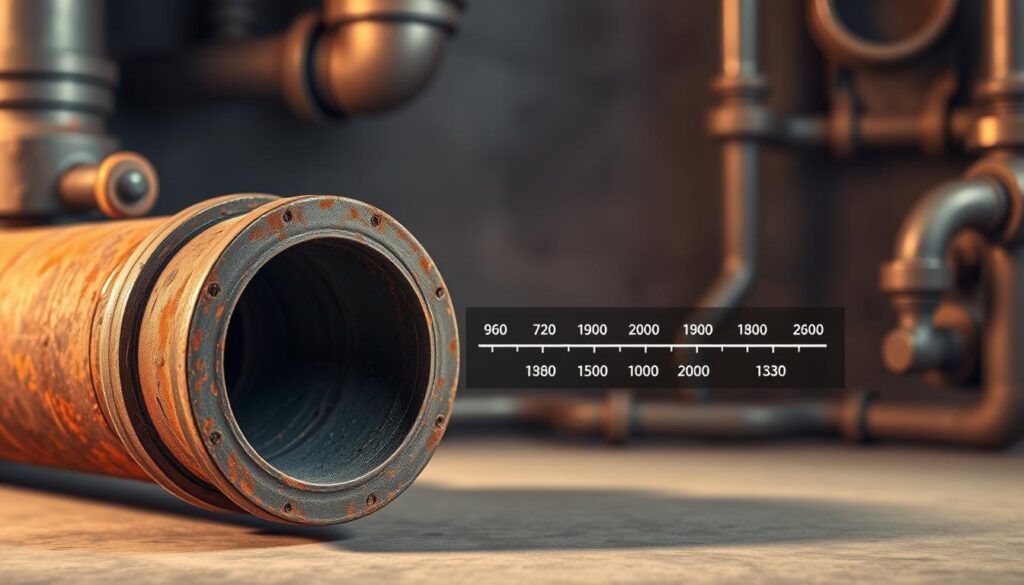
Cast iron pipes can last between 50 to 100 years. This depends on several factors like the environment and how well they are maintained. Understanding the durability and challenges of cast iron plumbing is key.
Cast iron pipes have been a common choice in homes for many years. They are known for their long life but can wear out over time. Spotting signs of wear early can save you a lot of money on repairs.
Key Takeaways
- Cast iron pipes can last up to 100 years with proper maintenance
- Environmental factors significantly impact pipe durability
- Regular inspection helps prevent unexpected plumbing failures
- Age and soil conditions affect cast iron pipe longevity
- Professional assessment is recommended for older plumbing systems
Table of Contents
Understanding Cast Iron Plumbing Systems
Cast iron drain pipes have been key in American homes for many years. They are known for their durability and strength. This made them a favorite among homeowners for generations.
The history of cast iron pipes goes back to the late 19th century. They changed how cities and homes were built. People saw their benefits in handling water and waste.
Historical Use in American Homes
Before the 1970s, cast iron pipes were everywhere in homes. Builders loved them for many reasons:
- They reduced noise well
- They could handle high heat
- They were very strong
- They lasted a long time
Composition and Manufacturing Process
Cast iron pipes are made in a special way. They start as molten iron and carbon. Then, they are poured into molds to become strong and durable pipes.
Common Applications in Residential Plumbing
These pipes were used in important parts of homes, like:
- Underground sewer lines
- Drainage systems
- Vertical waste stacks
- Main water distribution networks
Knowing about cast iron pipes’ history and how they’re made shows their amazing engineering. It also highlights their lasting impact on home building.
How Long Does Cast Iron Plumbing Last?
Knowing how long cast iron pipes last is key for homeowners with old plumbing. These pipes usually last 50 to 100 years. But, many factors can change this time frame.
Conditions in your home greatly affect the pipes’ lifespan.
The average cast iron pipe lifespan has several stages:
- Initial Durability: First 25-30 years of top performance
- Potential Degradation: Wear signs start around 30-50 years
- Critical Replacement Period: 50-75 years when big problems appear
Several things can affect how long cast iron plumbing lasts:
- Water quality and pH levels
- Soil conditions around the pipes
- How the pipes were installed
- How often they are maintained
Experts say to get regular checks on your cast iron pipes. While they can last a century, they often need to be replaced sooner. Keeping an eye on them can prevent expensive plumbing problems.
Good maintenance can make your cast iron plumbing last for decades longer.
Your home’s environment is very important for cast iron pipe longevity. Places with lots of moisture or aggressive soil might see pipes last less than others.
Factors Affecting Cast Iron Pipe Durability
Cast iron drain pipes last longer if we know what affects them. Homeowners and experts can spot problems early. This helps keep plumbing systems working well.
Many things can shorten a cast iron pipe’s life. Knowing these can help protect your pipes. This way, you avoid expensive fixes later.
External Corrosion Triggers
Soil around pipes is very important. Several things can make pipes wear out faster:
- High soil acidity levels
- Presence of stray electrical currents
- Chemical toxins in surrounding ground
- Moisture content and drainage patterns
Internal Degradation Mechanisms
Things inside the pipes can also harm them. Key problems include:
- Acidic sewage composition
- Hydrogen sulfide gas buildup
- Bacterial interactions
- Sediment accumulation
Installation Quality Considerations
How pipes are installed matters a lot. Bad installation can lead to problems like:
- Incorrect pipe alignment
- Inadequate joint sealing
- Insufficient slope for proper drainage
- Improper support and anchoring
| Factor | Impact on Durability | Potential Consequences |
|---|---|---|
| Soil Acidity | High Negative Impact | Accelerated External Corrosion |
| Sewage Composition | Moderate Negative Impact | Internal Pipe Degradation |
| Installation Quality | Significant Impact | Reduced Pipe Lifespan |
Knowing these key factors helps you take care of your pipes. This way, you can make your pipes last longer.
Signs of Cast Iron Pipe Deterioration
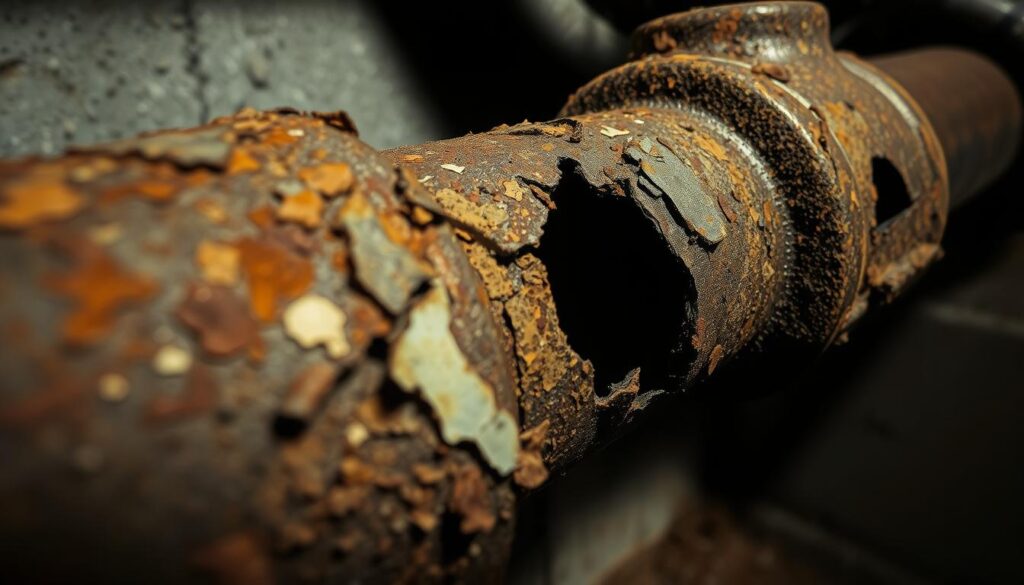
Spotting problems with cast iron pipes early can save you a lot of money. These systems are known for serious issues over time. It’s important to know the signs that your pipes might be failing.
Your home’s plumbing system sends out clear signals when cast iron pipes are failing. These signs can help you catch problems before they get worse.
- Visual Rust and Discoloration: Reddish-brown stains or rust patches on visible pipe sections indicate advanced corrosion
- Water Discoloration: Brown or rust-colored water when running taps suggests internal pipe degradation
- Unusual Odors: Persistent sewer smells around drains or in your basement can signal pipe damage
- Frequent Drainage Issues: Slow drains, recurring clogs, or gurgling sounds when water flows
- Structural Damage: Visible cracks, leaks, or water stains near pipe connections
Pest infestations can also be a critical sign of failing cast iron pipes. Increased rodent or insect activity near drainage areas might indicate pipe damage that creates entry points for unwanted creatures.
When you see several signs of deterioration, it’s time to call a professional. Plumbing experts can use special cameras to check the pipes and suggest fixes.
Early detection of cast iron pipe problems can prevent catastrophic home damage and expensive emergency repairs.
Common Problems with Aging Cast Iron Pipes
Cast iron pipes in older homes can deteriorate, causing big problems. As these pipes get older, they face many issues that can harm your home’s water system.
Knowing about these problems can help you fix cast iron pipe issues early. Older pipes deal with several big challenges that affect their strength and how well they work.
Rust and Corrosion Challenges
Rust is a big problem for cast iron pipes. It makes the pipes weaker over time, leading to many issues:
- Gradual pipe wall thinning
- Increased risk of structural failure
- Potential water contamination
- Reduced water flow capacity
Crack Formation and Leakage Risks
Cast iron pipes can crack due to different reasons. These cracks can come from:
- Soil movement and ground shifting
- Temperature fluctuations
- Underground water pressure
- Natural material degradation
Blockage and Flow Restriction Problems
Rust, mineral buildup, and debris can slow down your plumbing. Cast iron pipes that deteriorate can make water flow harder, even causing blockages.
Getting regular checks from professionals can spot and fix these issues early. This can save you from costly repairs or having to replace the whole system.
Maintenance Tips for Cast Iron Plumbing
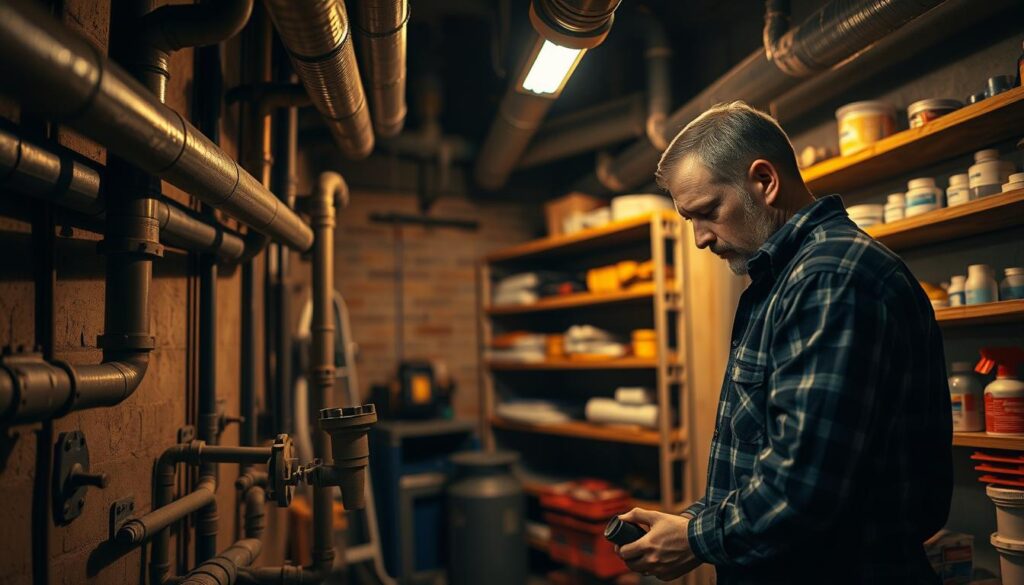
Maintaining cast iron drains is important. It keeps your plumbing system working well for a long time. Regular care and smart maintenance can help avoid costly repairs.
Here are some key maintenance tips for cast iron plumbing:
- Conduct annual professional inspections
- Avoid using harsh chemical drain cleaners
- Clean pipes regularly with gentle solutions
- Monitor for early signs of corrosion
- Address minor issues immediately
Professional inspections are key. They help find problems early. Plumbers use cameras to check your drains inside, spotting any damage.
| Maintenance Activity | Recommended Frequency | Purpose |
|---|---|---|
| Visual Inspection | Every 6-12 months | Check for visible damage or corrosion |
| Professional Camera Inspection | Every 2-3 years | Detect internal pipe issues |
| Gentle Cleaning | Quarterly | Prevent buildup and blockages |
Warning: Chemical drain cleaners can harm your pipes. Use enzyme-based or biodegradable cleaners instead. They keep your pipes safe.
Regular maintenance saves you money and trouble. It keeps your plumbing in good shape. This way, your home’s plumbing works well for years.
Cast Iron vs Modern Plumbing Materials
Homeowners have to choose between cast iron and PVC for plumbing. The debate between cast iron vs pvc plumbing looks at long-term performance and upkeep.
Modern plumbing has changed homes a lot. PVC pipes are better than cast iron in many ways, like being more durable and easier to install.
Material Performance Characteristics
Looking at cast iron vs pvc plumbing shows big differences:
- PVC is better at handling chemicals
- Cast iron is great at blocking sound
- PVC is much lighter than cast iron
- Cast iron is stronger
Cost Considerations
| Material | Initial Cost | Maintenance Expense | Lifespan |
|---|---|---|---|
| Cast Iron | High | Expensive | 50-75 years |
| PVC | Low | Minimal | 25-40 years |
Choosing between cast iron and PVC plumbing depends on your budget and needs. PVC is cheaper, but cast iron is better in some situations.
Experts say to think about your home’s needs before picking pipes. Each option has its own benefits for different homes.
When to Replace Cast Iron Pipes
Knowing when to replace your cast iron sewer line can save you from costly and destructive plumbing emergencies. Cast iron pipes usually last 50-75 years. But, there are key signs that suggest it’s time for a replacement.
Your home’s plumbing system sends warning signals that shouldn’t be ignored. Watch for these red flags:
- Persistent sewage odors in your home or yard
- Frequent drain clogs and slow drainage
- Visible pipe corrosion or rust
- Water discoloration from rust particles
- Unexplained wet spots in your yard
Age is a big factor in deciding when to replace cast iron sewer lines. Pipes installed before the 1980s need careful consideration. Older pipes often have more damage and are at risk of failing.
Professional plumbers suggest a thorough inspection for homes over 50 years old. Tools like video camera inspections can show hidden damage. This helps you decide if you need to replace your pipes.
Early detection and proactive replacement can prevent catastrophic plumbing failures and protect your home’s structural integrity.
The cost of replacing cast iron sewer lines might seem high. But, it’s much less than the damage from pipe failure. Replacing them on time keeps your home’s plumbing system healthy and avoids expensive surprises.
Professional Inspection and Assessment Methods
Fixing old cast iron plumbing needs a pro to check it first. They use special tools to see if there are any big problems coming. This way, they can fix things before they cost a lot.
Video tech has changed how plumbers check pipes. They use cameras on flexible rods to see inside your pipes. This lets them spot problems that were hard to find before.
- High-resolution camera inspections
- Detailed pipe condition mapping
- Identification of hidden structural damage
- Precise location of repair needs
When plumbers check your cast iron pipes, they do a lot. Here’s what they usually do:
| Inspection Method | Purpose | Key Findings |
|---|---|---|
| Video Scope Inspection | Internal pipe examination | Corrosion, cracks, blockages |
| Pressure Testing | Detect leaks | Pipe integrity check |
| Electromagnetic Scanning | External pipe check | Underground damage |
How much a professional check costs can vary. It’s usually between $250 and $1,000. Getting a detailed check can save you a lot of money by finding problems early.
Plumbers say it’s smart to get your pipes checked often. This is true for homes with old cast iron pipes. These checks help you know if you need to fix or replace your pipes.
Modern Solutions for Cast Iron Pipe Problems
Fixing old cast iron plumbing is now easier thanks to new technologies. These advancements reduce damage to your property and lower repair costs. You can now fix aging pipes without digging up your yard.
Today’s plumbing repair methods offer smart solutions for old cast iron pipes. They aim to protect your property while making lasting improvements.
Trenchless Repair Options
Trenchless repair has changed the game for fixing old cast iron pipes. It means no big holes in your yard. This method brings several benefits:
- Less damage to your landscape
- Shorter repair times
- Lower costs for fixing
- Less invasive work
Pipe Lining Technologies
Pipe lining is a top-notch fix for damaged cast iron pipes. Cured-in-place pipe (CIPP) tech lets pros create a new pipe inside the old one.
The steps are:
- Cleaning the old pipe well
- Putting in a flexible liner filled with resin
- Heating or using UV light to set the liner
- Getting a smooth, strong new pipe inside
Choosing modern repair options can make your plumbing last longer. It also saves you from the high costs and hassle of old-school replacements.
Conclusion
Cast iron plumbing systems are a big challenge for homeowners. How long they last depends on many things. These include the environment, how well they were installed, and how well they are maintained.
Regular checks by professionals can spot problems early. This can stop costly repairs and water damage. Knowing how long cast iron plumbing lasts helps you decide when to replace or fix it.
Preventive maintenance is key to keeping your plumbing in good shape. Cast iron pipes can last 50 to 75 years, but their performance varies. Working with licensed plumbers gives you the best advice for your home’s plumbing.
Knowing what to do and taking care of your plumbing is important. By staying informed and taking care of your plumbing, you can keep your home’s water system working well. This helps avoid unexpected repair costs.