

Affiliate Disclosure
Plumber Guide Guys is a participant in the Amazon Services LLC Associates Program, an affiliate advertising program designed to provide a means for sites to earn advertising fees by advertising and linking to Amazon.
When Did Indoor Plumbing Begin? Imagine a cold winter morning in ancient Mohenjo-daro. A young person walks into their bathroom and turns a valve. Clean water starts flowing without effort. This might seem like something we have today, but indoor plumbing has a long history.
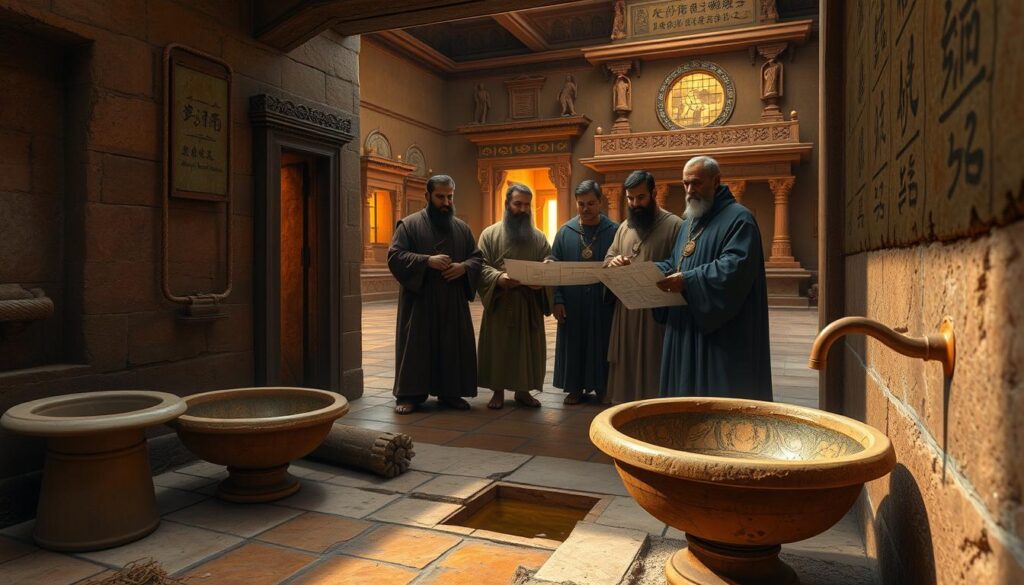
The story of indoor plumbing is full of human creativity. It goes from ancient drainage systems to today’s complex water networks. This shows how humans have always found ways to solve big challenges.
As we dive into this story, you’ll see how old societies created new ways to manage water. This was the start of modern sanitation. Learning about the early days of indoor plumbing is a journey through human progress.
Key Takeaways
- Indoor plumbing has roots in ancient civilizations
- Water management was key for early human settlements
- Technological innovations greatly improved living conditions
- Plumbing development shows how societies have grown
- Clean water access changed public health standards
Table of Contents
Understanding the Origins of Plumbing Systems
Water management is key to human civilization’s growth. Ancient societies knew how vital it was to control water. This led to the first indoor plumbing systems. Learning about these early steps shows how humans solve big problems.
Prehistoric people saw water control as a matter of life and death. Their plumbing innovations changed how people lived and worked. It also changed how they interacted with their surroundings.
Early Water Management Techniques
Early water management was all about survival. Archaeologists have found amazing evidence of ancient water systems. These include:
- Digging wells to access groundwater
- Creating sophisticated drainage channels
- Developing gravity-based water transportation methods
- Constructing basic water filtration systems
The Role of Settlements in Plumbing Development
As settlements grew, so did the need for better water management. Urban centers became places where new plumbing ideas were tested. This drive for innovation pushed technology forward.
First Water Transportation Methods
Ancient engineers came up with clever ways to move water. These methods are the base of today’s plumbing. They used:
- Clay pipes for water distribution
- Gravity-fed aqueduct systems
- Underground drainage networks
- Rainwater collection mechanisms
These early achievements show humanity’s skill in tackling big environmental challenges. They did it through creative engineering and smart thinking.
Ancient Indus Valley: The Birth of Organized Plumbing
The history of indoor plumbing starts with a very advanced ancient civilization. The Indus Valley civilization, in today’s Pakistan and northwest India, changed urban planning with its plumbing. Their work inspired many future generations.
Cities like Mohenjo-daro and Harappa show amazing engineering skills. These cities had drainage systems far ahead of their time. People had:
- Sophisticated street-level drainage channels
- Interconnected sewage networks
- Private bathroom facilities in individual homes
- Public bathing areas with complex water management
Archaeologists found evidence of smart water management. Brick-lined underground sewers linked homes for waste removal. The engineers used gravity to move wastewater.
This was a big step in plumbing history. The Indus Valley’s sanitation was not just useful but also very complex. It laid the groundwork for future water systems in cities.
“The Indus Valley civilization’s plumbing infrastructure was a marvel of ancient engineering that surpassed many subsequent societies for centuries.”
Egyptian Innovation: Copper Pipes and Water Transport
The ancient Egyptians changed water management with new technologies. They made the first indoor plumbing systems. This changed how civilizations used water.
Development of Copper Piping Technology
The ancient Egyptians were leaders in making copper pipes. They built detailed piping systems. These pipes helped distribute water with great precision.
- Copper was chosen for its durability and resistance to corrosion
- Pipes were meticulously crafted using advanced metalworking techniques
- Water transportation became more efficient and controlled
Pyramid Plumbing Systems
The pyramids showed amazing water management skills. Archaeologists found underground water channels at Saqqara. These channels supported the pyramids and ceremonies.
| Location | Plumbing Feature | Purpose |
|---|---|---|
| Saqqara Pyramid Complex | Underground Water Channels | Structural Support |
| Royal Tombs | Copper Pipe Network | Ceremonial Water Distribution |
Agricultural Irrigation Advances
The Egyptians also improved irrigation for farming. They built canal systems to use the Nile’s floodwaters. This helped grow more food.
- Developed sophisticated canal networks
- Created controlled water distribution methods
- Maximized agricultural productivity
Egyptian engineering was a big step forward in water management. It laid the groundwork for today’s plumbing systems.
When Did Indoor Plumbing Begin: The Roman Empire Revolution
The Roman Empire changed indoor plumbing forever. They created a new way to manage water that would last for centuries. Their advanced plumbing systems were a huge step up in city planning.
Roman engineers made big strides in water transport. They built long aqueducts to bring water to cities and rich homes. This was a big step in indoor plumbing history.
- Lead pipes were primary conduits for water distribution
- Sophisticated tunneling techniques enabled complex water networks
- Gravity-powered systems ensured consistent water flow
Roman plumbing technology showed amazing engineering skills. They built pipe systems that could carry water for hundreds of miles. This was a huge achievement in hydraulic engineering.
| Roman Plumbing Feature | Technical Specification |
|---|---|
| Water Transportation | Aqueduct networks spanning hundreds of miles |
| Pipe Material | Primarily lead, with advanced construction techniques |
| Urban Water Coverage | Extensive public and private water distribution |
The Romans did more than just move water. They built sewage systems, public baths, and drainage systems. These improvements made city life much better.
Roman engineering transformed water infrastructure from a basic necessity to a sophisticated technological marvel.
The Dark Ages: Plumbing’s Temporary Decline
The history of indoor plumbing hit a big roadblock during the Dark Ages. After the Roman Empire fell, their advanced water systems went down too. This was a major setback in the evolution of home plumbing.
In Europe, the Dark Ages saw a big step back in sanitation tech. The Romans’ advanced engineering and water systems were forgotten. Communities were left with basic ways to handle waste.
Loss of Roman Technological Expertise
The Romans’ plumbing knowledge was quickly forgotten. Communities lost the engineering skills needed for complex water systems:
- Complex aqueduct designs vanished
- Sophisticated pipe-laying techniques were abandoned
- Drainage and sewage management systems deteriorated
Public Health Consequences
The plumbing tech decline led to big health problems. Cities became hotspots for diseases because of bad sanitation.
Medieval Sanitation Practices
Medieval times saw simple waste disposal methods. Chamber pots, outdoor privies, and little waste management were common. Streets were often filled with untreated sewage, making life dangerous for centuries.
The Dark Ages were a big pause in the growth of human sanitation tech.
Learning about this time helps us see how plumbing tech made a comeback later on.
Islamic World’s Contribution to Plumbing

In the medieval times, the Islamic world played a key role in plumbing history. Cities like Baghdad, Córdoba, and Fustat were at the forefront. They developed advanced water systems that changed global sanitation.
Islamic engineers and architects made big strides in water management and waste disposal. Their work improved urban living with new plumbing technologies:
- Multi-story buildings with integrated water supply systems
- Advanced sewage disposal mechanisms
- Early prototypes of flush toilet technologies
- Complex water distribution networks
In Fustat, buildings were designed with multi-story tenements and flush toilets. These were connected to central water systems. This was a major step forward in plumbing, helping to keep knowledge alive when Europe was falling behind.
The Islamic world’s work kept plumbing innovations moving forward. It helped create the sanitation practices we use today.
Renaissance Period: Revival of Plumbing Innovation
The Renaissance was a key time for plumbing, bringing new tech and engineering. Cities in Europe started using science and new designs for water management.
European engineers and city planners worked on new water systems. Their efforts changed plumbing for the better, setting the stage for future progress.
Innovative Engineering Approaches
- Increased understanding of hydraulic principles
- Advanced architectural design of water distribution systems
- Improved mathematical calculations for water pressure
- Enhanced pipe manufacturing techniques
Urban Water Systems Transformation
Cities in Europe got better at moving water around. Their systems were cleaner, more efficient, and better at handling water than before.
| City | Water System Innovation | Key Improvement |
|---|---|---|
| Venice | Underground Canal Network | Improved Urban Drainage |
| Florence | Ceramic Pipe Infrastructure | Enhanced Water Transportation |
| Rome | Aqueduct Restoration | Increased Water Supply |
Technological Breakthroughs
Renaissance engineers made big strides in water management. Precision engineering and scientific observation were key. They helped create better plumbing systems.
“The Renaissance transformed water infrastructure from a basic necessity to an art of engineering.” – Historical Plumbing Research Institute
These advances led to more changes in water systems later on. They paved the way for big improvements in the centuries to come.
Industrial Revolution: Modern Plumbing Takes Shape
The Industrial Revolution changed plumbing in big ways. Cast iron pipes and standard fixtures were huge steps forward. They made indoor water systems much better.
These changes made a big difference in how people used water:
- Introduction of cast iron piping for more durable water transportation
- Standardization of plumbing fixtures across manufacturing
- Increased availability of indoor plumbing in urban environments
- Mass production techniques reducing installation costs
By the mid-1800s, rich homes in Europe and the U.S. saw big water improvements. Plumbers made indoor water systems more reliable. This made homes more comfortable and healthier.
“The Industrial Revolution didn’t just change machines—it transformed how we live with water.” – Industrial Design Historian
Engineers and inventors built complex water networks. These networks are the base of today’s urban plumbing. Their work made indoor plumbing systems common and reliable.
Victorian Era: The Indoor Bathroom Revolution
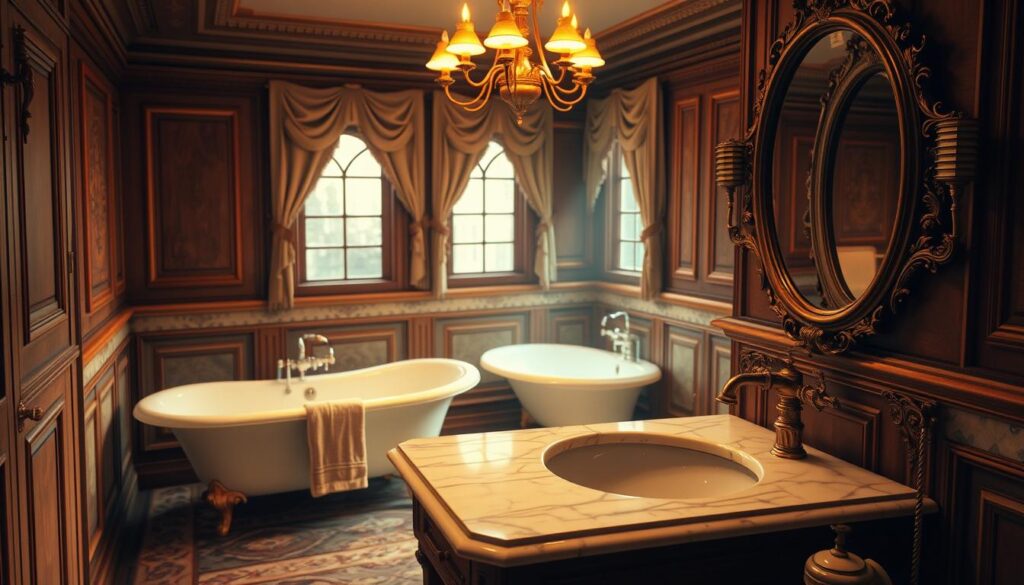
The Victorian era was a time of big changes in indoor bathrooms. New inventions in toilets and personal hygiene changed homes and social rules. The rich and upper classes started to value cleanliness more, changing home life.
In 1851, a big event happened at the Great Exhibition in London. The first modern bathtub with hot and cold taps was shown. This change made people think differently about cleanliness and comfort at home.
- Bathrooms transitioned from luxury to necessity
- Indoor plumbing became more accessible
- Sanitation standards dramatically improved
The indoor bathroom revolution changed Victorian homes a lot. Rich families were the first to get fancy plumbing. They had:
- Flush toilets
- Running water
- Separate bathing spaces
“Cleanliness is next to godliness” became more than just a saying—it became a tangible reality for many families.
Today’s bathroom comfort comes from these Victorian changes. Their focus on hygiene helped create the advanced plumbing we have now.
20th Century Plumbing Advancements
The 20th century was a big change for plumbing. Cities grew and technology improved, making plumbing better and more efficient.
New technologies changed water systems a lot. They made public health and living standards better in the U.S. Standard plumbing codes were also introduced. These codes helped make water systems safe.
Standardization of Plumbing Codes
- National Plumbing Code set safety standards
- Uniform rules for pipe and water system design
- Rules for health and safety in buildings
Material Innovations
New materials changed plumbing, replacing old lead and iron pipes. These new materials were better.
| Material | Advantages | Year Introduced |
|---|---|---|
| PVC Pipes | Corrosion-resistant, lightweight | 1940s |
| Copper Piping | Durable, antimicrobial properties | 1930s |
| Cross-Linked Polyethylene (PEX) | Flexible, easy installation | 1970s |
Public Health Improvements
Modern plumbing cut down on waterborne diseases a lot. Chlorination, filtration, and better water treatment made water safer for many Americans.
By the mid-20th century, plumbing systems changed cities and towns. They prepared the way for more water management innovations.
Modern Smart Plumbing Technologies
The world of plumbing has changed a lot in recent years. Smart technologies are making indoor water systems smarter and more efficient. This brings new levels of control and insight to managing water at home.
Now, homeowners have more control over their water systems than ever before. These new solutions use advanced sensors and digital monitoring. They go beyond just pipes, making plumbing smarter.
- Smart leak detection systems that provide real-time water flow monitoring
- Intelligent water filtration technologies with smartphone connectivity
- Automated water conservation fixtures
- Digital water quality assessment tools
Your home’s water system can now be managed with great precision. IoT-enabled devices let you track water use, find problems early, and save water with smart analytics.
Some key innovations include:
- Wireless moisture sensors that prevent water damage
- Smart water heaters with predictive maintenance capabilities
- Water recycling systems integrated with home automation
“The future of plumbing is intelligent, connected, and sustainable.” – Water Technology Institute
These advanced solutions improve your experience and help save water and money. As plumbing technology keeps getting better, homes will have even smarter water systems. These systems will focus on being efficient and good for the environment.
Conclusion
When did indoor plumbing start? The history of indoor plumbing is quite interesting. It shows how we moved from simple water management to complex systems. Your bathroom today is a result of thousands of years of human work.
It all began with ancient civilizations like the Indus Valley and Egypt. They first understood the need for clean water systems.
The growth of indoor plumbing has greatly helped human health and cities. From Roman aqueducts to Victorian-era bathrooms, each step forward has made life better. This shows how engineering and health work together to make our lives cleaner.
Now, as you enjoy your modern plumbing, think about all the work that went into it. Smart home tech is taking it even further, using new sensors and saving water. This shows our ongoing effort to solve big problems and make life better.
Knowing this history makes us value the systems that keep us going every day. Plumbing is not just pipes and water. It’s a sign of our creativity, strength, and goal to live healthier and more comfortably.