

Affiliate Disclosure
Plumber Guide Guys is a participant in the Amazon Services LLC Associates Program, an affiliate advertising program designed to provide a means for sites to earn advertising fees by advertising and linking to Amazon.
How to Bid Plumbing Jobs? Submitting a bid can be nerve-wracking for plumbers. Your skills, reputation, and future success depend on it. It’s not just about numbers; it’s about understanding clients, showing your value, and building trust.
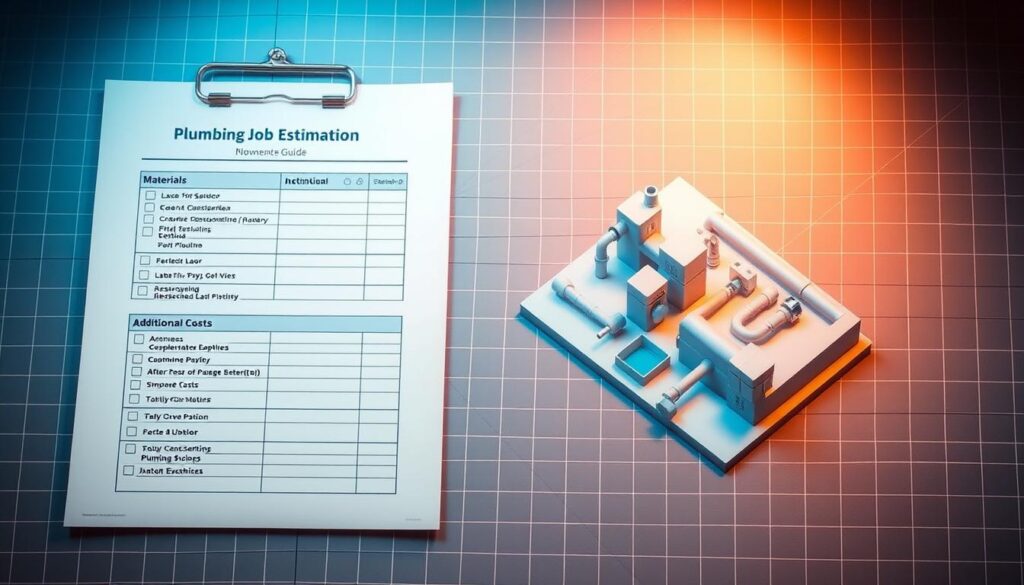
In the plumbing world, being precise is key. Whether it’s a small fix or a big project, your bids can make or break your business. Your ability to create accurate, competitive bids is critical.
This guide will change how you approach plumbing estimates. You’ll learn how to make bids that show your worth and cover your costs. By the end, you’ll be confident in pricing your services right and winning more contracts.
Key Takeaways
- Learn strategies for plumbing job estimation
- Understand different types of plumbing project bidding
- Develop skills for competitive and accurate estimates
- Discover ways to increase bid success rates
- Master cost calculation methods for plumbing services
Table of Contents
Understanding Different Types of Plumbing Jobs
Plumbing pros face many project types. Each needs its own approach to pricing. Skills and strategies vary by job.
There are three main types of plumbing jobs. Each has its own needs and bidding rules:
- Residential plumbing projects
- Commercial plumbing work
- New construction installations
Residential Plumbing Projects
Residential jobs are smaller, focusing on homes and apartments. They include:
- Emergency repairs
- Kitchen and bathroom remodels
- Replacing fixtures
- Fixing and maintaining pipes
Commercial Plumbing Work
Commercial jobs are bigger and follow strict rules. They cover:
- Restaurants
- Office buildings
- Apartment complexes
- Retail stores
New Construction Projects
New construction plumbing needs detailed planning. It involves designing and installing systems from start to finish.
| Project Type | Typical Scope | Complexity Level |
|---|---|---|
| Residential | Home repairs, upgrades | Low to Medium |
| Commercial | Large-scale system installations | High |
| New Construction | Complete plumbing system design | Very High |
Knowing the different plumbing jobs helps in setting prices. It also lets you tailor bids for each project’s needs.
Essential Components of a Plumbing Bid
Creating accurate plumbing quotes needs a detailed look at all job parts. Professional plumbing contractor bidding requires careful focus on many financial parts. These parts greatly affect your project’s success.
Your plumbing bid should cover several key areas. This ensures you have a complete view of the project:
- Labor Costs: Figure out exact worker hours and skill levels
- Material Expenses: List all needed supplies in detail
- Equipment Usage: Note any special tools and machinery required
- Travel Time: Include transportation costs and on-site prep
- Overhead Expenses: Add operational costs not directly tied to the project
Each part is vital for making precise plumbing quotes. Experts must assess every possible cost. This way, they can offer competitive yet profitable bids.
“Success in plumbing contractor bidding comes from understanding the complete financial landscape of each project.”
By breaking down these elements, you can make clear, detailed estimates. These estimates protect your business’s finances while meeting client needs.
How to Bid Plumbing Jobs: Step-by-Step Process
Learning to price plumbing jobs well needs a clear plan. You must have a detailed strategy to be accurate and competitive.
For a plumbing bid to succeed, planning and assessment are key. This guide will help you make precise and profitable estimates for your plumbing projects.
Initial Site Assessment
The first step in pricing plumbing projects is a thorough site check. You’ll need to:
- Inspect the entire project area
- Identify any challenges
- Measure the work needed
- Record the current plumbing setup
Material Cost Calculation
Getting the material costs right is vital for a good plumbing bid. Keep these points in mind:
| Material Category | Estimation Strategy |
|---|---|
| Pipes | Measure the needed lengths |
| Fixtures | Include the cost of specific models |
| Additional Components | Consider possible replacements |
Labor Cost Estimation
Figuring out labor costs needs a close look at the project’s complexity and your team’s skills. Accurate time tracking is key in pricing plumbing projects.
- Assess the project’s complexity
- Calculate the work hours needed
- Determine the right hourly rates
- Consider the skill levels of your team
Overhead Consideration
Plumbers must include overhead costs in their bids. This covers business expenses beyond the project itself.
Remember, a good bid includes both direct costs and your business’s operational needs.
By following these steps, you’ll create strong and competitive plumbing bids. These bids will help your business stay profitable while meeting client needs.
Pricing Models for Plumbing Services

Choosing the right pricing model is key for plumbing services to be profitable. Your pricing strategy can greatly affect your business’s success and how happy your customers are. Each pricing strategy has its own benefits for different plumbing tasks.
Professional plumbers mainly use three pricing models:
- Hourly Rate Pricing: Great for jobs that are unpredictable or complex
- Flat-Rate Pricing: Offers clear pricing and predictability
- Project-Based Pricing: Best for big installations
To make profitable plumbing estimates, you need to know the strengths of each pricing method. The best model depends on the job’s complexity, how long it takes, and what customers expect.
| Pricing Model | Pros | Best For |
|---|---|---|
| Hourly Rate | Flexible, covers unexpected complications | Emergency repairs, unknown scope jobs |
| Flat-Rate | Clear pricing, customer confidence | Standard repairs, routine maintenance |
| Project-Based | Comprehensive cost coverage | Large installations, remodeling |
Your pricing strategy should aim for fair pay and competitive prices. Think about local competition, job complexity, and your business costs when setting your pricing for plumbing services.
Calculating Labor Costs and Rates
Getting labor costs right is key for winning plumbing contractor bids. Your quotes must be accurate to stay profitable and competitive.
To figure out labor costs, you need to know a few important things. These elements are vital for a good bidding strategy.
Determining Hourly Rates
When setting your hourly rates, think about these key points:
- Skill level of technicians
- Local market rates
- Complexity of plumbing work
- Experience of your team
Labor Time Estimation
Accurate time tracking is essential for winning bids. Here’s how to estimate job time:
- Do a detailed initial assessment
- Split tasks into easy-to-measure parts
- Include extra time for surprises
- Use past project data
Team Size Requirements
The right team size is important for both efficiency and cost. Follow these tips:
| Project Type | Recommended Team Size | Estimated Hours |
|---|---|---|
| Residential Repair | 1-2 technicians | 2-4 hours |
| Commercial Installation | 3-4 technicians | 8-16 hours |
| Large-Scale Project | 5-6 technicians | 24-40 hours |
By learning these labor cost tips, you’ll make bids that are both competitive and profitable. They will reflect the real needs of the project and market standards.
Material Cost Estimation and Markup
Getting accurate plumbing job estimates is key. It’s all about knowing how to calculate material costs and set the right markup. Skilled plumbers focus on tracking materials closely to make sure their estimates are profitable.
To create a solid material cost plan, follow these steps:
- Create a detailed inventory of required materials
- Research current market prices from multiple suppliers
- Factor in possible price changes
- Consider material waste
Choosing the right markup is vital for your business’s health. Most pros suggest a markup of 50-100% on materials. This covers overhead and ensures you make a profit.
| Material Type | Average Cost | Recommended Markup |
|---|---|---|
| PVC Pipes | $2.50/foot | 75% |
| Copper Pipes | $4.50/foot | 65% |
| Fixtures | $75-$250 | 90% |
Digital tools can make estimating plumbing jobs easier. Price tracking software and digital inventory systems help keep your material costs up to date. They let you adjust prices quickly.
“Precision in material estimation separates successful plumbing businesses from struggling ones.” – Professional Plumbing Association
Overhead and Operating Expenses
Winning plumbing contracts is more than just counting material and labor costs. Your overhead and operating expenses are key to your pricing strategy and profit. They help you stay competitive and profitable in the long run.
When pricing plumbing projects, you need to consider all the costs that keep your business running. These costs might not be seen by clients, but they affect your profits a lot.
Fixed Costs: The Steady Financial Commitments
Fixed costs are expenses that stay the same every month. They include:
- Office or workshop rent
- Equipment lease payments
- Insurance premiums
- Vehicle maintenance and registration
- Employee salaries
Variable Expenses: The Fluctuating Business Costs
Variable expenses change with your project volume and business activity. They might be:
- Fuel and transportation costs
- Consumable supplies
- Marketing and advertising expenses
- Utility bills
- Professional development and training
Insurance and Licensing: Protecting Your Business
Having the right insurance and licenses is vital for your plumbing business. These costs might seem high, but they’re key for winning plumbing contracts and showing you’re professional.
By tracking and setting aside these costs, you can make bids that cover your expenses. This makes your offers more appealing to clients.
Creating Professional Plumbing Estimates
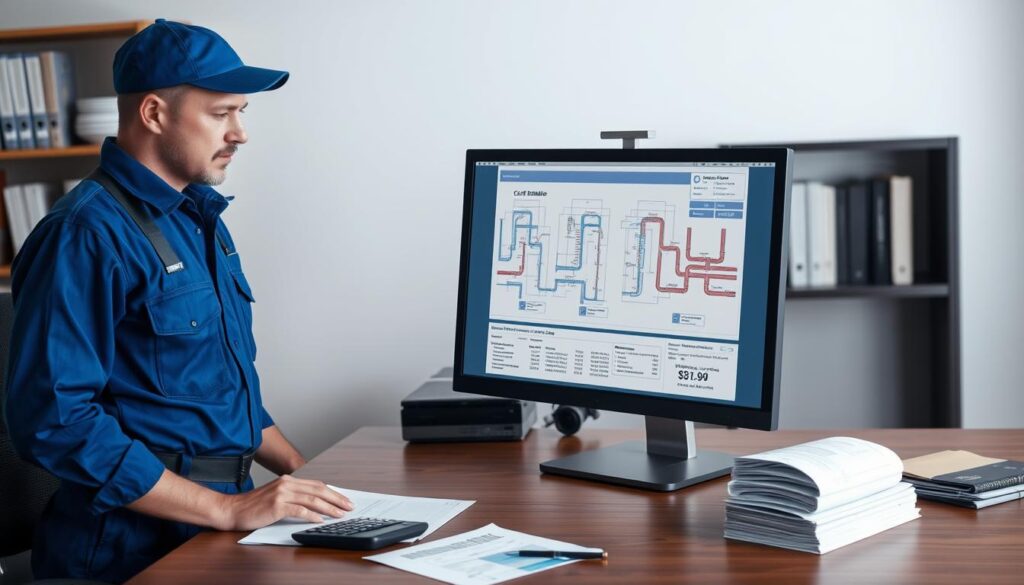
Making accurate plumbing quotes is all about precision and planning. Your estimate is more than just a price. It shows your business and plumbing skills.
When making your estimates, aim for a detailed and clear document. This builds trust with your clients. A well-made estimate shows your expertise and dedication to quality.
- Include detailed cost breakdowns
- Specify project timelines
- Outline material and labor expenses
- Clarify payment terms
“A clear estimate is the foundation of successful client relationships in the plumbing industry.”
Your estimate should clearly show what work you plan to do. Break down your costs into different parts. This helps clients see the value you offer:
| Cost Category | Description | Percentage of Total |
|---|---|---|
| Labor | Skilled technician time | 40-50% |
| Materials | Pipes, fixtures, equipment | 30-40% |
| Overhead | Business operational costs | 10-20% |
Pro tip: Use digital tools and templates to streamline your estimate creation process and maintain professional consistency.
Transparent and detailed estimates help you win more bids. They also make you a reliable plumbing contractor.
Using Technology for Plumbing Estimates
Technology has changed how plumbers estimate jobs and prices. New digital tools have made estimating more efficient and accurate than before.
Today, plumbers use advanced software to price their services better. Plumbing estimation software has features that help a lot with bidding.
Advanced Plumbing Estimation Software
The right tech can really help your plumbing business. Modern tools have cool features like:
- Digital blueprint takeoff capabilities
- Real-time material pricing databases
- Automated calculation systems
- Cloud-based accessibility
Digital Price Books
Digital price books are key for tracking costs accurately. They let you:
- Update material costs instantly
- Track regional pricing variations
- Maintain detailed item catalogs
Mobile Estimating Tools
Mobile tech lets plumbers make estimates right where the work is. These tools help with quick calculations, talking to clients, and keeping records.
“Technology doesn’t replace skill—it enhances your professional capabilities.” – Plumbing Industry Expert
Using these tech solutions can make your estimates more accurate. It cuts down on mistakes and helps you give better proposals to clients.
Common Bidding Mistakes to Avoid
Learning how to bid on plumbing jobs is key. Avoiding major mistakes can mean the difference between success and failure. Experienced contractors know that precise bidding needs a solid strategy and careful details.
There are several mistakes that can hurt your plumbing business. Knowing these can help you make better, more competitive bids.
- Underestimating Labor Costs: Not calculating worker hours and skill levels correctly can cause big financial losses
- Overlooking Material Expenses: Not considering current prices and supply chain issues
- Ignoring Overhead Expenses: Forgetting indirect costs like equipment upkeep, insurance, and office work
- Incomplete Project Assessment: Not doing a thorough site check at first
Successful plumbers have strong estimation methods to avoid these problems. Using systematic ways helps ensure prices are right and bids are competitive.
| Bidding Mistake | Potential Impact | Prevention Strategy |
|---|---|---|
| Labor Cost Miscalculation | Reduced Profit Margins | Detailed Time Tracking |
| Material Price Errors | Financial Loss | Regular Market Research |
| Overhead Neglect | Unsustainable Business Model | Comprehensive Expense Tracking |
By tackling these common mistakes, you can boost your chances of winning plumbing contracts. This keeps your business profitable and your reputation strong.
Conclusion
Creating successful plumbing estimates is more than just math. It’s about growing your business and standing out in a tough market. By using the tips from this guide, you can get better at estimating costs. This will help you win more plumbing jobs.
To succeed, you need to know all about your project. This includes material costs, labor, and overhead. Keep improving your bidding by looking at past projects and using new technology. Each bid is a chance to show you’re a pro in plumbing.
Good pricing means more than just covering costs. It shows clients the value you offer. Detailed, clear estimates can make you stand out. Spend time getting better at estimating, and you’ll land more profitable jobs.
See each estimate as a chance to learn. Keep track of your wins and losses, and always be ready to change. The plumbing world changes fast. Being able to adapt will make you successful and keep your business growing.